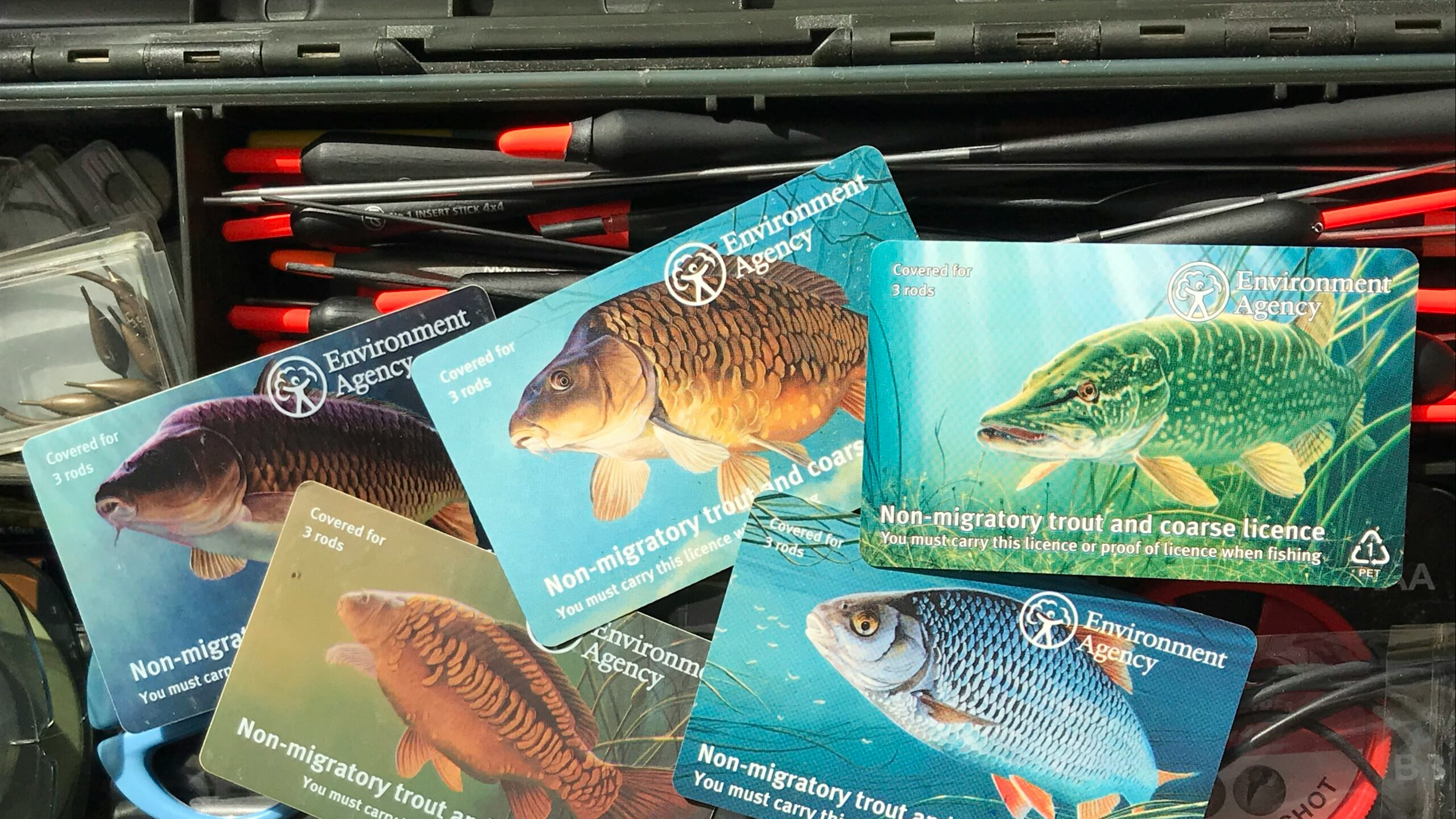
Fishing rod licence sales rose for the third year running in 2025/26, but experts within the industry are working to combat a steady decline in the number of permits bought by adults.
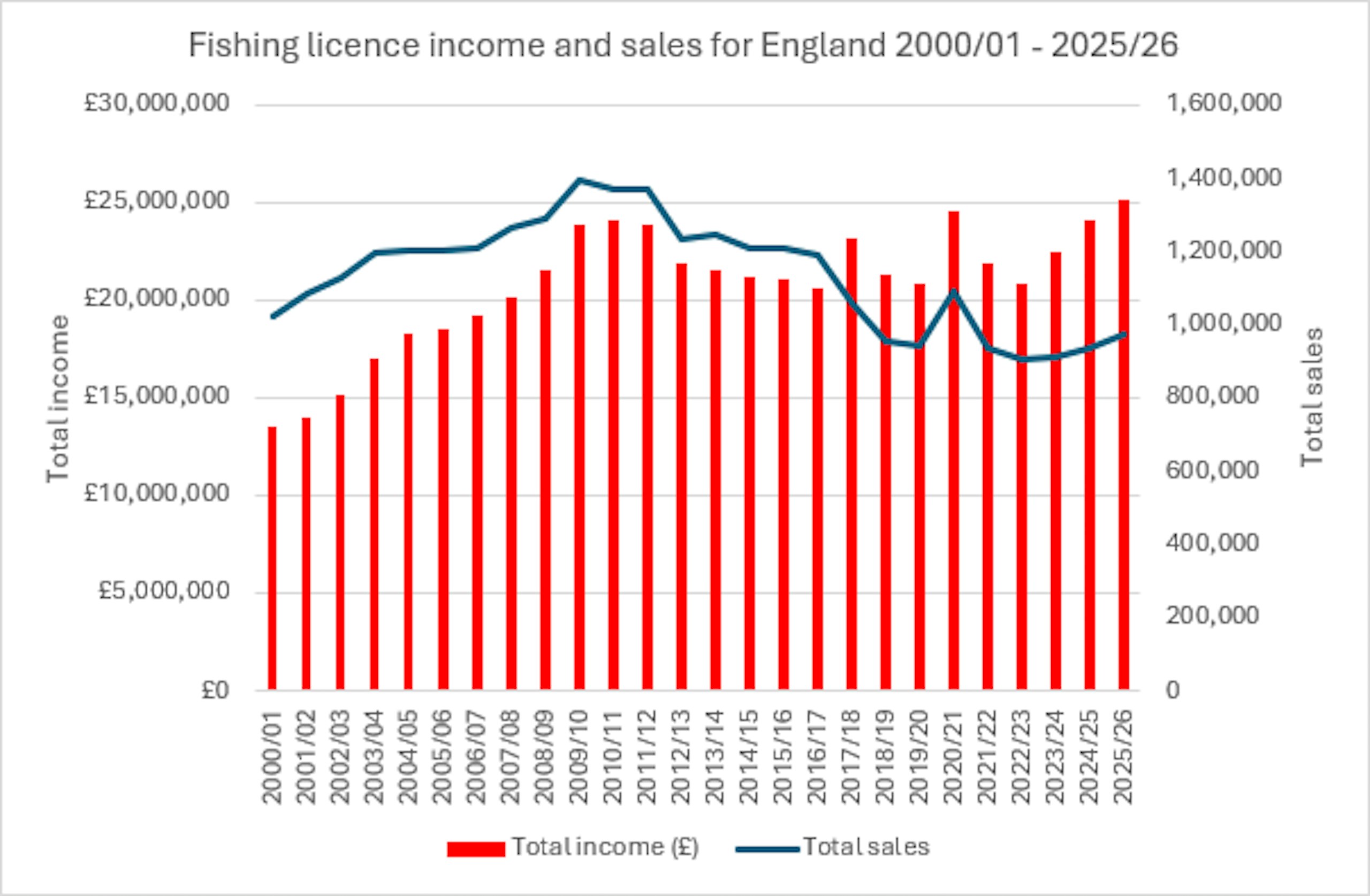
The Environment Agency revealed that it ‘sold’ 973,859 licences last year, up 4.2 per cent from 934,000 in 2024/25. This generated £25.1m – an increase of almost £1m on the previous season, income which is invested back into the sport to help maintain, develop and improve fisheries.
Many of these additional licence sales are attributed to juniors, with a rise in both annual two-rod (16.7 per cent) and annual three-rod (46.5 per cent) licences continuing the strong increase in junior sales witnessed in 2024/25. Additionally, sales of disabled two- and three-rod coarse and non-migratory trout permits rose sharply (up by 11.3 per cent and 14.9 per cent respectively), as did annual senior (over 66-year-old) licence sales in the same categories, each being up by just over two per cent.
But, of slight concern was a slight fall in adult two-rod coarse and non-migratory trout licences, which decreased by 0.4 per cent. Although only a slight drop, this licence category brings in the most income, so the EA and the industry as a whole are keen to halt this decline.
Area of concern
“Recording an increase in licence sales for the third year in a row is positive news,” an EA spokesperson told us. “The associated growth in income has largely been driven by the three-year incremental rise in rod licence duties, with revenue growing from £20.9m in 2022/23 to £25.1m in 2025/26.
“The rise in sales has largely been driven by the increase in junior rod licence-holders, which has almost doubled from 61,530 in 2022/23 to 118,341 in 2025/26. Junior licences are free and this, coupled with the rise in anglers purchasing disabled licences, means that a larger percentage now holds a concessionary or free licence.
“But while the rise in junior angler numbers is promising for the future, the conversion rate of 16-year-old anglers to 17-year-old full fee-paying licence holders is still low.”
With the costs of rod licences remaining fixed for 2026/27, increasing the number sold is imperative for the EA.
“Efforts to achieve this will be focused through better marketing and communication strategies, and hopefully better retention of annual rod licence-holders through automatic licence renewal, which came online in October 2025,” said the spokesperson.
Retention and 'churn'
Andrew Race, chair of the Angling Trades Association (ATA), gave an insight into the challenge of retention in the ‘adult’ category.
“The issue we have stems from ‘churn’ – the number of people leaving each year,” he told us. “All sports and activities have churn, but usually, when a few thousand people leave, they are replaced by a few thousand incoming individuals.
“In angling, we have a high churn rate, meaning we could see 100,000 people leave one year, but with many different individuals coming back. Currently, the number of returnees is slightly smaller than that of people going.”
While incomers could be replaced as the new wave of juniors become fee-paying adults, data shows that the conversion rate between these two demographics is low. But Andrew believes this trend has a simple explanation.
“People in their late teens go to college or university – at that age, life gets in the way of fishing. This has always been the case. It’s the remainder of the adult category that we would particularly like to engage with, and from research into why people have given up fishing, the top two reasons are a lack of time and not having somebody to go with.”
Driving change
Tackling a lack of time to fish is a tough task, but the ATA has plans to do just that.
“If someone says they are too busy and are considering selling their tackle, we want them to keep a little bit of it,” Andrew said.
“This can lean against the garage wall, and one day, if they do have a bit more time, they might be tempted use it again. Their kids, if they have any, could see this too, and be inspired to try fishing themselves.”
With junior rod licence sales on the rise, Andrew is keen to implement a strategy to keep these newcomers in the sport. “While some of these juniors may be fishing with their grandparents, many come from non-angling families,” he explained. “Additionally, through drives like Take a Friend Fishing (TAFF), we’ve seen lots of people try fishing for the first time. But it’s vital that we get past headline figures. For instance, if 30k people go through TAFF but 29.5k don’t fish again, it loses its point.”
Improving 'compatibility'
Andrew continued: “We have to provide people with information on how to fish, which can be done through bait and tackle. For example, if a bag of groundbait includes instructions on how to mix it, parents could buy it, prepare it at home with their kids and, because it’s prepared to the right consistency, they’ll have better results on the bank.
“Additionally, if people are at a game fair and try fishing for the first time, they should be able to pick up a simple and affordable kit that is of decent quality and will enable them to continue their journey as anglers. It’s all about improving the compatibility of angling, and we’re currently working within the industry to do exactly that.”