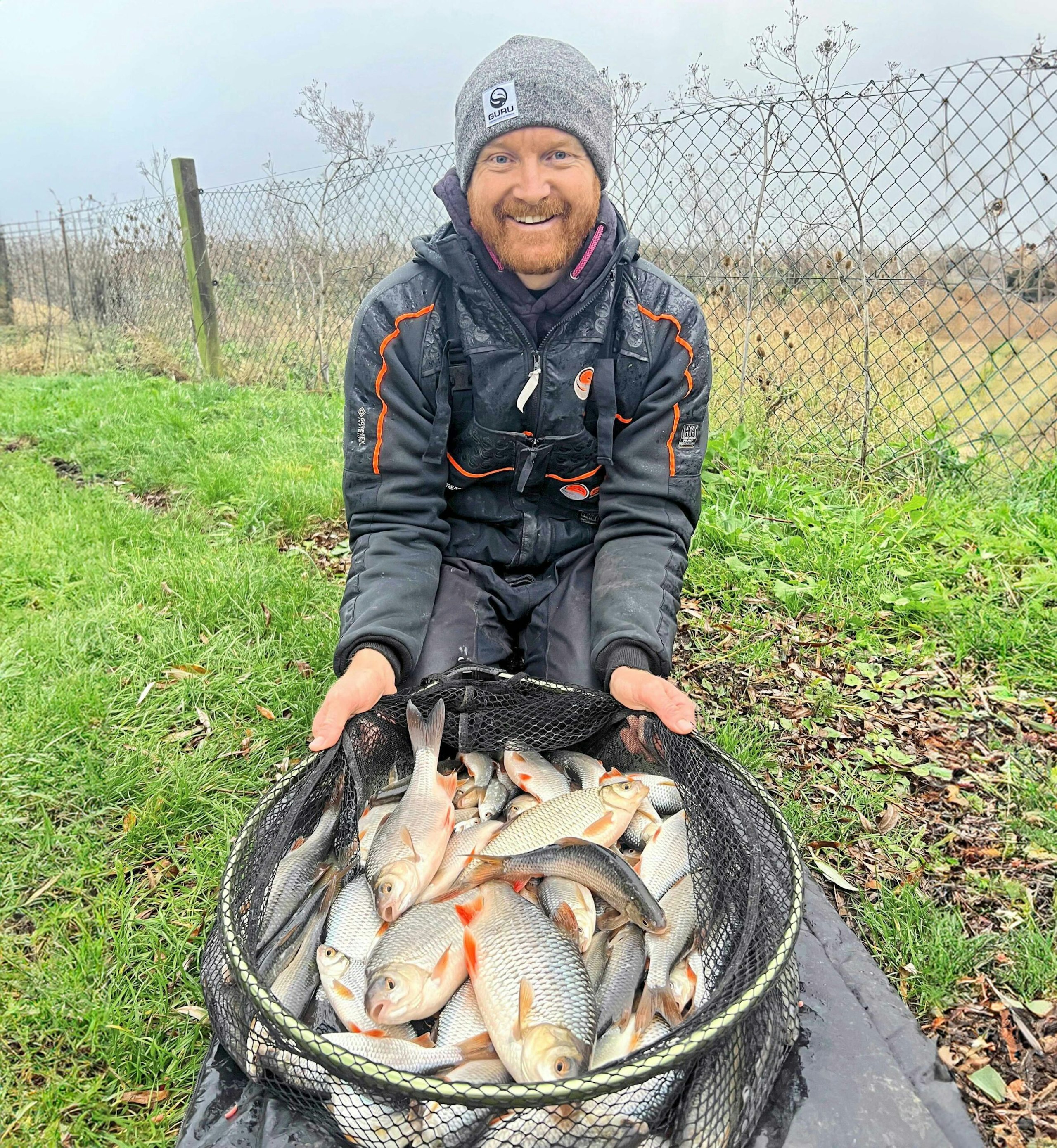
Venues such as commercial fisheries or large lakes that hold plenty of carp are often also home to huge shoals of silverfish like roach and bream. These species are often overlooked, but when anglers turn their attention to targeting them, a prolific session is often on the cards. We joined England international Matt Godfrey on the banks of Float Fish Farm to see how he goes about putting together a quality net of silvers.
Head for the deeps
Big-carp waters are often quite large and featureless, but there is a simple rule of thumb when it comes to choosing a suitable swim for silvers, and one that rarely fails. Silverfish will head for the deepest and most open areas of a lake, and these are almost always in the middle.
Once you’re in the peg and set up, it’s time to pop a plummet on to your pole rig and explore the underwater contours. I am looking for the bottom of the marginal slope, and this will give me a flat spot over which to lay down a bed of groundbait that the silverfish will graze upon.
GET YOUR GROUNDBAIT RIGHT EVERYTIME WITH THIS HELPFUL GUIDE...
Add some fishmeal
The traditional view is that fishmeal is an additive that roach in particular will always steer clear of, but that certainly isn’t true on big-carp waters. Large quantities of pellets and boilies that are packed with this ingredient are introduced every year, and the roach have cottoned on to it as a main food source.
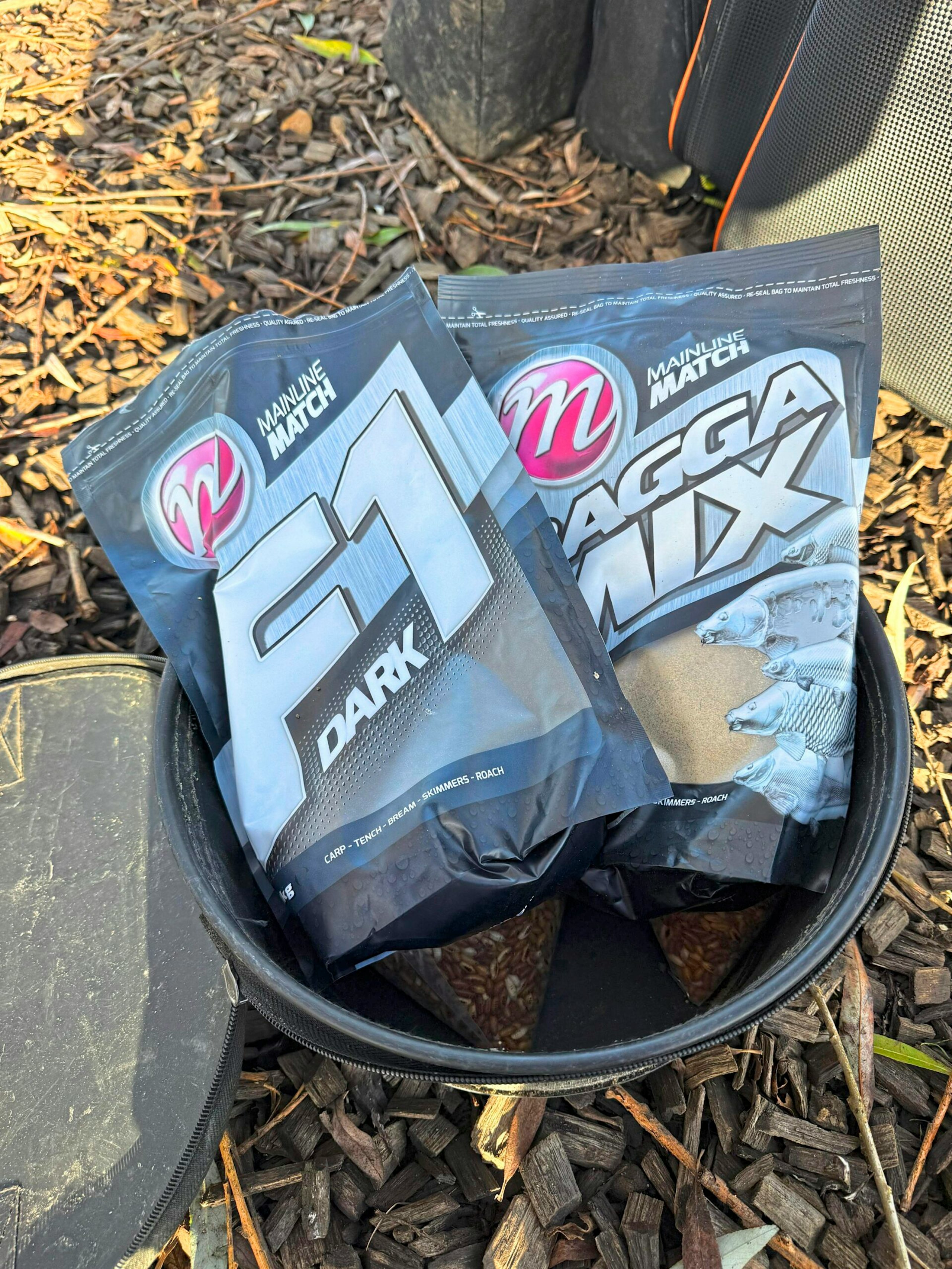
That’s why I always like to have an element of fishmeal in my groundbait mix for roach at such venues. My favourite blend is even amounts of Mainline Match Bagga Mix and F1 Dark, a combination which provides the ideal balance of sweetness and fishmeal.
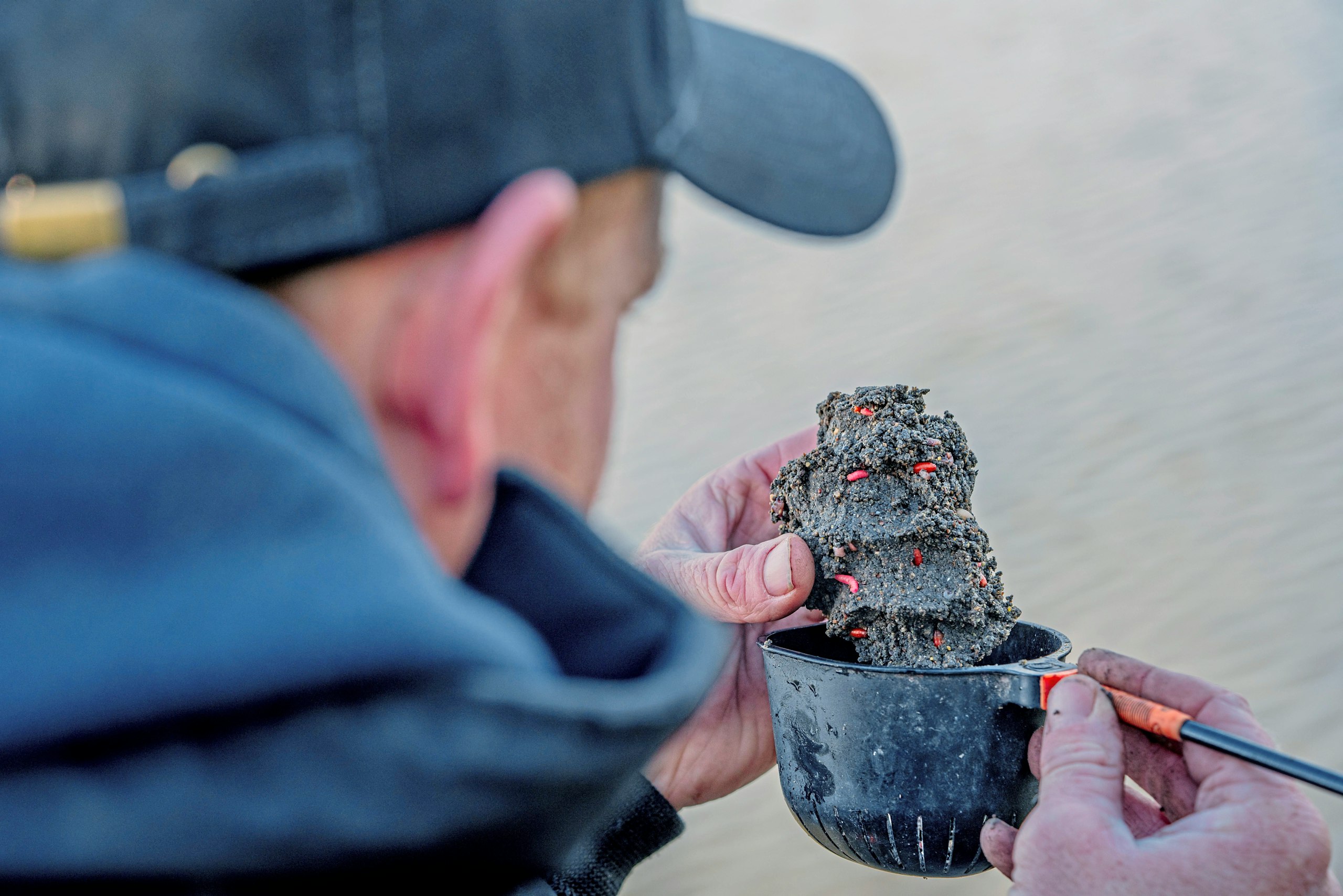
It creates a dark green mix, and I’ll cup three soft balls in at the start, even in deep water. They break up quickly, giving the fish instant access to the contents, which get roach interested and draw others in out of curiosity.
HEAD TO ONE OF THESE VENUES TO CATCH BIG ROACH NOW...
Get the perfect presentation
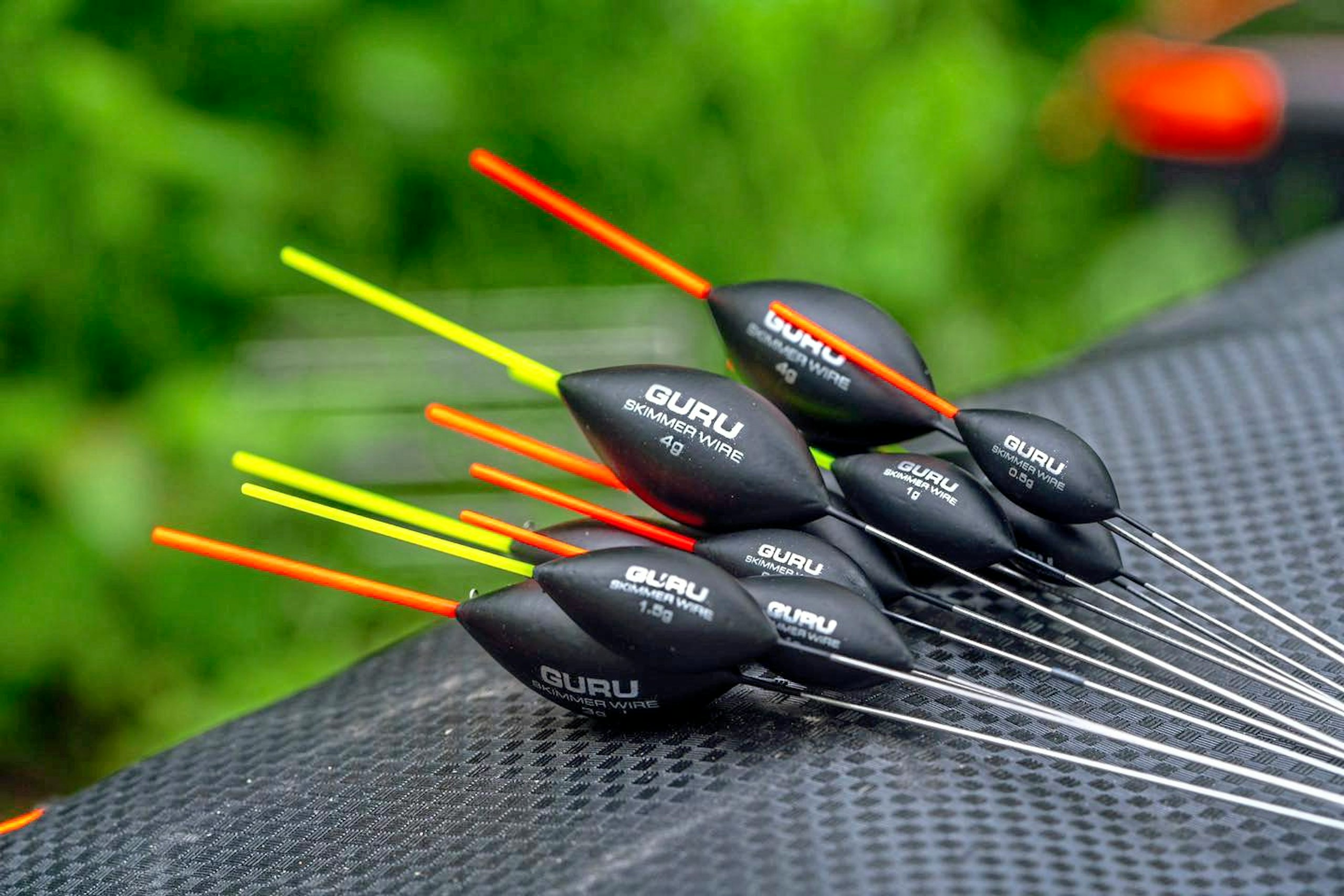
Quite heavy floats are needed in deep water to provide rig stability. I use a 1.5g Guru Skimmer Wire pattern.
Many anglers think that you need all your weight close to the hook when using something of this size, but I don’t. I want my hookbait to bomb through the top three-quarters of the water column, before then slowing down, so that it mimics a loosefeed item once it enters the feeding zone. I do this with a bulk 75cm from the hook, then a taper of five No9s sat below.
Most bites will come soon after the hookbait has touched down, but if I don’t get one within a few minutes, I’ll lift 2ft-3ft of the rig out of the water, and lower it back down.
My terminal tackle is 0.13mm mainline to a 0.10mm hooklength and a size 16 or 18 Guru F1 Maggot hook. The elastic is a solid grade eight.
CATCH MORE FISH ON THE POLE WITH THESE EXCELLENT TIPS...
Trust in two hookbaits
Loosefeeding maggots over the top of the groundbait is important. I’ll fire in half a pouch of maggots twice in quick succession each time that I ship out.
The noise and the trickle of food both stimulate a response. The groundbait acts as the attractor, while the loosefeed keeps the fish occupied.
It makes sense to start with either a single or double maggot on the hook. I will stick with this from start to finish a lot of the time, but there are instances when a worm head can be more effective, such as if you’re catching at pace and want a hookbait that will catch you two or three fish before it needs to be changed.
Catching on a worm head can often be a sign that adding a little chopped worm to your next ball of groundbait will have a positive impact on the final result.
THE BEST FISHING POLES WILL HELP YOU PRESENT YOUR BAIT PERFECTLY.
Time your top-ups
A lot of anglers seem to gamble when it comes to topping up with groundbait, but you need to be methodical and only do this when it is appropriate.
If you go through a spell when you can’t get a bite, but then the action resumes with a smaller stamp than you were catching earlier, then it’s time to add a little more feed.
A single ball is often enough to regroup the shoal and get you back into the swing of things. You may only have to do this five or six times during a session, meaning that a kilogram of groundbait is often more than ample.