- Home|
- News|
- News Stories
The fight to save the UK’s vanishing eels
@ARK
by Aidan Bordiuk |
Updated on20th May 2026 at 11.22am
Follow Angling Times on Google
One of the UK's rarest and most fragile fish species is now at the centre of a citizen science project across the Kennet and Pang catchments, as volunteers join efforts to help monitor and protect the critically endangered European eel.
The project is taking place in some of the UK’s most important chalk streams, habitats so rare that 85% of the world’s examples are found in England.
Once common in UK rivers, particularly those like the Kennet, eel numbers have fallen dramatically since the 1980s, with populations now in steep decline due to contributing factors such as barriers, pollution and overfishing.
Anna Forbes, ARK’s Education and Outreach Manager, explained the aims of the initiative to Angling Times:
"ARK is the Rivers Trust for the Kennet and Pang catchments, we are a registered charity and run a variety of projects at a range of scales, taking a catchment-based approach to restore, monitor, educate and lobby to improve our rivers. Our focus for this project is on citizen science and educational outreach with schools and the wider community in the Kennet catchment."
"It’s exciting to again be part of the Thames Catchment Community Eels Project (TCCEP), this current 1-year Development Phase is a multi-parter project building on the successful pilot of 2020-22."
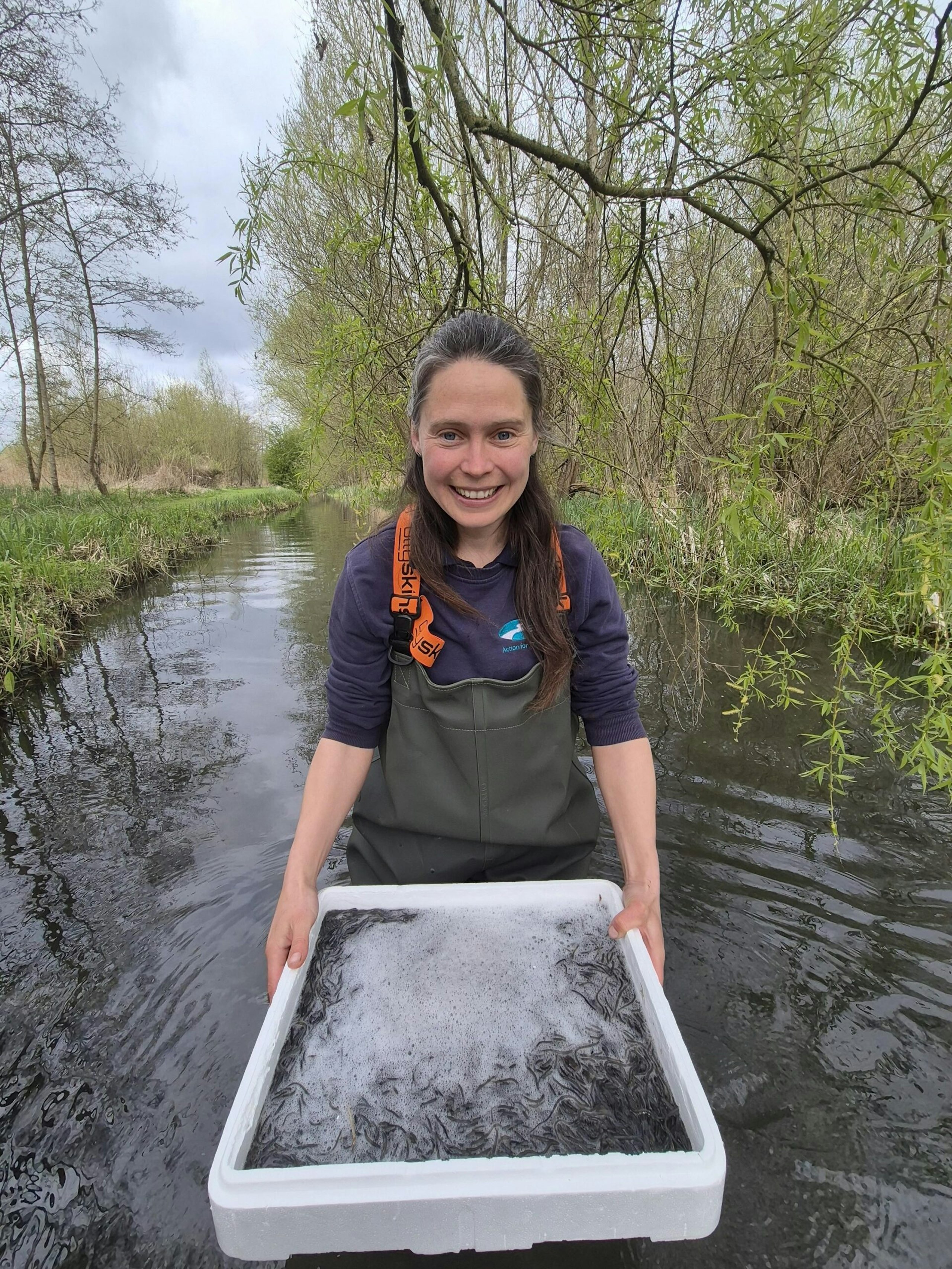
ARK eel project officer Dr Emily Best with a tray of glass eels | Credit: ARK
The Kennet is a Site of Special Scientific Interest (SSSI) and is renowned for its wild brown trout, water voles, and mayflies, to name but a few of the species found there. Historically, the Kennet was also home to eels, but since the 1980s, eel numbers arriving in our English rivers have plummeted by more than 70%. There are several contributing factors, including barriers such as weirs which prevent upstream migration, as well as pollution, illegal trafficking, climate change, and overfishing.
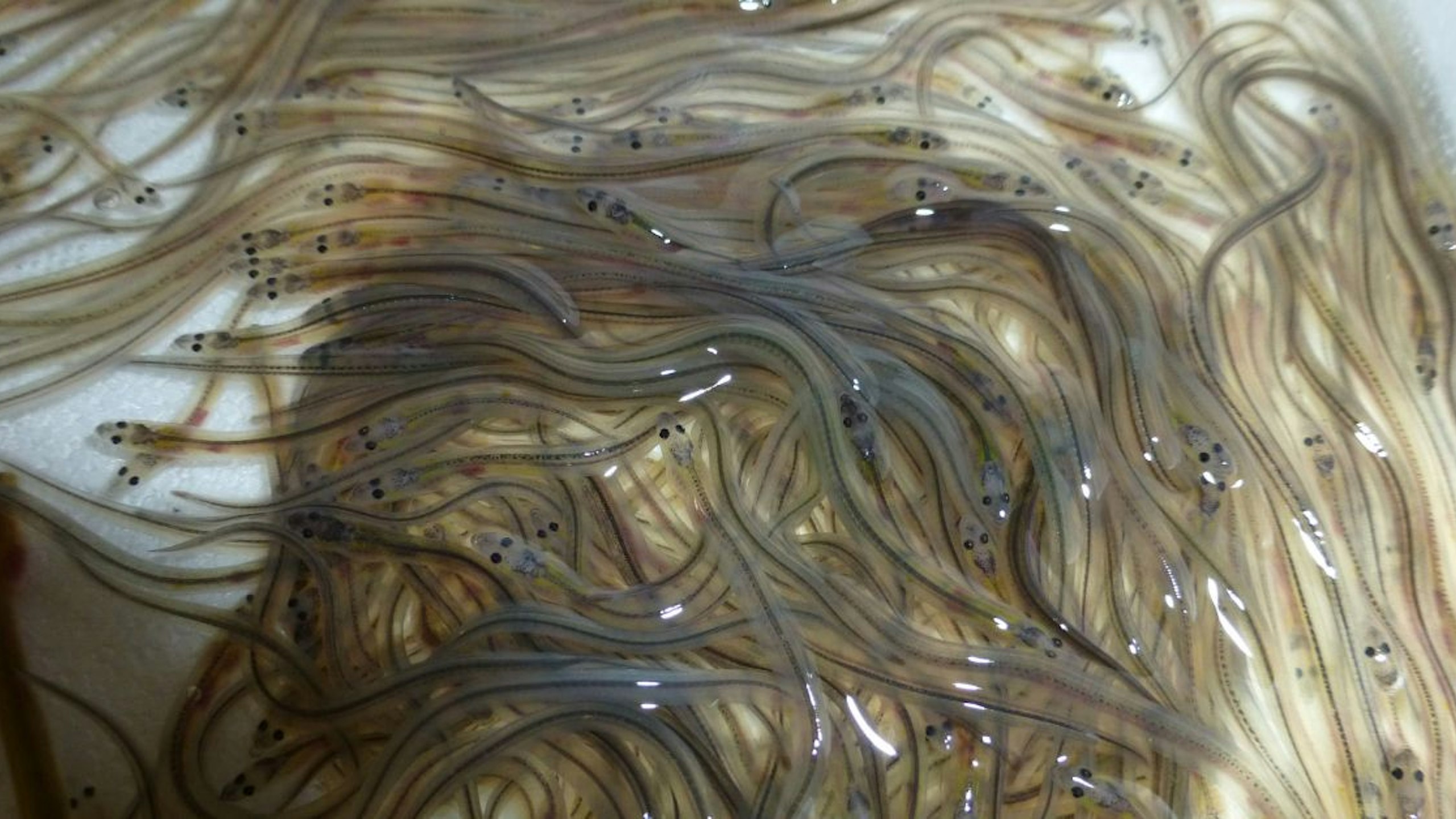
“All European eels are believed to hatch from tiny eggs in the Sargasso Sea, located in the western Atlantic Ocean. The newly hatched eel larvae, known as leptocephali, float on the Gulf Stream and the Azores Current towards Europe, developing into their next life cycle stage, the glass eel, as they approach the continental shelf of Europe.
“The journey is over 6,000km and takes approximately 1–3 years. Eels then spend years living in our rivers before maturing and making the epic migration down the river system, out via the Thames Estuary and across the ocean to return to the Sargasso Sea to spawn, which they only do once in their lifetime before dying,” Anna explained.
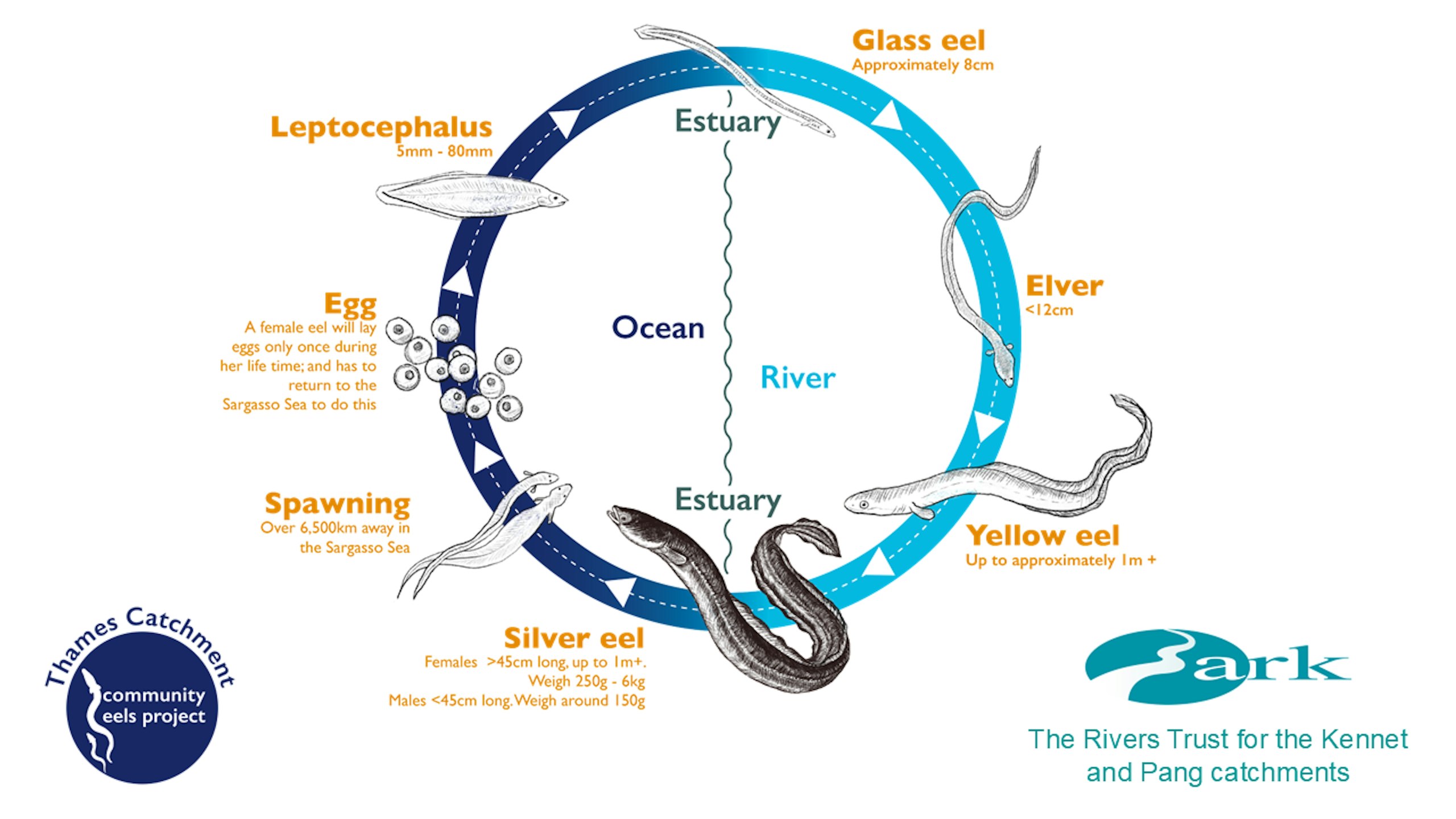
The life cycle of the European eel is a fascinating one | Credit: ARK/TCCEP
ARK will be leading a pilot citizen science project using passive eel habitat trapping methodology at six key sites, which will be monitored weekly for eel presence. This will support the gathering of data during a research project led by the Environment Agency (EA) and Bournemouth University, investigating European eel restocking on the Kennet and the Pang.
A total of 120 EA-permitted passive traps are being installed in the chalk stream margins at the selected release sites. The cotton mop-head “traps” replicate plant roots, imitating the type of hiding spot eels favour to encourage them in, while remaining totally passive to allow eels and other species to enter and leave freely.
Every week, pairs of trained volunteers will check the traps and record and photograph any eels present. The project is a great way to volunteer; it gets people outdoors, learning about and enjoying their river, while helping us maintain a large number of traps that are regularly checked, something that simply couldn’t operate at this scale without dedicated volunteers.
Eels won’t be handled. Instead, photographs will be taken in trays of river water with a coin included for scale, allowing their size to be estimated. The eels will then be returned swiftly to the area where they were found.
“The European eel is a keystone species, which means its presence and activities have a major influence on the composition and health of an ecosystem. Tragically, the European eel is now recognised as critically endangered and is considered more endangered than the giant panda.
“So, the citizen science data supporting the EA’s multi-year eel restocking project is incredibly important.” Anna told us.
TCCEP is a catchment scale project led by Thames Rivers Trust, working with seven partners including ARK to secure a thriving future for eels and communities. The Zoological Society of London are co-ordinating the Thames Eel Action Plan, this project has been developed using the action plan and will feed into it.
TCCEP Development Phase is made possible with The National Lottery Heritage Fund. Thanks to National Lottery players.
ARK is a membership organisation and you can support our work by becoming a member for just £20 a year.To find out more about ARK and becoming a member and/or a volunteer visit their website: www.kennetandpang.org
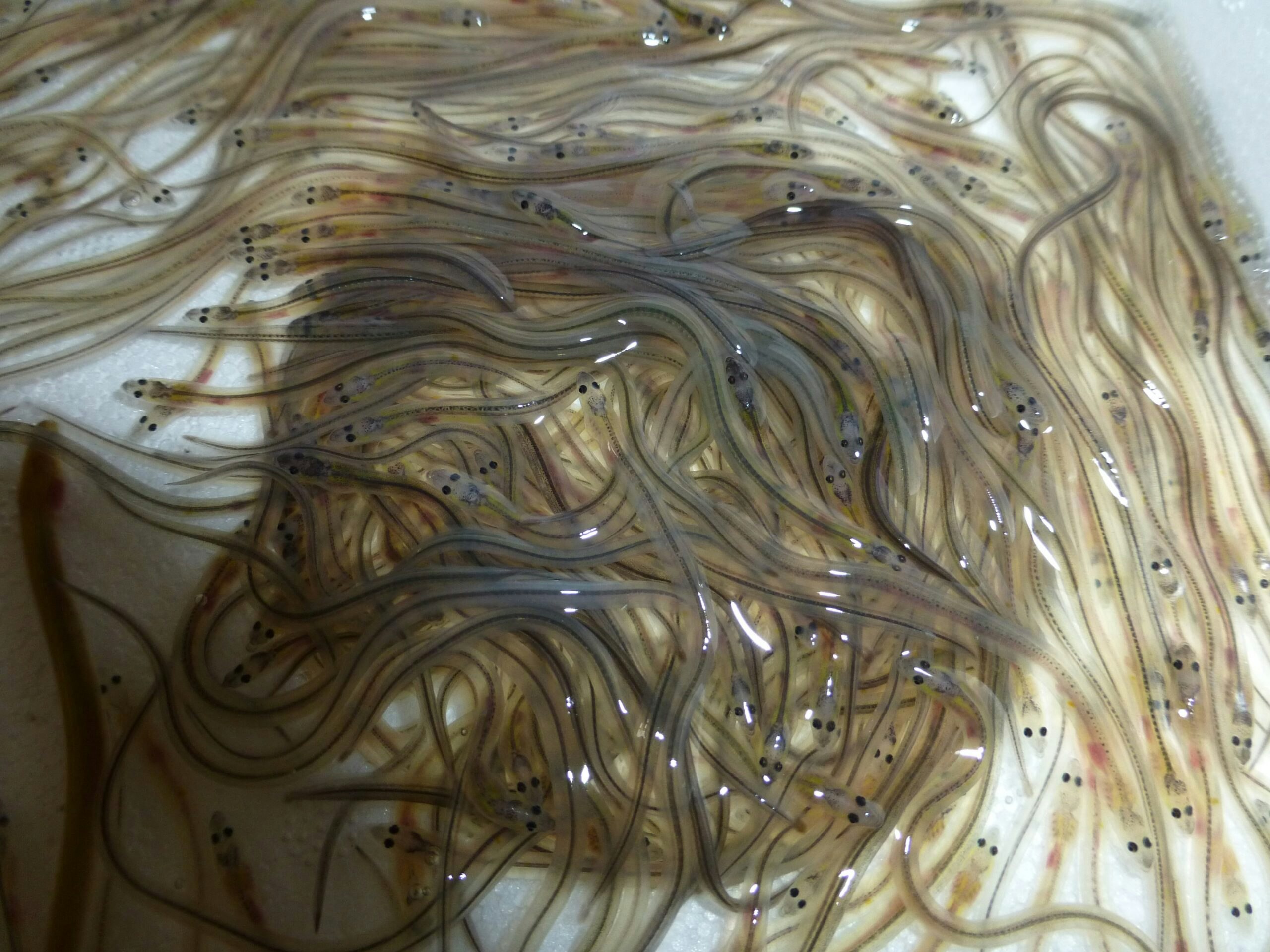
Hopefully the eel can make a comeback! | Credit: ARK
Just so you know, we may receive a commission or other compensation from the links on this website - read why you should trust us