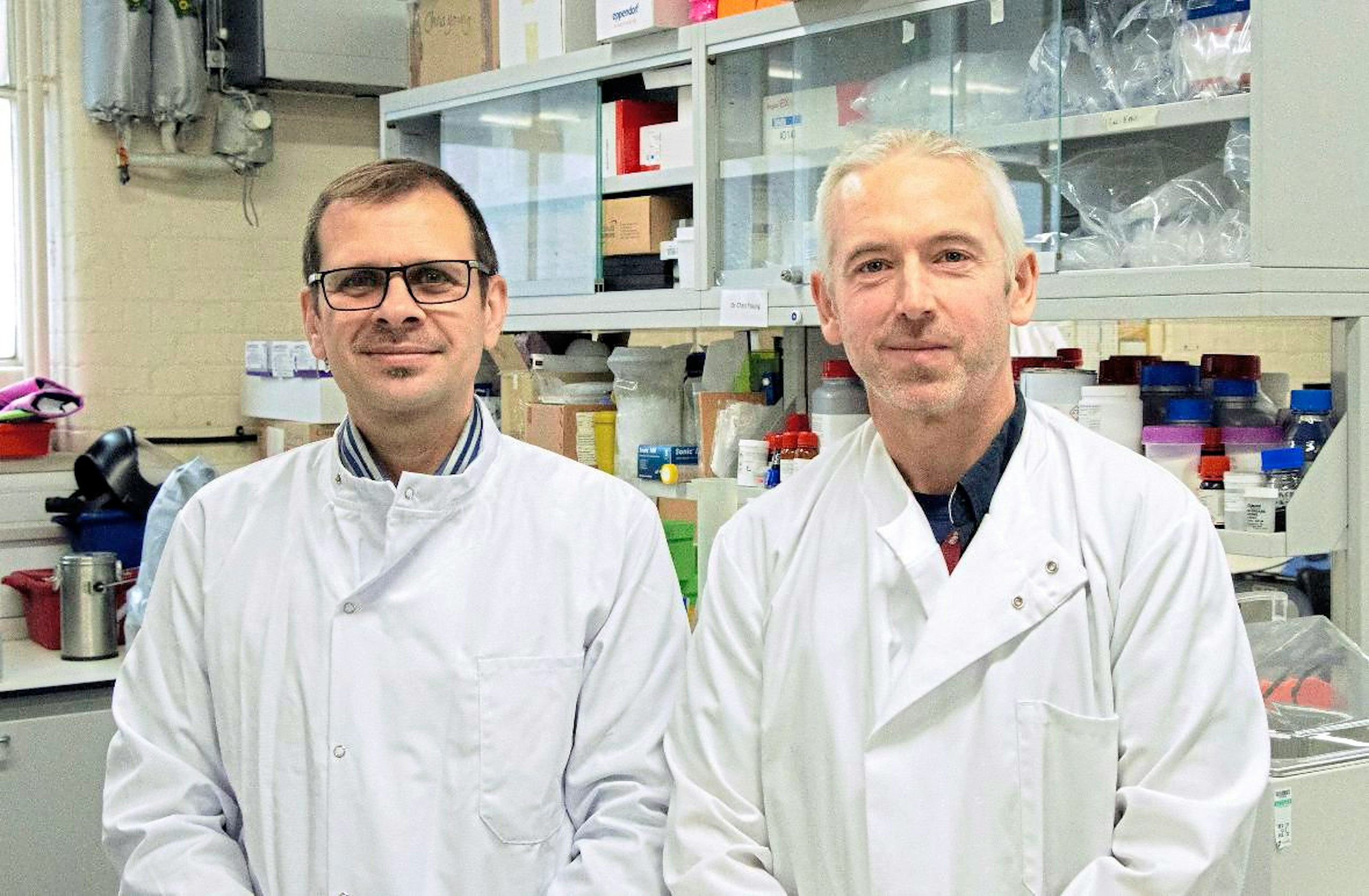
Chris Young is a passionate angler and Associate Professor of Molecular Medicine at De Montfort University, Leicester.
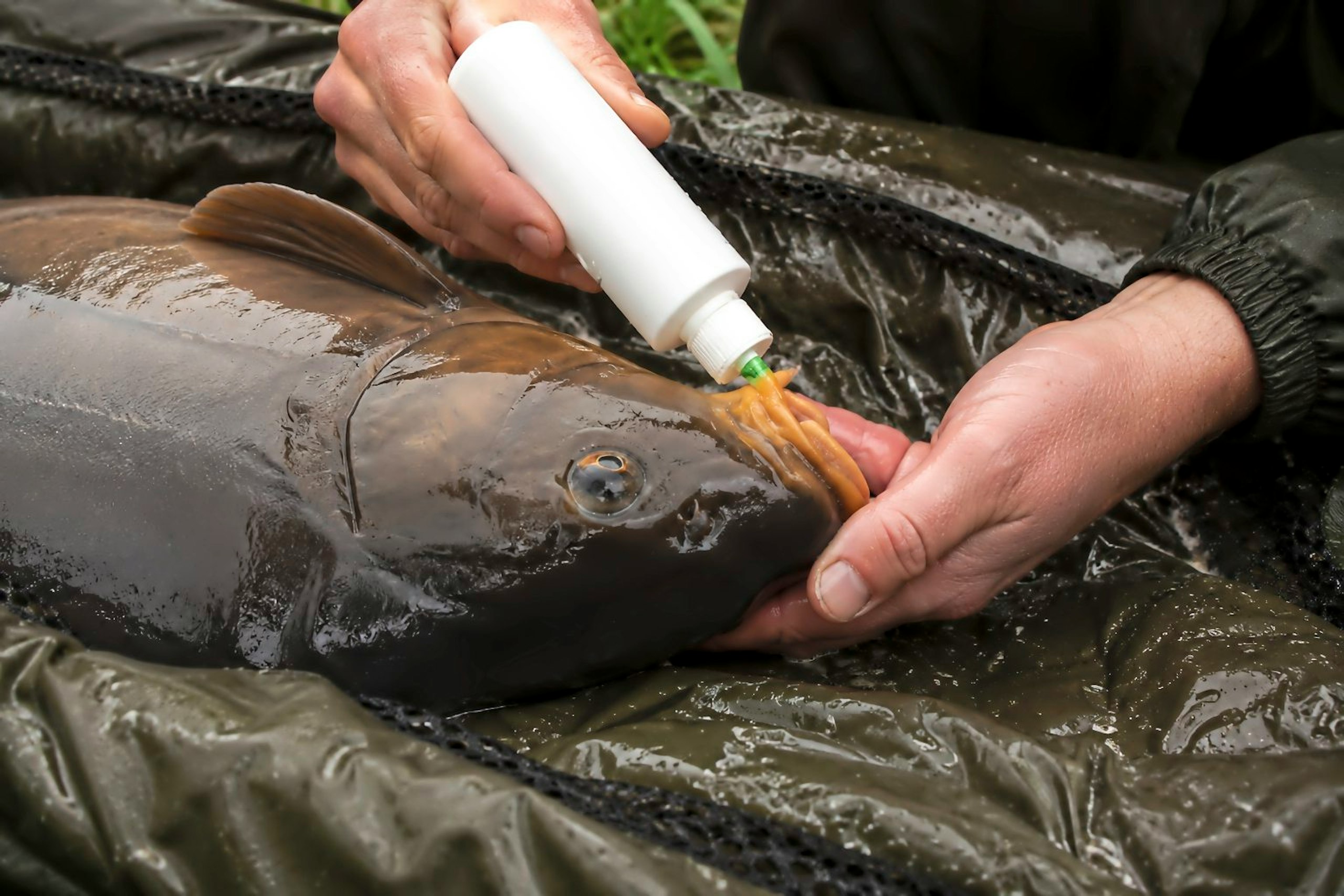
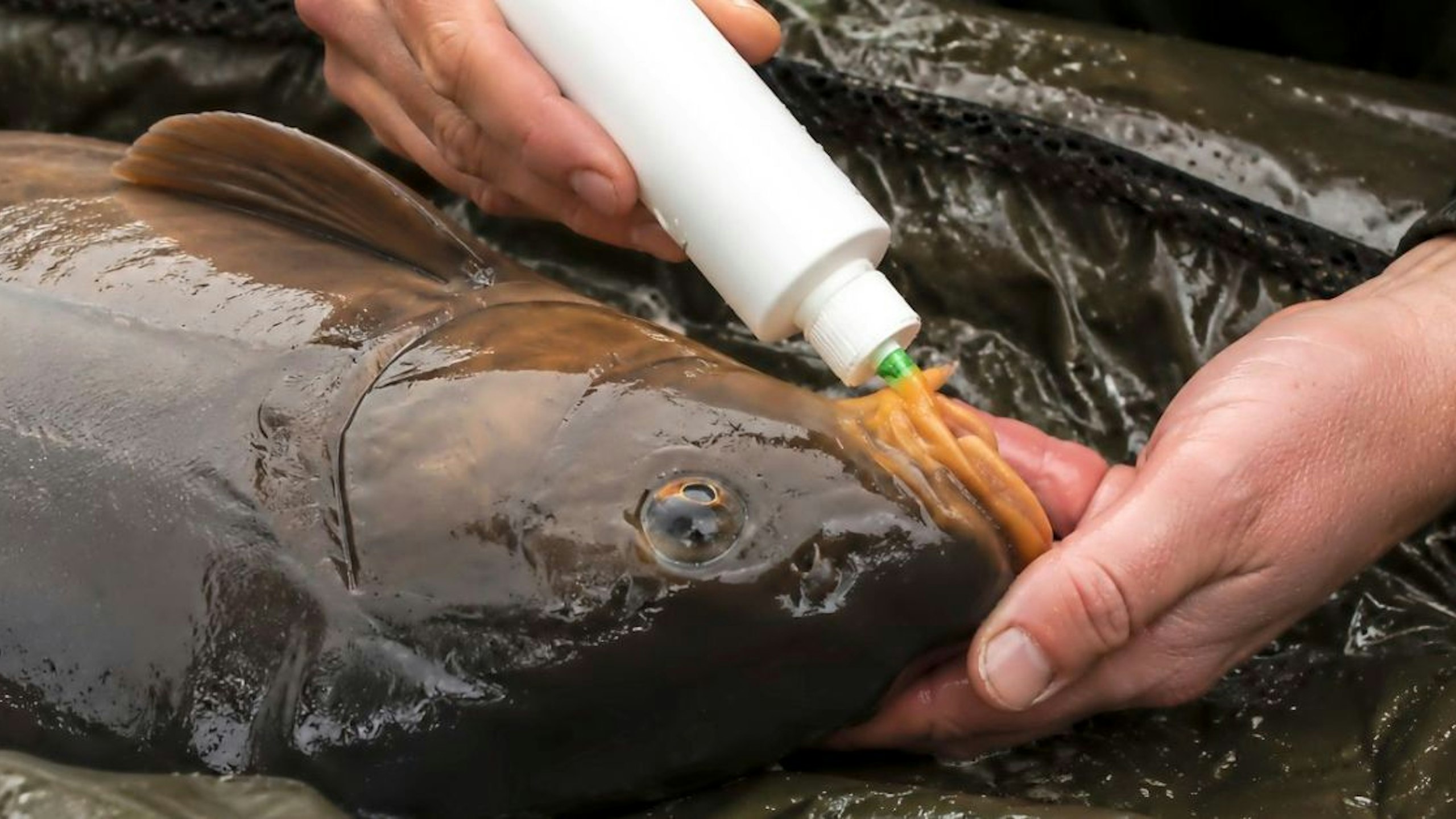
While fishing with his son Jake three years ago, he caught a fish with a wound and wanted to put some sort of treatment on it. But, after digging out a bottle of carp-care solution, Chris saw that it had no label of ingredients and so decided against using it.
That moment inspired Chris to investigate the area, so he spoke to his colleague, Omar Qutachi, also of the Leicester Institute of Pharmaceutical & Health Innovation at De Montfort, and launched a study to gather the first empirical, peer-reviewed data on the topic.
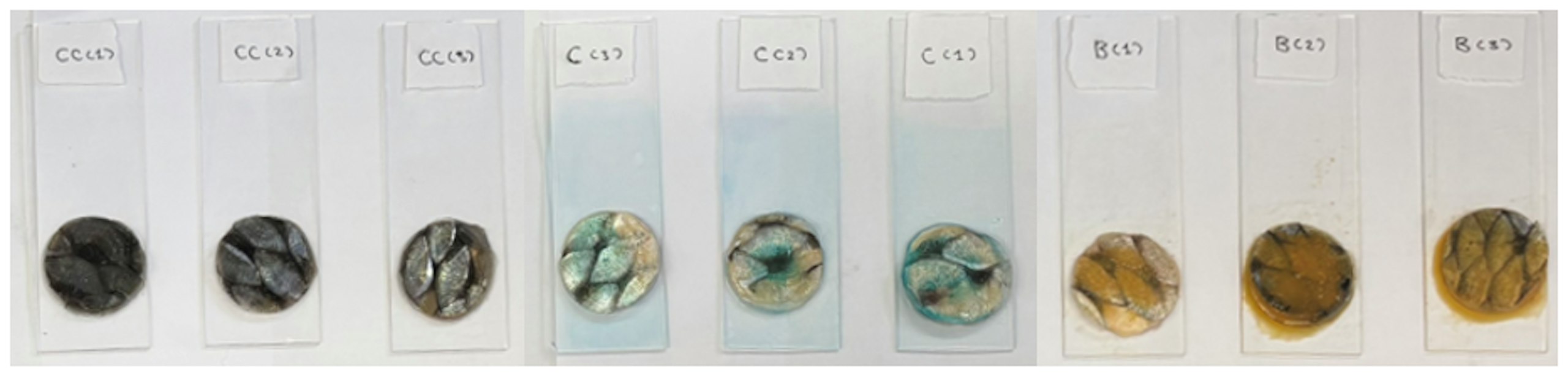
They bought a selection of market-leading products from the angling and koi-carp sector and, with advice from the Institute of Fisheries Management (IFM), designed a test to measure their effectiveness in tackling a panel of pathogens that could be harmful to carp.
The results were shocking but have inspired the team to find an effective and safe solution.
The central issue
“We tested 11 different products, and many showed no anti-microbial effects on relevant carp pathogens,” Chris told Angling Times.
“Some had high inherent toxicity against cyprinid cells, which means that while they didn’t kill bacteria, they did kill fish cells.
“The products also had little submerged wet adhesion, so run off underwater. Some were so highly concentrated, they posed an ecological hazard through overdosing. In summary, most didn’t work, and those that did were massively over-concentrated.”
Propolis is a widely accepted market leader in wound care, but upon testing, the solvents that it and other chemicals were dissolved in were found to be detrimental to fish.
“Ethanol and methanol strip mucin (a primary element in fish slime) and put holes in the skin, which opens it to easy access from pathogens,” Chris added.
“As anglers, we’re trying to do a good thing by using these products, but really, we’re actually invoking harm through too much love.”
Challenging accepted norms
At many fisheries, carp-care products are mandatory, and sometimes we hear examples of fish that have been injured, treated, and then recaught a few years later with healed wounds.
However, Chris was quick to dismiss such apparent ‘evidence’.
He said: “Unfortunately, such observations aren’t robust data. A fish with an identical wound would have to be compared to that of the treated fish to show the carp-care formula’s impact. The likelihood is the fish would have looked better if you hadn’t put the product on.”
Products currently on the market are focussed on killing bacteria and infection, but often these aren’t the key issue for an injured carp, as Chris revealed.
“Carp are hardy creatures that can live in tough conditions. They have a really robust immune system, and in a clean environment, the focus is more on sealing and healing wounds than on infection,” he added.
“I’ve never seen an infected wound on a fish, and even if someone says they have, are they qualified to make the diagnosis? Really, if you think that a fish is infected, it should be kept aside and the fishery boss should contact a vet.
Applying carp-care products like the ones we tested on a wound that likely isn’t infected will delay healing, as they are such concentrated compounds that they’re toxic to fish cells that would be regenerating.”
Not a blame game
Chris and Omar are keen to highlight that, in publishing the results of the study, they do not want to cause panic or point fingers at companies making these products.
“We haven’t tested every compound on the market, but we have done enough to raise the alarm,” Omar said.
“People with good intentions are using these products without knowing that some are toxic to the fish and entire ecosystem. Our intention is not to point fingers at individual products or companies – this isn’t their fault as there is a lack of scientific process here.
“We need to engage with policy makers, regulatory agencies and with legislators and encourage them to work with scientists who know about these materials.”
A solution in the pipeline
Already, Omar and Chris are working with the IFM and Angling Trades Association (ATA) to develop an approved standard with an agreed testing procedure for products.
“We have never had such a standard, but our paper provides one,” Chris said.
“Companies wanted to do a good thing for fishing by creating carp-care products, which are conceptually excellent, but they didn’t have the tools to do it. We are that tool, and have the time, resources and workforce.”
Chris and his team are working on developing a solution, and hopefully something will be available soon to replace the ineffective products on the market.
“We need a phased transition to something better, and I’d encourage brands and fishery owners to contact me if they want advice,” Chris added.
“If they are interested in being part of a quality standard scheme, they should register their interest with the ATA to stay informed on developments.
“I love angling, and on this topic, the industry needs science. By engaging with us, we can move away from unsafe products and improve the situation for the industry.”
Contact Chris by emailing chris.young@dmu.ac.uk.
For the IFM, visit www.ifm.org.uk, and for the ATA, go to www.anglingtradesassociation.com