- Home|
- Advice|
- Tips
How to trigger perch into taking lures
Matt Woods explains how he goes about choosing a lure based on what triggers perch as predators...

by James Furness |
Published on23rd February 2026 at 2.17pm
Follow Angling Times on Google
The mood of a perch can change, not just day by day, but moment by moment. Success with these fish often comes down to understanding what helps to trigger these moods at a particular time.
Those triggers can be broken down into four very simple categories – sight, smell, sound and sensation. Thinking in terms of these senses provides a clear framework for choosing appropriate lures and tactics.
Sight
A perch's eyes are designed to work effectively in coloured water. I have caught them in water the colour of concrete on completely inert lures.
Ned rig baits, for example, don’t vibrate, make noise or give off much scent, but their profile can imitate multiple food sources. Bait profile can often be more important than colour. Matching the shape of available prey is key, particularly on venues with abundant small food items.
Modern warm summers produce huge numbers of fry, while wet winters lead to increased worm activity, making slim, undulating lures effective. Rivers often have banks loaded with blackhead and whitehead worms, and during periods of high water perch will feed right at your feet.
On other waters, perch are present because baitfish are there too – bleak, roach, dace and minnows all play their part. However, in winter perch are less likely to actively hunt and more inclined to feed opportunistically, which is why lures resembling injured or dying prey come into their own.
ALWAYS CHOOSE THE RIGHT LURES FOR PERCH WITH THIS HELPFUL GUIDE...
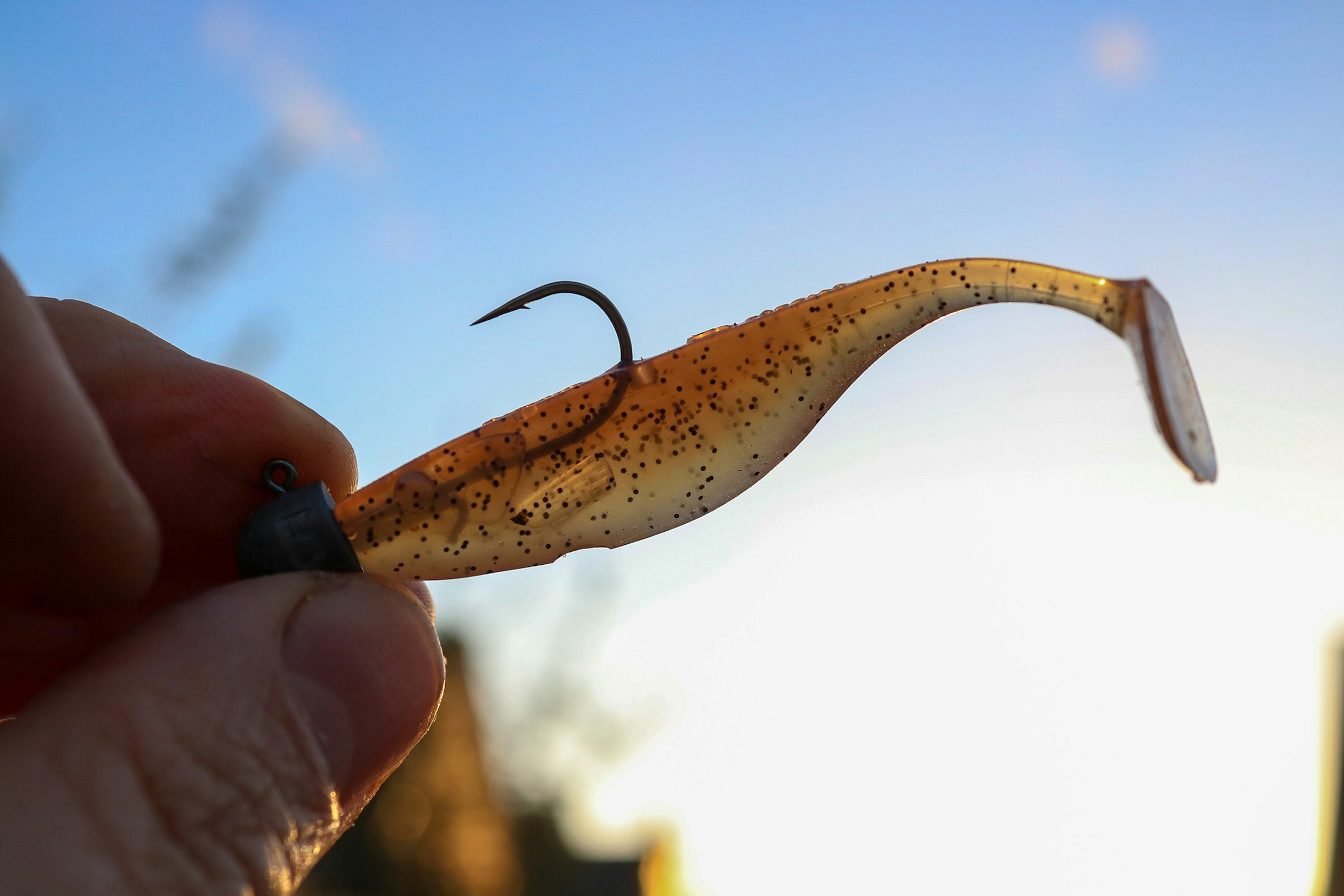
Perch are heavily reliant on sight, so choosing the right colour is paramount!
Size also matters. Are the prey fish long and slim, or short and deep-bodied? When fishing canals, tapered lures with wider shoulders work well because of gudgeon shoals, while other venues demand creature baits to match crayfish.
As for colour, I prefer natural shades, switching between dark, shiny and translucent patterns. I also favour lures that allow light to pass through, as they never look the same on each retrieve. Painted lures can work well in clear water, but in most situations simple, translucent baits give more consistent results. Brighter colours have their place too, particularly in very clear water. Ultimately, perch become accustomed to what they feed on regularly, and water clarity plays a big part.
HEAD TO ONE OF THESE VENUES IF YOU WANT TO CATCH BIG PERCH.
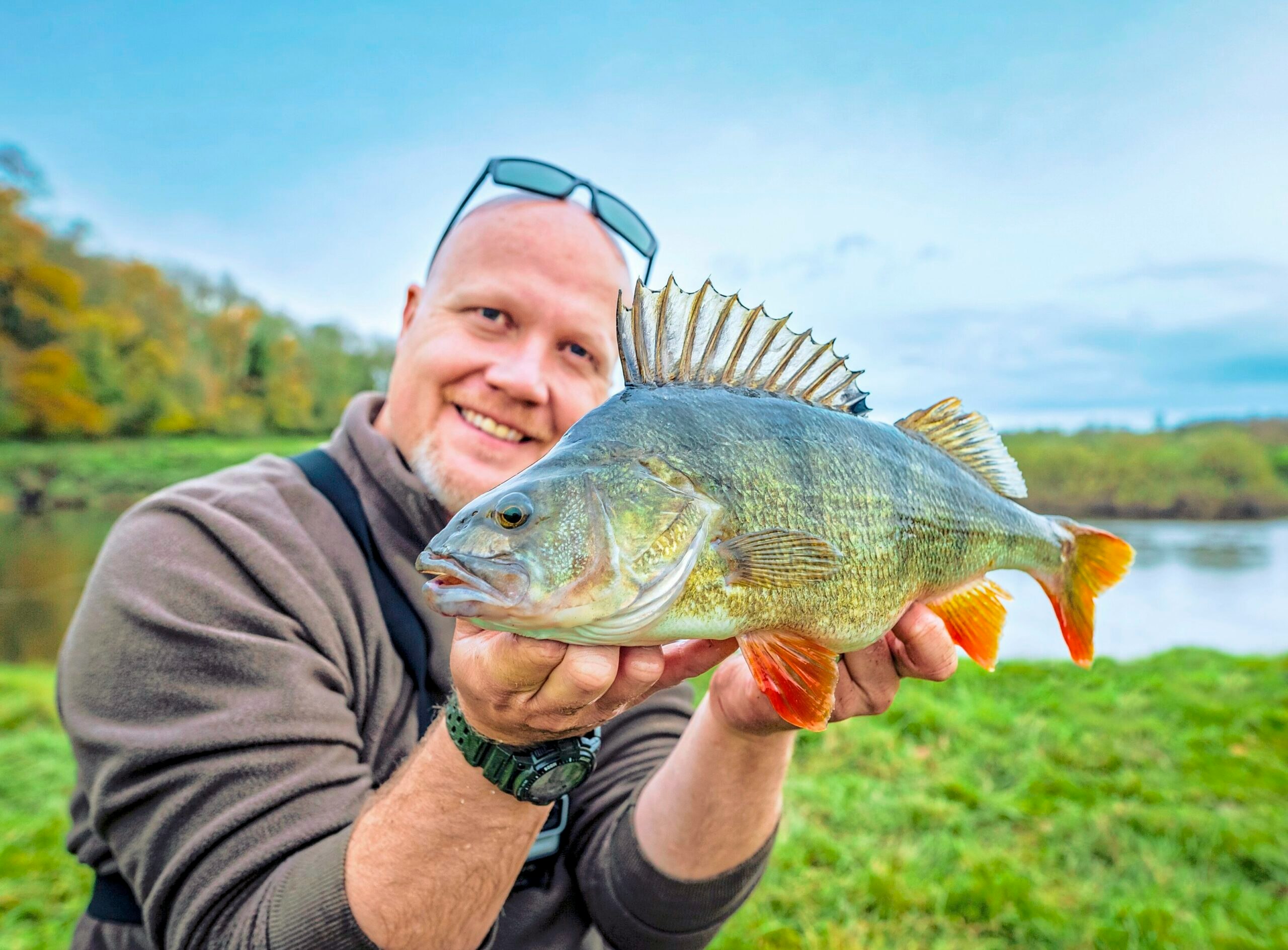
Big perch are always achievable if you get your lure choice right
Smell
I place a lot of faith in scent, especially in coloured or very cold water. I’ve found that the specific smell often matters less than the fact that there is one. I particularly like garlic for perch. They really seem to like it, and attack garlic lures with more aggression.
Equally, there are other attractors like aniseed which seem to work a couple of times, then the fish don’t seem so keen.
I use the scented marker pens a lot to pimp my lures, and swear by them. Many moons ago, perch master Archie Braddock wrote about flavours for perch, and there’s been a lot of research into it across Europe. Ignore scented lures at your peril!
A FLAVOURED LURE WORKED WITH ONE OF THE BEST LURE RODS IS A WINNER!
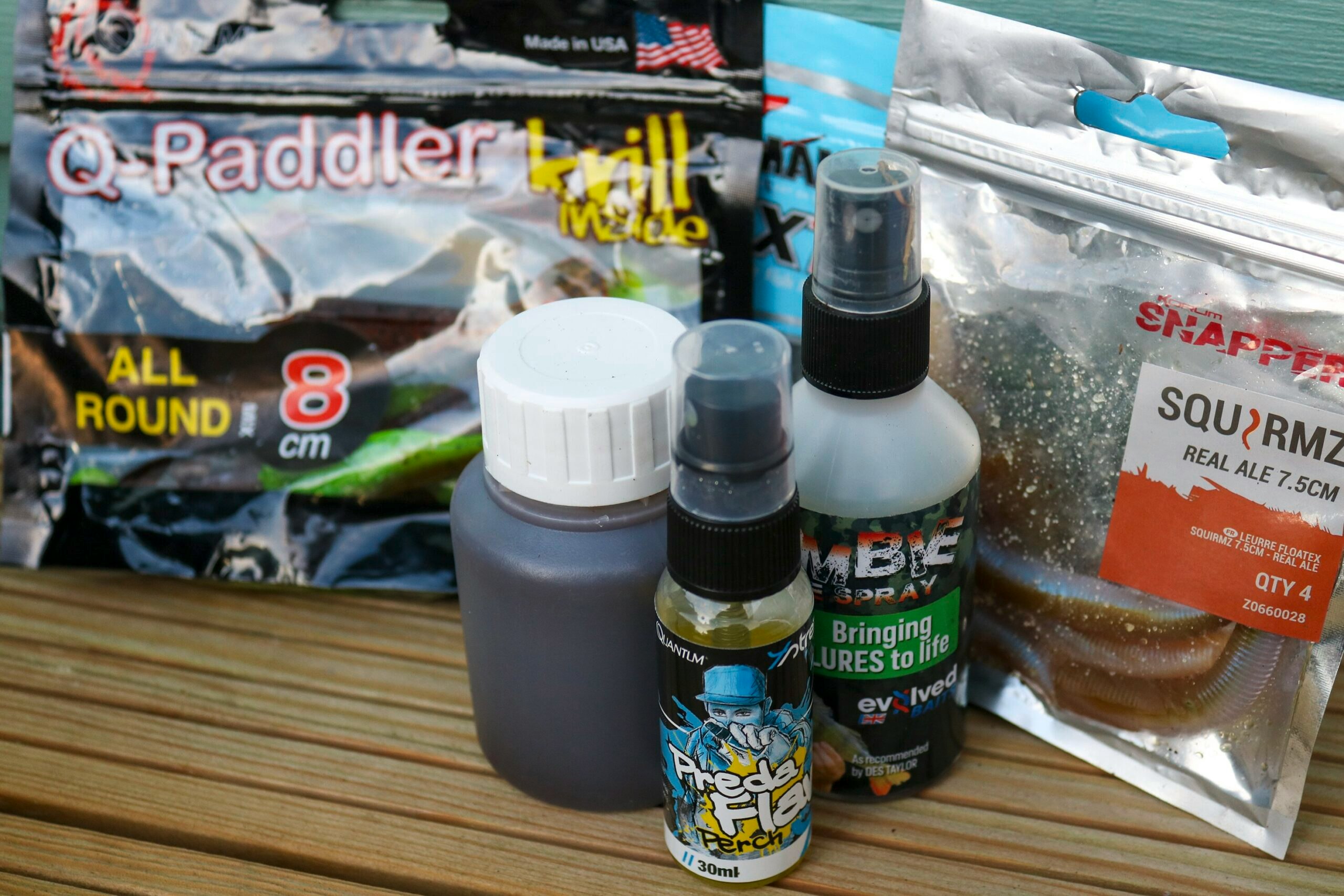
Flavouring lures is something that is very under-rated
Sensation
This is perhaps the most critical of all. Perch detect vibration through their bodies, and success often depends on choosing the right movement of lure at the right time.
Hard baits with tight, fast actions can be deadly one day and ignored the next, while wider rolling actions have their moments too. The same applies to soft baits. Paddle tails, curly tails, pin tails, spoon tails, fork tails and creature baits all displace water differently, creating a wide range of sensations.
Inert lures that move very little water excel on Ned rigs, ideal for slow fishing and ‘annoying a fish into submission’. Pin and fork tails offer subtle movement, while spoon and flat tails waft gently. Curly tails move a lot of water slowly, making them effective in cold conditions. Paddle tails vary enormously, from fast, tight vibrations to wide, rolling actions.
Sometimes it takes a shad to ‘light up’ a shoal and catch aggressive fish before you switch to slower, finesse tactics for more cautious perch.
I carry a wide selection of lures to cover all bases, adjusting to conditions, water clarity and angling pressure. When it comes to perch, there’s no wonder bait or magic solution. It’s a game of chess that can be won with any of the pieces.
WANT TO IMPROVE YOUR LURE FISHING? CHECK OUT OUR HELPFUL GUIDE...
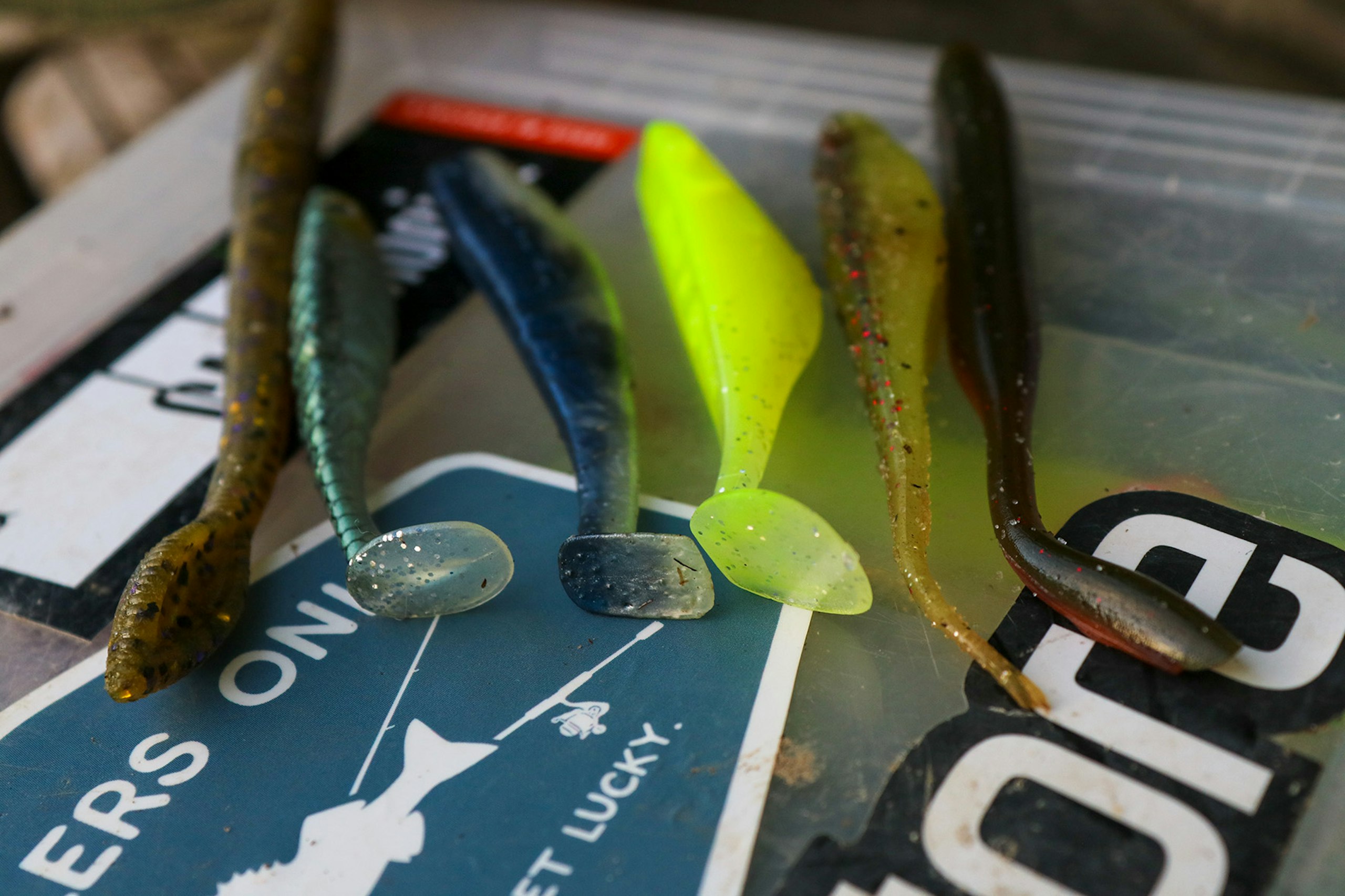
The type of tail will vary the vibrations of the lure
Sound
Sound is often overlooked, yet it plays a significant role. Even a standard jighead makes noise as it taps the bottom, something that becomes especially relevant on pressured waters.
When drop shotting on pressured venues, I often use a round weight and avoid lifting it from the bottom to prevent it spooking fish. While rattling crankbaits and tail-rattled shads can trigger aggressive perch in milder conditions, I believe that subtle, unfamiliar sounds are often more effective.
Texas and Carolina rigs can produce gentle ticking noises, and I often add a glass bead to my drop shot rigs to create a random click on the retrieve. Why it works is unclear, but it consistently draws interest and seems to be something perch don’t easily wise up to. Bead size can be adjusted to vary volume or doubled up to increase noise in places where fish have never encountered the approach.
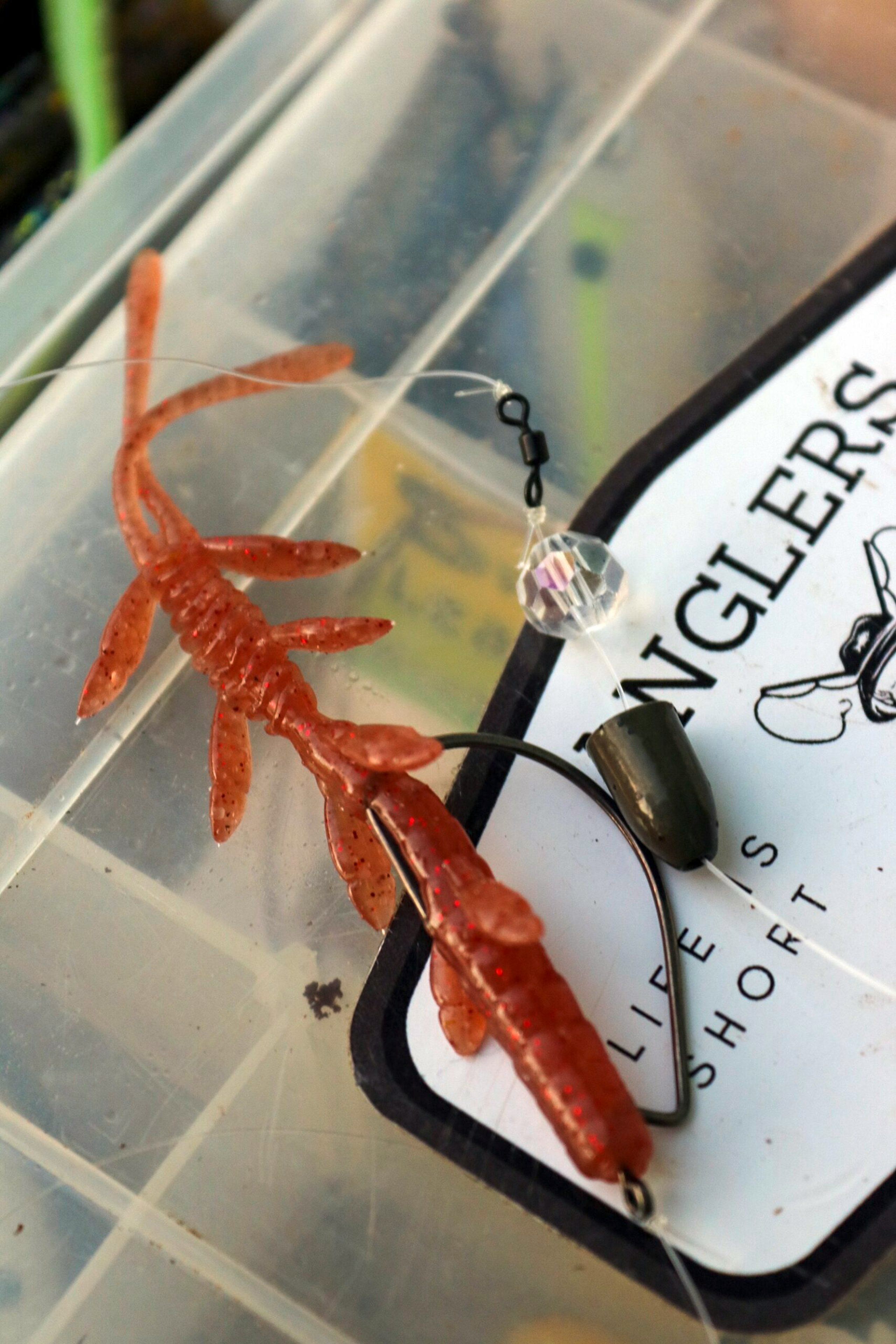
A Carolina rig is ideal for perch
Just so you know, we may receive a commission or other compensation from the links on this website - read why you should trust us