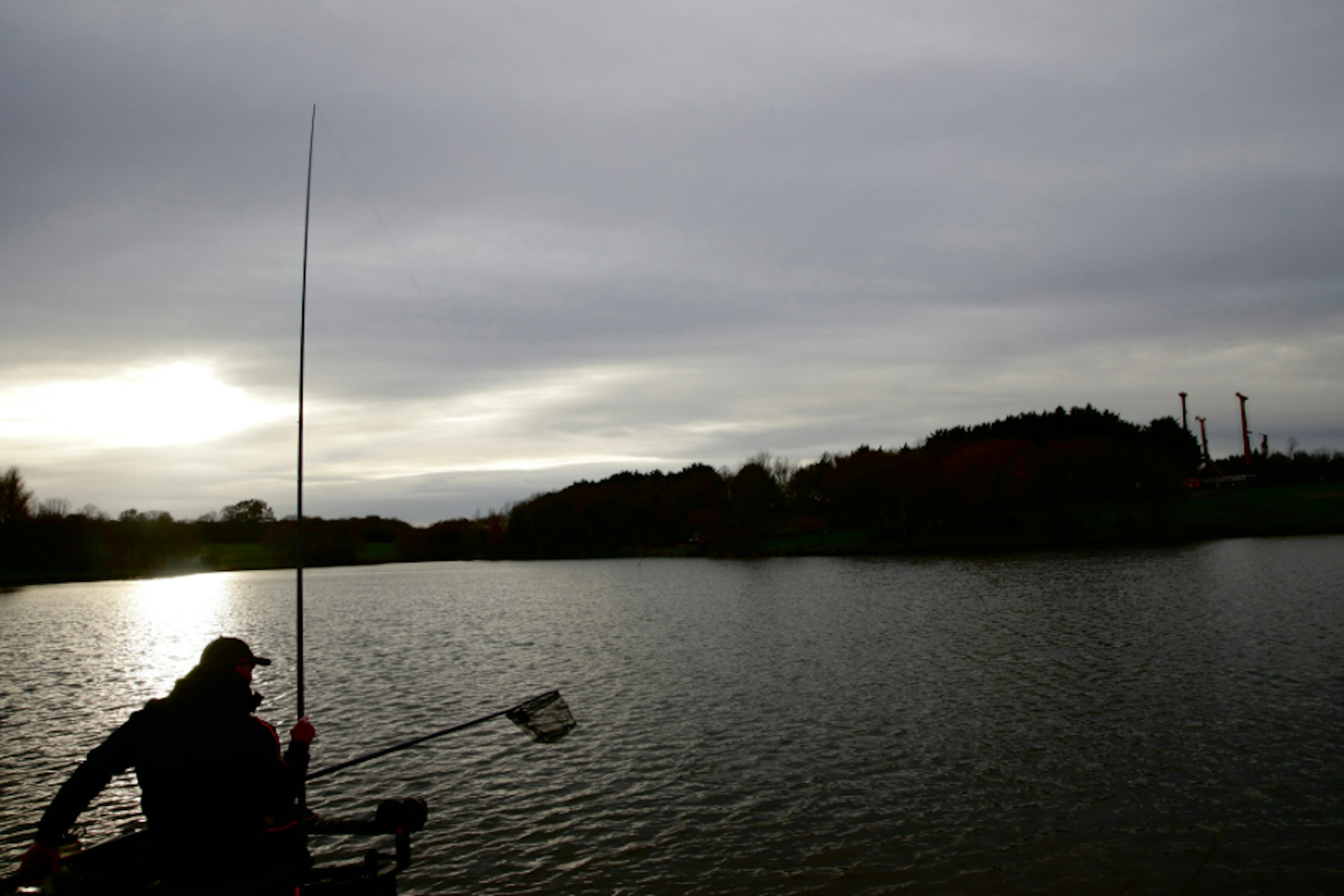
The early stages of winter have already produced a real mixed bag of weather conditions, ranging from unseasonably mild spells right through to bitterly cold periods when daytime temperatures have struggled to get above freezing.
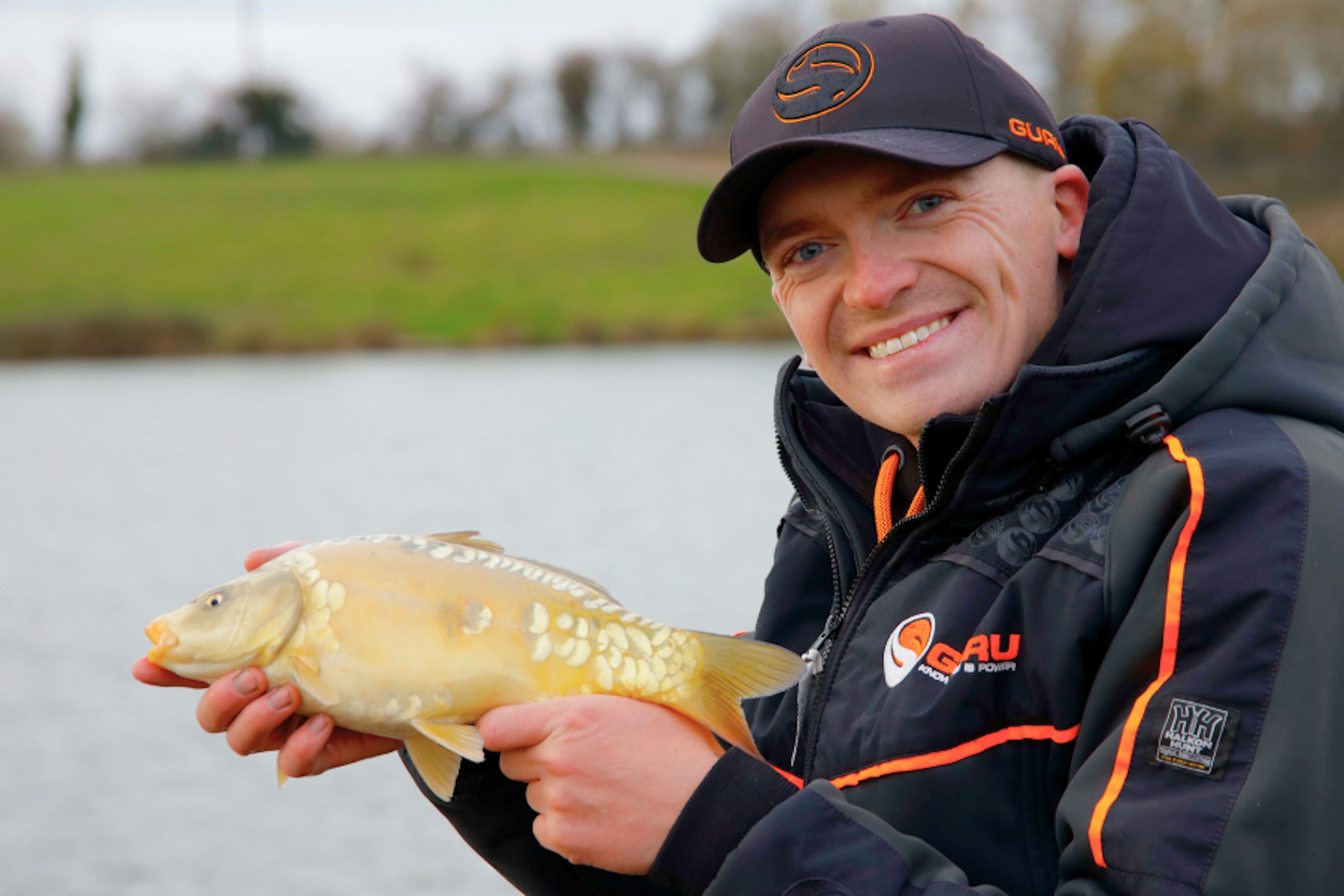
Many anglers would postpone their plans to get out on the bank when faced with an Arctic blast, but Guru’s Brandon George has proved there are bites to be had – even under those challenging conditions.
Push out long
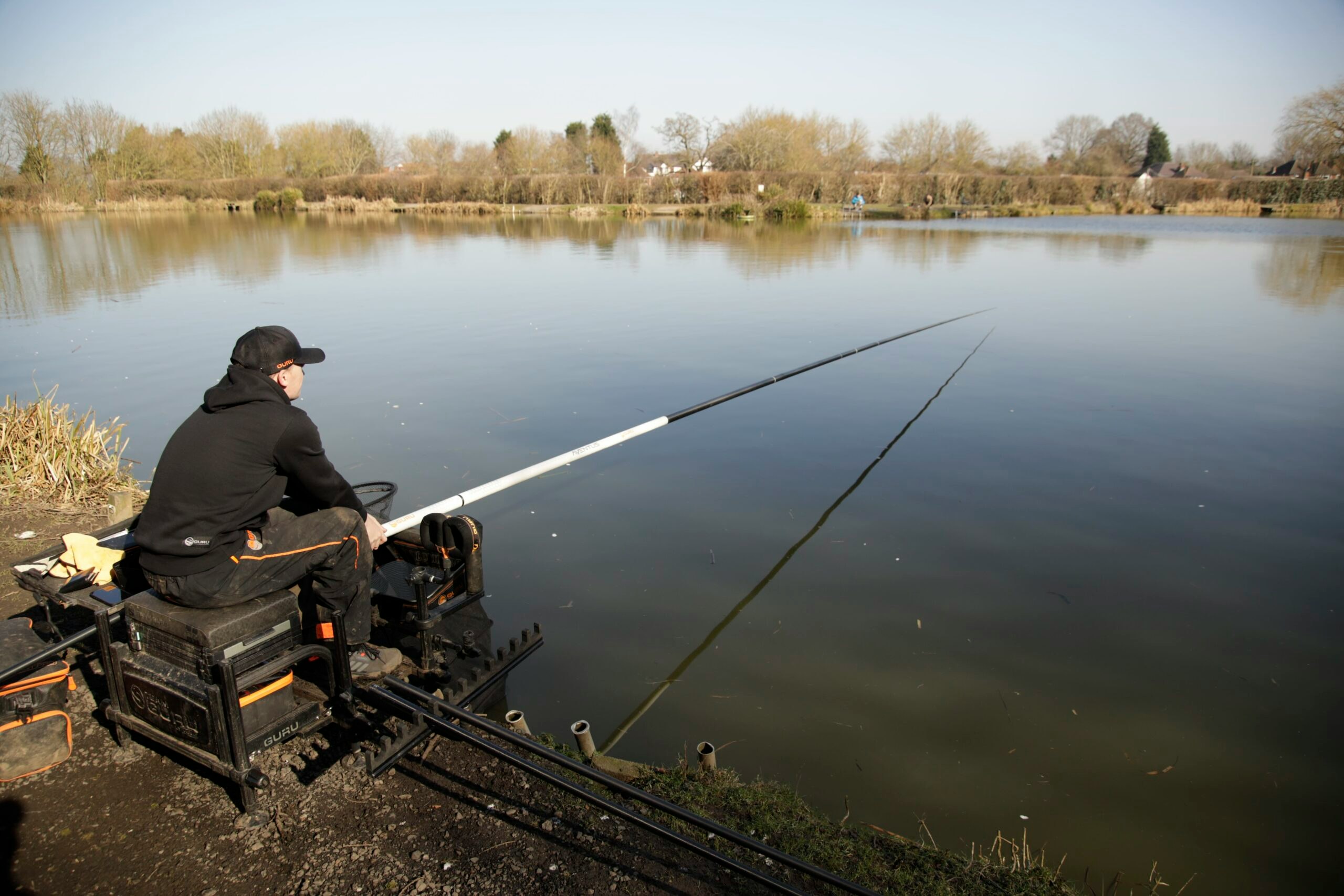
The first thing the fish will do when the water temperature drops rapidly by a few degrees is push out from the bank. Pole fishing gives you the finesse that helps you get bites, but it’s all about starting close to your maximum distance when there is ice on the ground.
That’s because the water is clear and cold, and the shoals will feel most comfortable in the deeper water well beyond the bottom of the marginal slope.
Start the session by fishing a metre short of whatever your maximum is. For example, if you can fish comfortably at 14.5m, then get things underway at 13.5m. This gives you a little leeway to chase the fish out if they back away, while also making sure the early stages of the session still give you some action.
THE BEST FISHING POLES ARE DESIGNED TO FISH LONG.
Create a cloud of attraction
Groundbait plays a big part in your cold-water attack, but you don’t need much of it to generate the reaction you want.
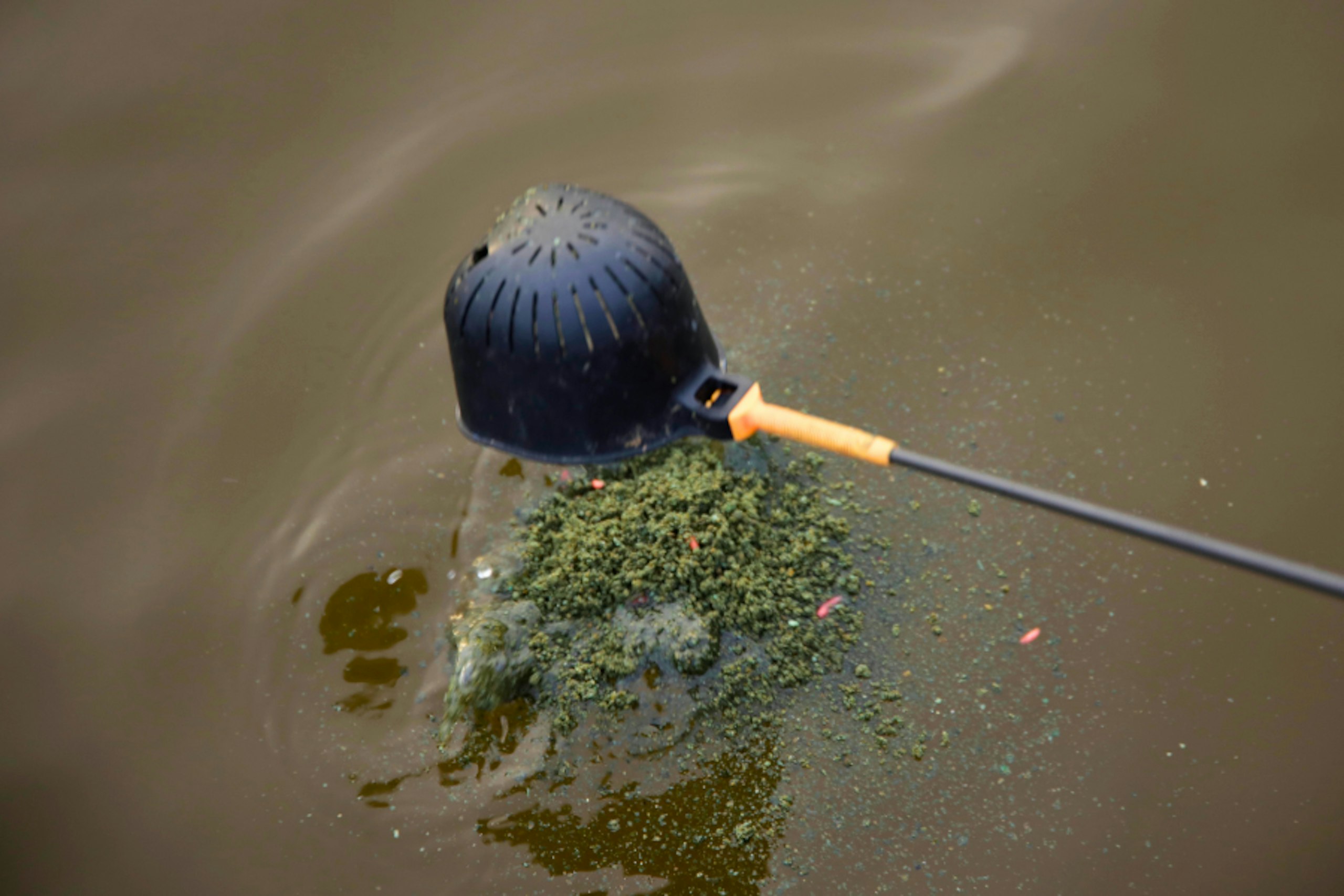
There are two main aims when you use it, and the first is to create a cloud that colours the water up a little. Groundbait also creates a central point for any interested fish to linger on top of.
You should always cup it in loose so that the whole water column benefits from it. You’re fishing in 10ft of water today, and you should still think nothing of introducing feed this way.
A sweet mix with a dark colour works best in these conditions, and you can rely on a blend of Mainline Match F1 Dark and Green Supreme. Two loose cups of 200ml each go in at the start, and you add half a pot if bites dry up and you feel the shoal needs regrouping.
You’re likely to feed half-a-dozen cups at most in these conditions, meaning half a kilogram of groundbait will be ample for the whole session.
LEARN HOW AND WHEN TO USE FISHMEAL GROUNDBAITS IN THIS ARTICLE.
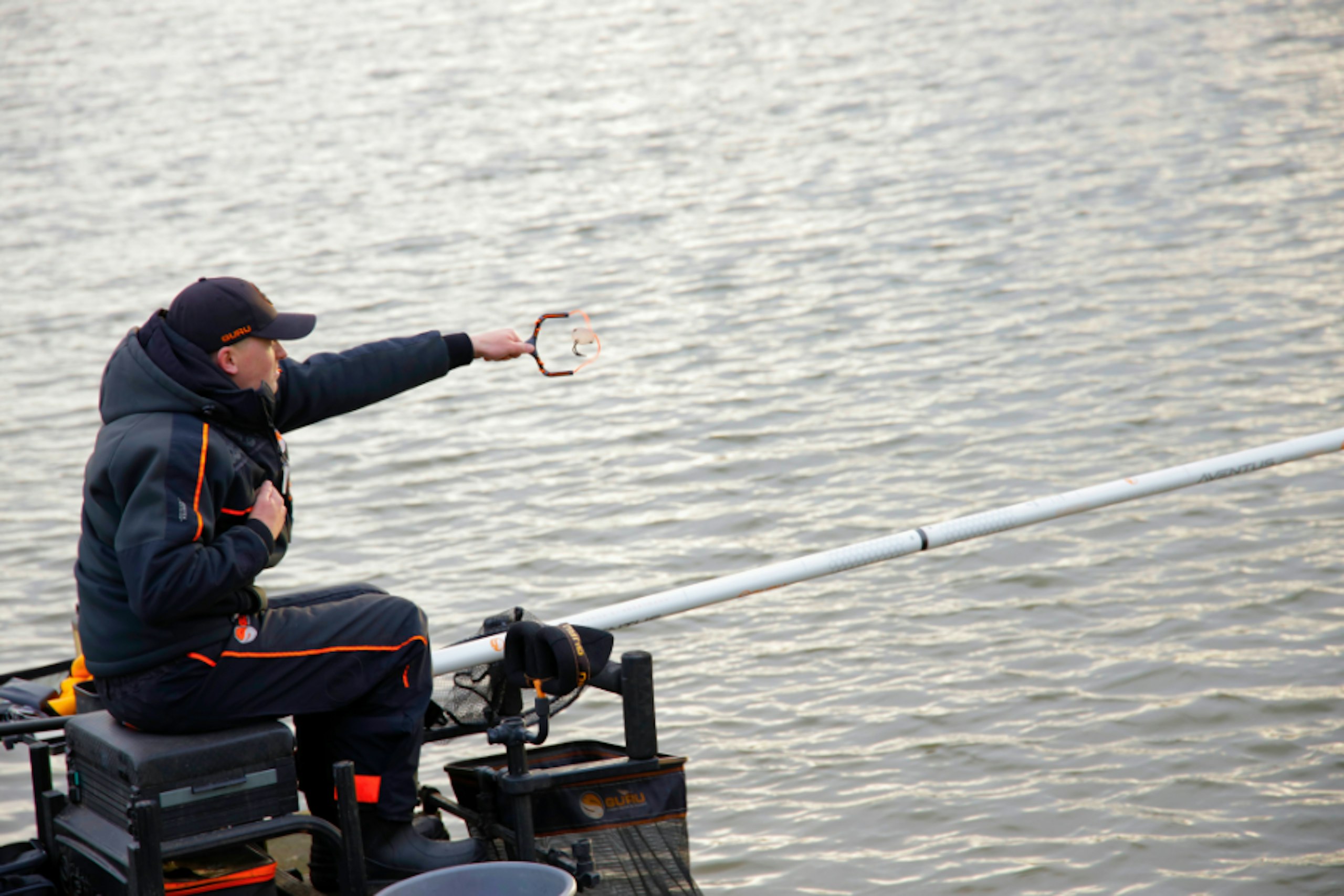
Don’t neglect the catapult
Fish may gradually congregate over your groundbait, but that isn’t enough to stimulate them into feeding in these conditions.
They’ll often sit there and do nothing unless you goad them into having a munch. Feeding five maggots twice in quick succession every five minutes is the way to do this. Maggots have very low feed value, and food falling through the water column is often the trigger that gets fish moving around and showing an interest.
Pinkies can work in the same way, but you should avoid pellets, as these have quite a high food value.
THE BEST FISHING CATAPULTS WILL HELP YOU TO FEED ACCURATELY.
A slow fall is essential
Fish that are going to feed often intercept the offerings either just before they hit bottom or moments afterwards. That’s why loosefeeding maggots quite frequently is important.
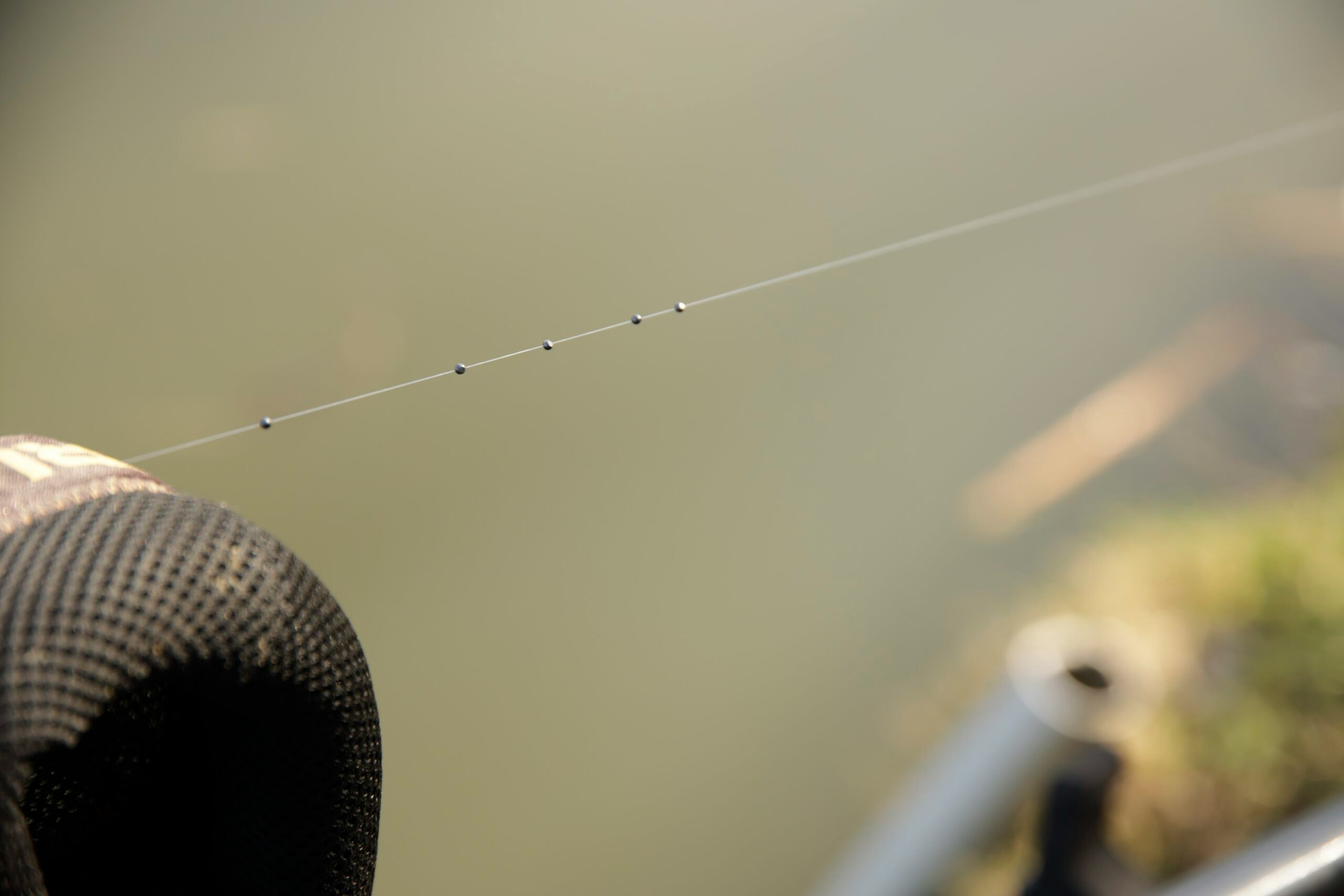
You must get your hookbait to mimic the pace those maggots fall, and that means using the lightest float possible. Using a 0.5g Guru Slim Maggot with a cane bristle and a carbon stem, which offers the ultimate in sensitivity. You still have full control of this in deep water, with any tow and breeze not moving it off the target zone.
This is shotted with a tapered pattern spread 42cm from the hooklength, working upwards, with the gaps getting bigger as you work your way up.
Elastic is a grade six solid and mainline is 0.13mm to a 0.07mm hooklength and a size 16 Guru Fine Wide Gape hook.
That might sound extremely light at the business end but, when you combine it with the soft elastic, you will still land bonus fish on it if you take your time playing them.
IN THIS GUIDE DISCOVER 5 MUST HAVE SILVERFISH POLE RIGS.
Leave it late
Your aim is to tick over in the early and middle stages of the session, since the final hour of the day is often the most prolific.
Light levels start to dip, and the water will have become a fraction warmer, having had the sun on it all day. Both of these are a catalyst for the fish to show more interest in feeding.
Stick to your guns with feeding, though, and don’t be tempted to pile more in.
You may be getting more bites, but that’ll soon change if you start to feed positively at a time when the fish are still only interested in picking off a few morsels.
DISCOVER HOW TARGETING SILVERS ON CARP VENUES CAN WIN MORE MATCHES.