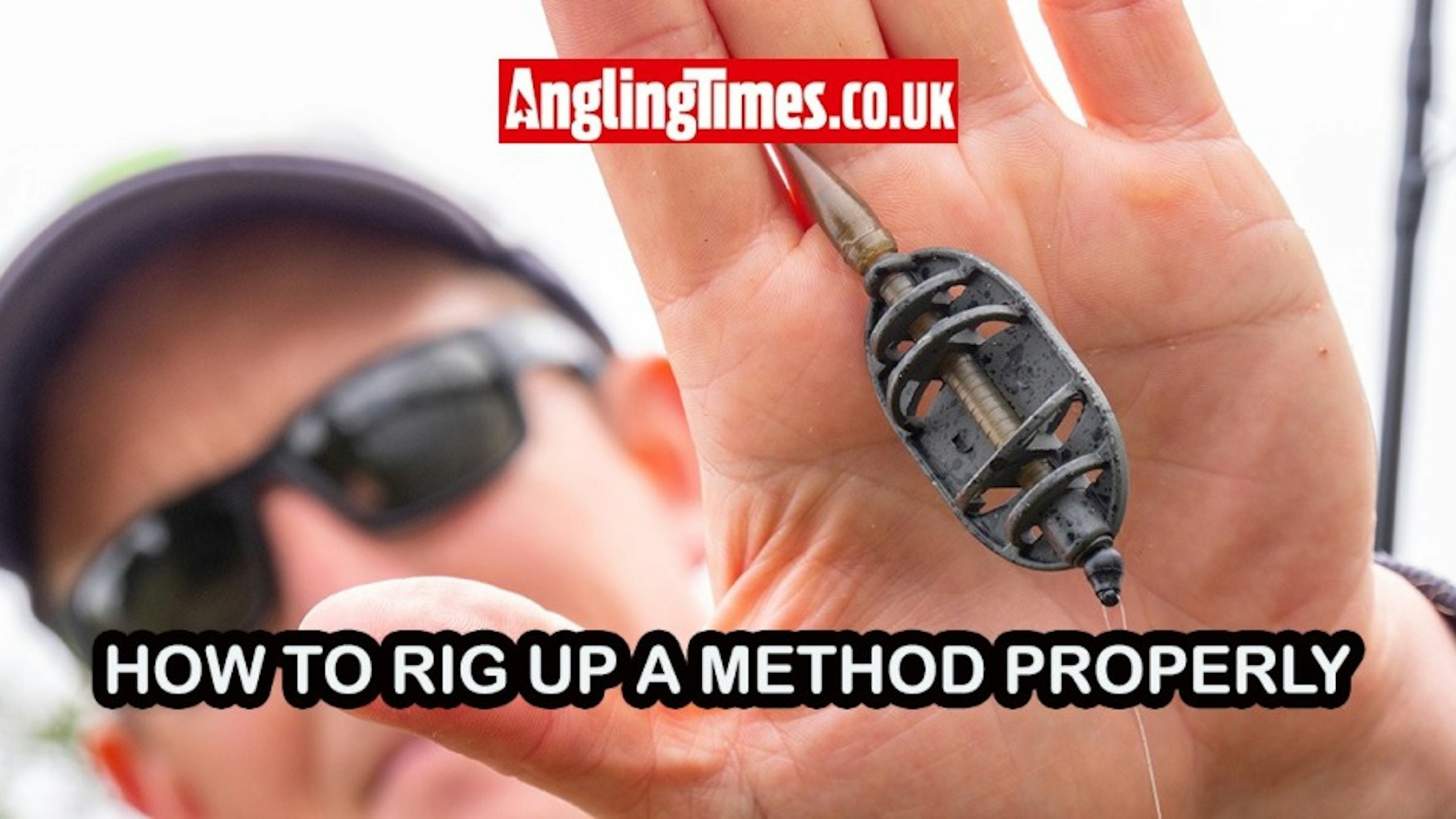
If you fish commercials for carp and F1s, the Method feeder is one of the most reliable tactics you can learn. For beginners especially, it’s simple, tangle-free and very effective.
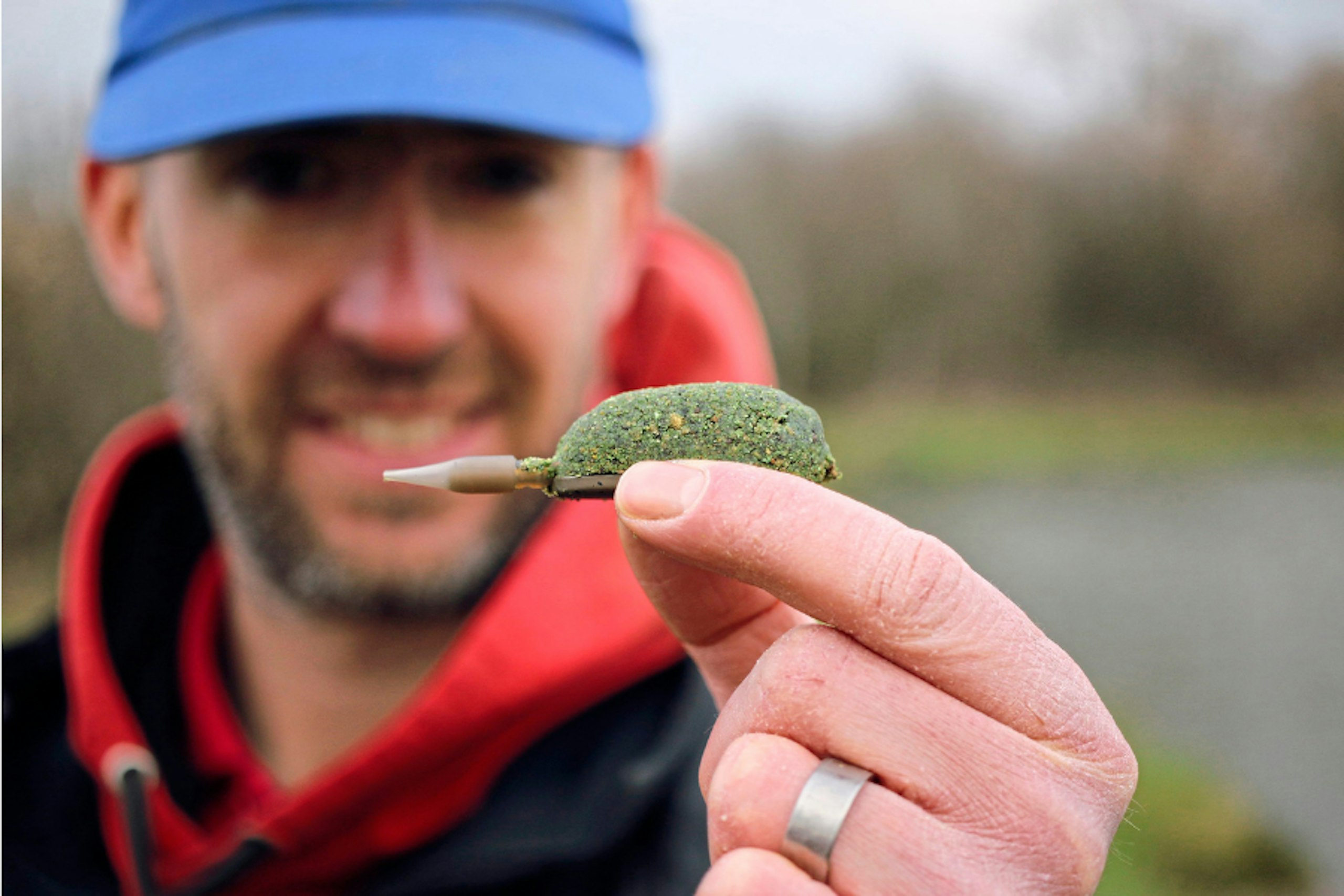
At its most basic, a Method feeder is a flat, weighted feeder that you mould an amount of feed around it. Your hookbait is either buried inside that feed or it can be left hanging outside of it. When the feeder lands on the bottom, it sits flat. The feed begins to break down and your hookbait is left sitting right in the middle of a small pile of attraction.
Fish move in to eat the loose feed and find the hookbait among it. Because of the short hooklength and the weight of the feeder, the rig is largely self-hooking. You are not trying to hit tiny taps on the tip. When a fish moves off, the rod pulls round properly, and you know about it. That simplicity is why it is such a good starting point.
THE BEST SHORT FEEDER RODS ARE GREAT FOR FISHING A METHOD AT SHORT RANGE.
How to set up a Method feeder rig
Most commercial fisheries insist on a free-running set-up, and that suits the Method perfectly.
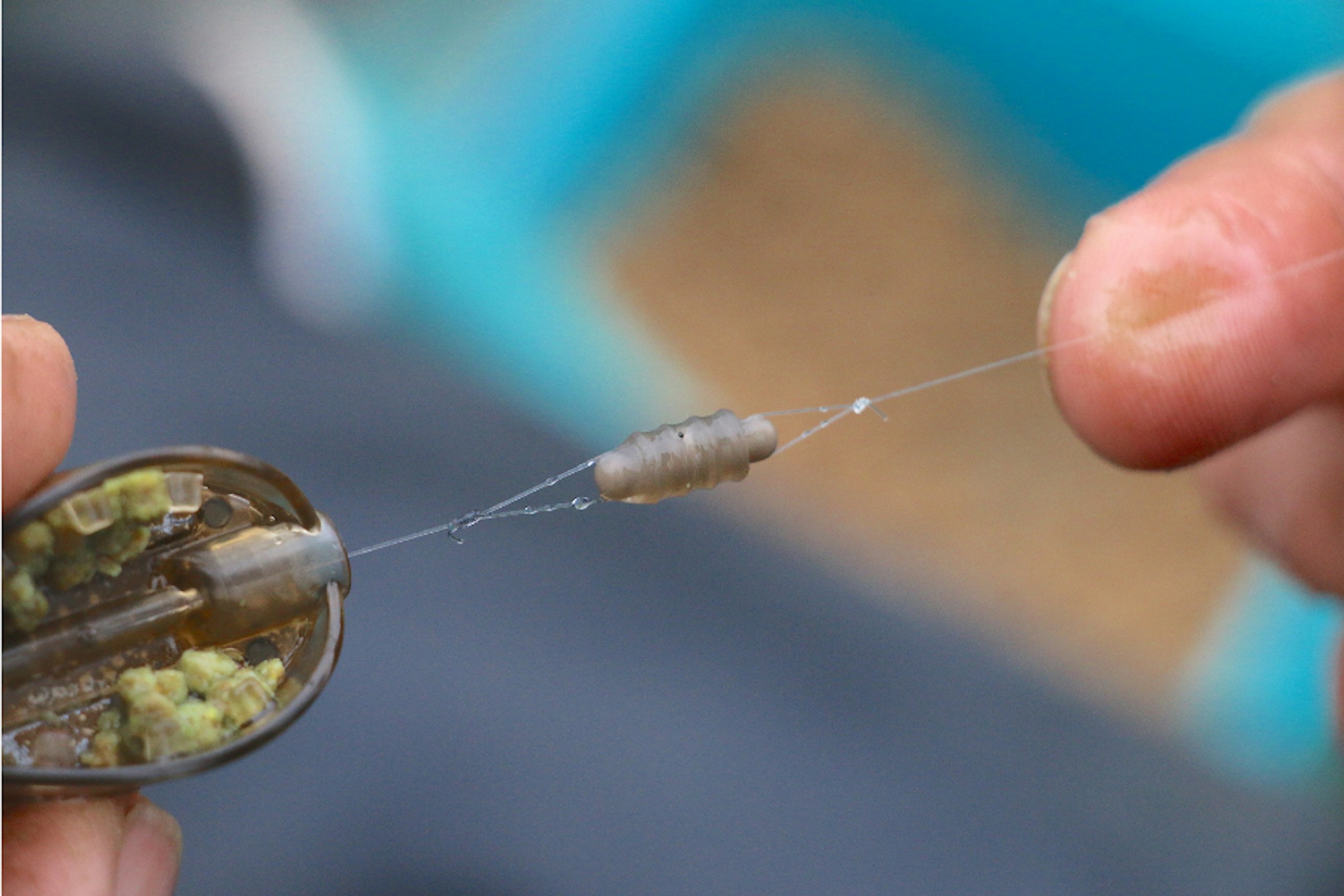
The feeder is threaded onto the mainline, now you attach a quick-change bead (these are often supplied with the feeder) or a hooklength swivel both offers the ability to change hooklength quickly and easily. From that swivel you attach a short hooklength, usually around four inches is ideal but a slightly shorter or longer can often work well if you are getting a lot of aborted takes. The short hooklength keeps everything tight and ensures the fish feels the weight of the feeder almost immediately.
Once tied, you mould your chosen feed around the feeder, this can be done using the palm of your hand, or you can use a mould to make this task easier. A mould also makes the feeder much more aerodynamic for casting.
To use the mould, a common way to do it is to place your hookbait in the mould and fill with your feed, then firmly press the feeder into the mould to create your loaded method, and cast it out. Keep a tight line between rod tip and feeder. As the feed breaks down, the hookbait is exposed and bites are often positive and decisive.
IN THIS BUYERS GUIDE WE LIST OUR PICK OF THE BEST BEGINNER FISHING RODS.
Choosing the right feeder weight
On most commercials, a feeder between 15g and 30g will cover nearly all situations.
At short range on a calm day, a lighter feeder is fine. But you still need enough weight to cast accurately and keep the rig pinned to the bottom so it doesn’t move.
If you are fishing further out, casting into a crosswind, or casting to an island where the bottom slopes away, go heavier. A slightly heavier feeder will grip the slope better and stop it rolling down into deeper water. If it rolls, the presentation is compromised and you can end up fishing away from the feed. You can tell if this happens after the cast when you tighten up and the tip keeps dropping slack as the feeder tumbles down the slope. If that happens, switch to a heavier feeder and cast again.
Accuracy and stability matter more than fishing as light as possible.
IN THIS ARTICLE FIND THE BEST BAITS TO IMPROVE YOUR METHOD FEEDER FISHING.
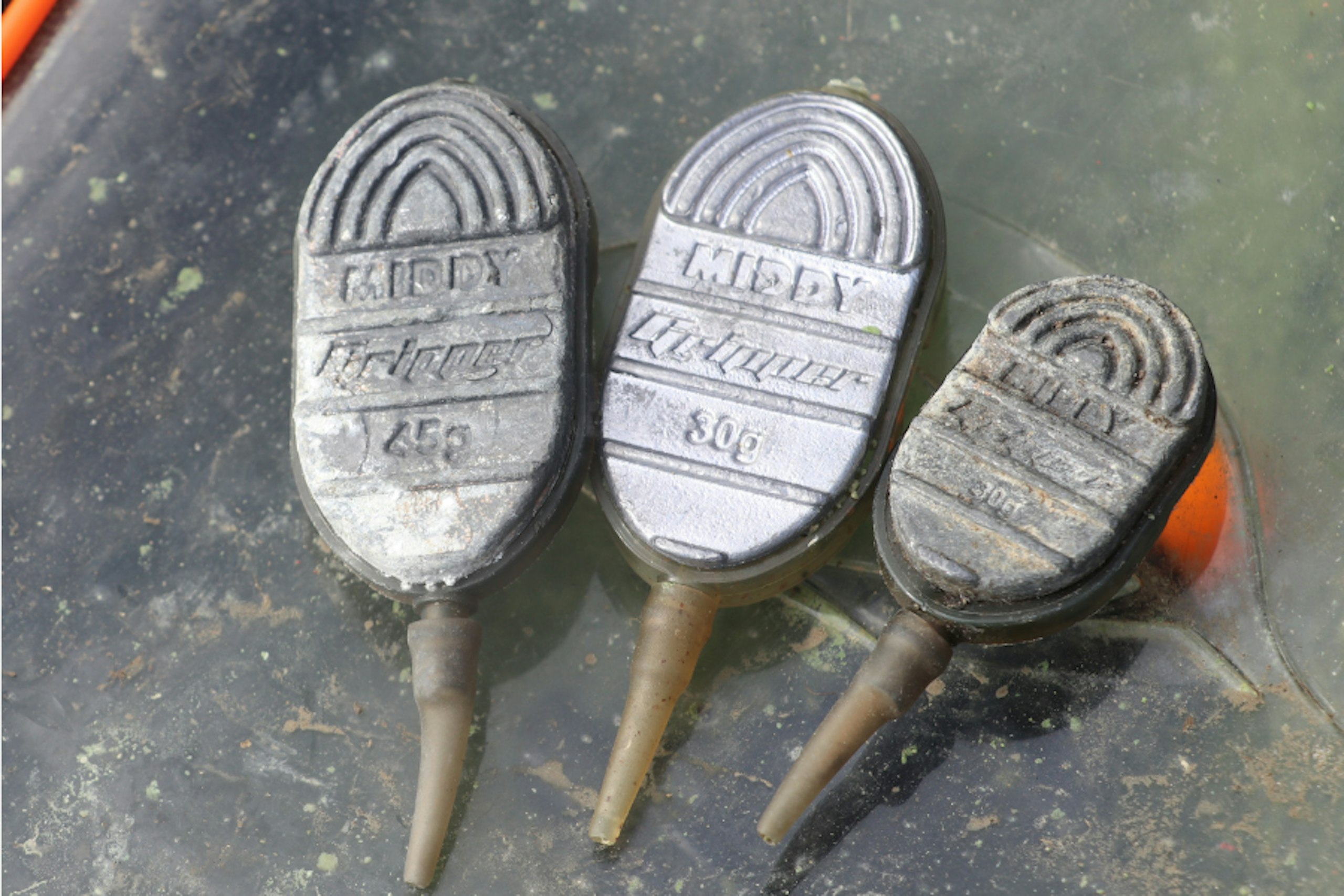
In-line or elasticated?
There are two main types of Method feeder: in-line and elasticated. Both work, but there are differences.
An in-line feeder has the mainline running through the body of the feeder. It is simple, reliable and widely accepted under fishery rules. For beginners, this is usually the best place to start.
Elasticated feeders have a short length of elastic built into the stem. This can help cushion sudden lunges and reduce hook pulls, especially when fish are under the rod tip. The downside is that some fisheries do not allow elasticated models, so always check the rules first.
If in doubt, stick to an in-line Method feeder.
JUST GETTING STARTED? CHECK OUT THIS BEGINNERS GUIDE TO STARTING FISHING.
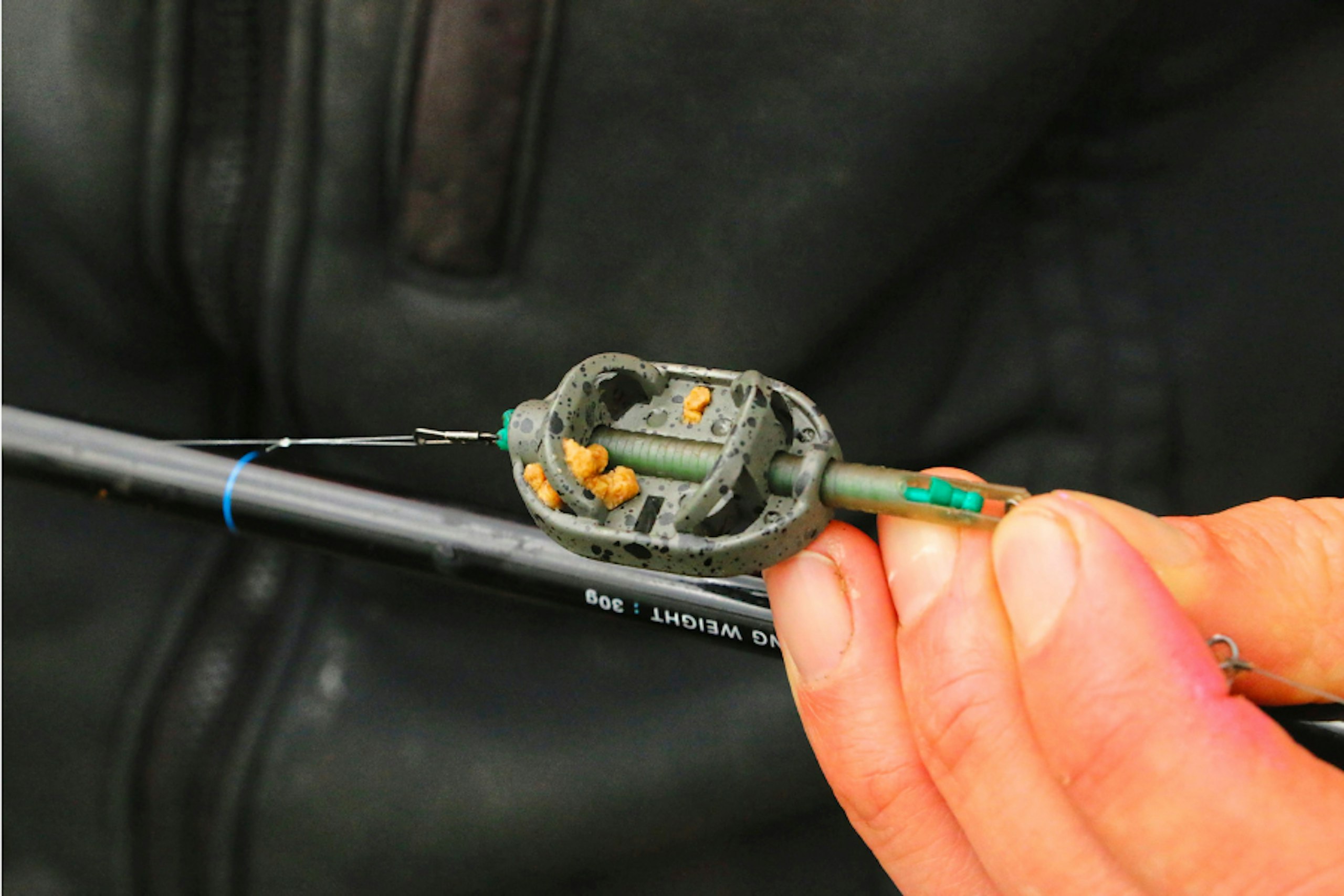
Groundbait, pellets or both?
The Method gives you options when it comes to feed.
A fishmeal groundbait is a strong all-round choice. It breaks down well, creates attraction and is easy to mould. Many anglers mix in a handful of 2mm micro pellets to add a bit more substance. A simple starting point is a 70/30 mix of groundbait and micros.
If you are targeting mainly carp, especially in warmer conditions, prepared micro pellets on their own can be very effective. Properly soaked and rested so they bind, they form a neat, compact ball around the feeder and create a tight dinner plate of feed on the bottom.
In colder water, be careful not to overdo it. You want enough feed to draw fish in, but not so much that you fill them up.
IF YOU LIKE TO FISH FROM A CHAIR THEN CHECK OUT OUR PICK OF THE BEST FISHING CHAIRS.
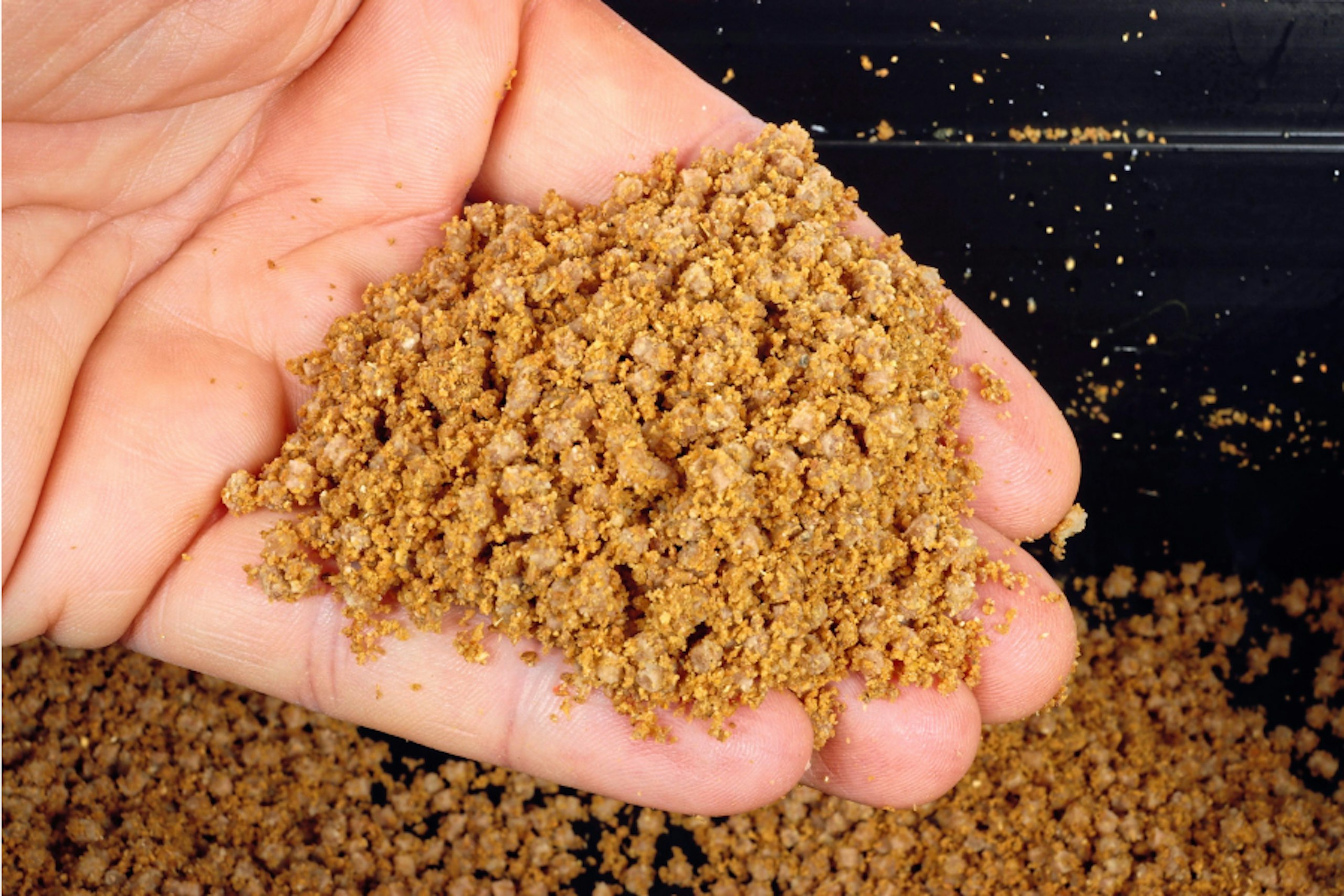
Best hookbaits for the Method
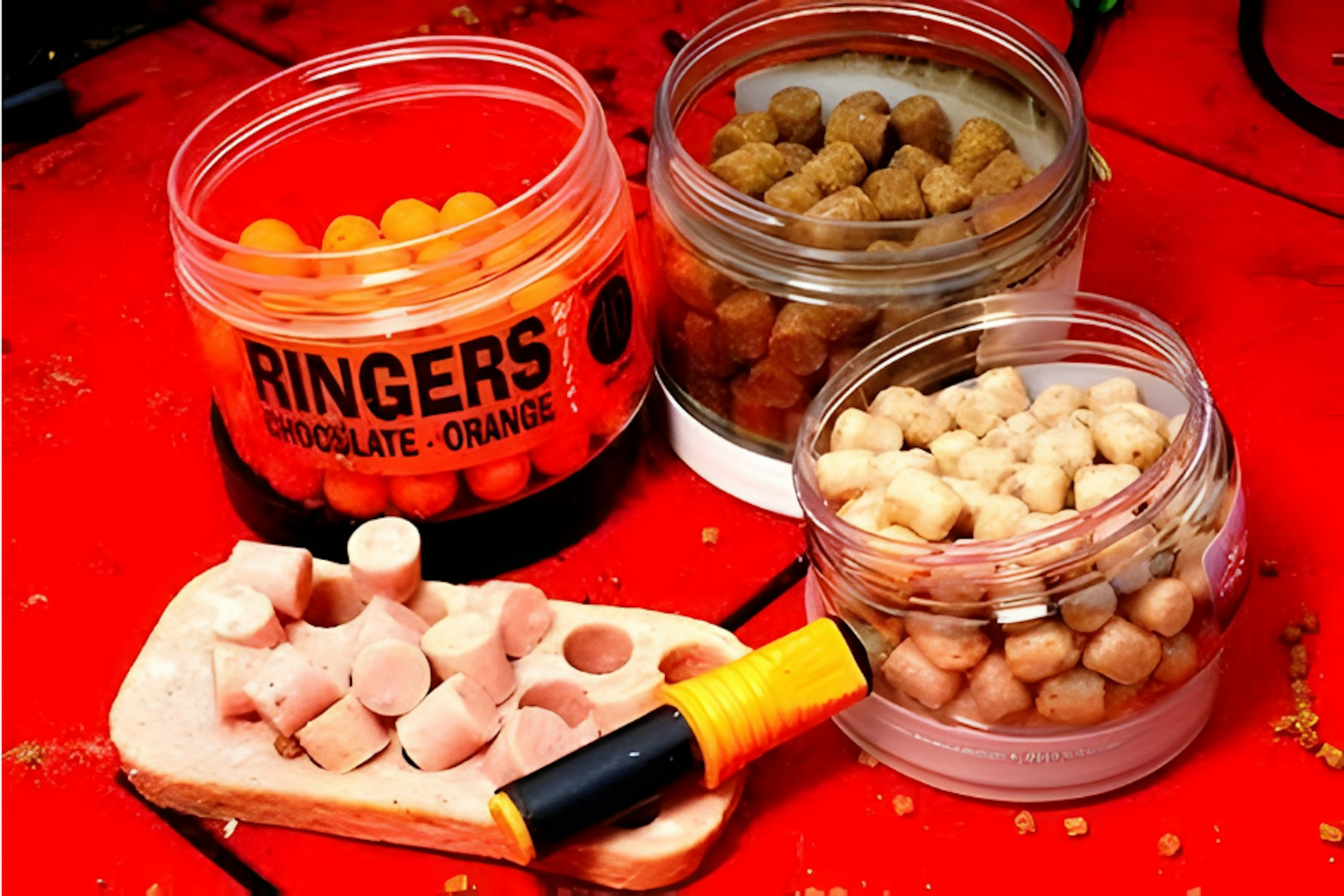
Most anglers opt for a wafter hookbait when method feeder fishing. They’re available in a wide range of sizes and colours, and because they sit lightly hovering over the hook, they are easy for fish to pick up.
But it can often be more productive to match the hookbait to the feed you are using for example if you are using wetted down micros around the feeder a 6mm or 8mm pellet as a hookbait can be highly effective.
Dead maggots, sweetcorn, punched meat and mini boilies can all work too. Start simple, then change one thing at a time until the fish make their preference obvious.
IN THIS ARTILCE I LIST THE 5 THINGS I WOULDN'T GO FEEDER FISHING WITHOUT.