- Home|
- News|
- News Stories
How salmon farming is affecting fishing in Scotland
Wild salmon in Scotland are already under heavy pressure, but is salmon farming adding to the problem?
@Des Taylor
by Jonathan Longden |
Published on17th April 2026 at 11.02am
Follow Angling Times on Google
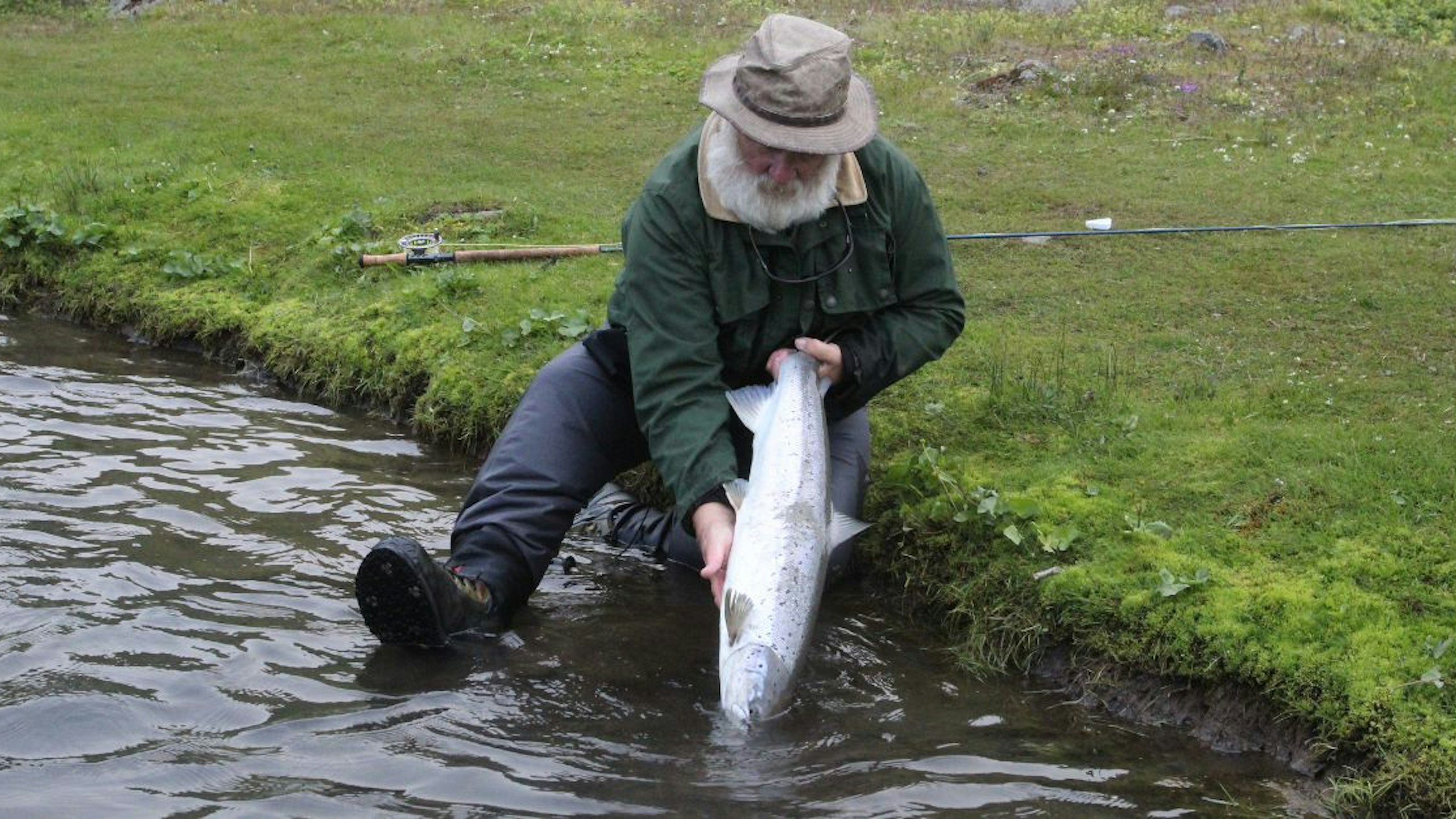
Wild salmon in Scotland are in serious decline. Numbers of retuning fish are down, conservation measures are tightening, and more fisheries are moving to mandatory catch and release. The causes are well known. Habitat loss, barriers to migration, climate change and poor marine survival all play a part.
But on the west coast and around the islands of Scotland, where fish farms sit in the same waters used by migrating salmon and inshore-feeding sea trout, another question keeps arising. Is salmon farming adding pressure to fish stocks that are already vulnerable?
Where fish farms and wild fish collide
Scotland’s salmon farming is concentrated in sea lochs and coastal waters on the west coast and in island groups. These are the same areas that wild salmon smolts must pass through on their way to sea, and where sea trout spend much of their lives.
That overlap is where the concern lies. It is not just about the farms. It’s about what happens when farmed fish and wild fish share the same water at critical points in the wild fish’s life cycle.
The Scottish Government’s latest assessment for the 2026 angling season classifies 66% of salmon stocks as being in poor conservation status, while only 18% are in good status. When stocks are already at that level, the question is not whether farming is the biggest issue, it’s about whether it’s adding an avoidable one.
The lice pressure
Open-net farms create conditions where lice can build up, and the Scottish Environment Protection Agency (SEPA) is explicit that farms can elevate lice levels and increase risks to wild salmon growth and survival. For smolts moving through farmed areas, that exposure comes at one of the most vulnerable points in their life cycle. Sea trout are even more exposed, simply because they spend far longer in the same inshore waters.
Salmon Scotland’s technical director Dr Iain Berrill said lice are kept at “very low levels” across the sector and that, if there is an impact on wild fish, it is “small compared with the wider pressures on wild salmon”.
That is where the disagreement lies. Nobody is arguing salmon farming is the only pressure. The question is whether its making things worse in the places where wild fish are already most at risk.
What fish farms are putting into the water
Modern salmon farming relies on a mix of treatments. These include emamectin benzoate, a medicine that is added to feed, and bath treatments such as azamethiphos, deltamethrin and hydrogen peroxide. They are regulated, but that does not mean they are leaving no mark.
A peer-reviewed study published in Science of the Total Environment in 2019 surveyed eight fish farms in the Shetland Isles and found emamectin benzoate present in 97% of seabed sediment samples. The strongest negative effects were recorded on crustacean abundance and species richness. SEPA’s own survey work has also documented benthic impacts and sea-lice medicines in sediments around farms.
For anglers, this is important as fish farming does not operate in isolation from the wider environment through which wild fish migrate. The seabed, the inshore waters and the rivers connected to them are all part of the same system.
SEPA data, corroborated by reporting in The Times in March 2026 said Scottish salmon farms discharged more than 48 tonnes of formaldehyde in 2025, around 40% higher than the previous year and part of a five-year total approaching 176 tonnes.
UK government guidance notes that formaldehyde is classified as carcinogenic to humans. That does not automatically define the risk at the point of discharge, but it does make the sustainability argument harder to keep simple when a chemical with that profile is being used at that scale.
Formaldehyde is used during the freshwater phase of salmon production to treat fungal infections. Many of those freshwater farms sit in Highland lochs draining into rivers, which is why the discharge point matters just as much as the total.
Asked about treatments and their environmental impact, Dr Berrill said the focus is on prevention and that medicines are used as a last resort under strict regulatory control.
What the mortality figures show
Scottish data shows repeated seasonal spikes in mortality. Dr Berrill acknowledged “real environmental and biological challenges” but said the figures do not indicate a consistent, sector-wide problem of persistently high mortality.
He also argued that comparisons with other livestock can be misleading, noting that salmon “produce thousands of eggs, and in the wild only a small number survive to adulthood. That does not reduce our responsibility to improve survival on farms”.
Losses are part of any farming system. At this scale, though, they are also a sign that the biological pressures, from lice to disease and environmental stress, are not fully under control. The measures used to manage those pressures are the same ones raising wider questions around chemical use and environmental impact.
Why this matters to anglers
Salmon Scotland points to £1 billion invested between 2018 and 2024 in welfare, monitoring and infrastructure. The sector publishes monthly mortality data for every marine farm. Dr Berrill has also backed calls for a full parliamentary inquiry into wild salmon management.
But investment in a problem and resolution of it are not the same thing. Transparency about mortality does not bring mortality down. And a wider inquiry, while sensible enough, is not an answer to the specific questions around lice pressure, treatments and local environmental impact.
For anglers fishing west coast rivers, sea lochs and inshore coastal area, the issue is about what is in the water, what is happening to the sediments, and whether fish are being put under more pressure by an industry operating in the same environment.
The evidence doesn’t say salmon farming is the whole story, and it would be wrong to pretend otherwise. But in waters where wild fish are already under heavy pressure, it is becoming harder to argue that farming is not part of the picture. Anglers are right to keep asking where that pressure begins, and how much more these fish can take.
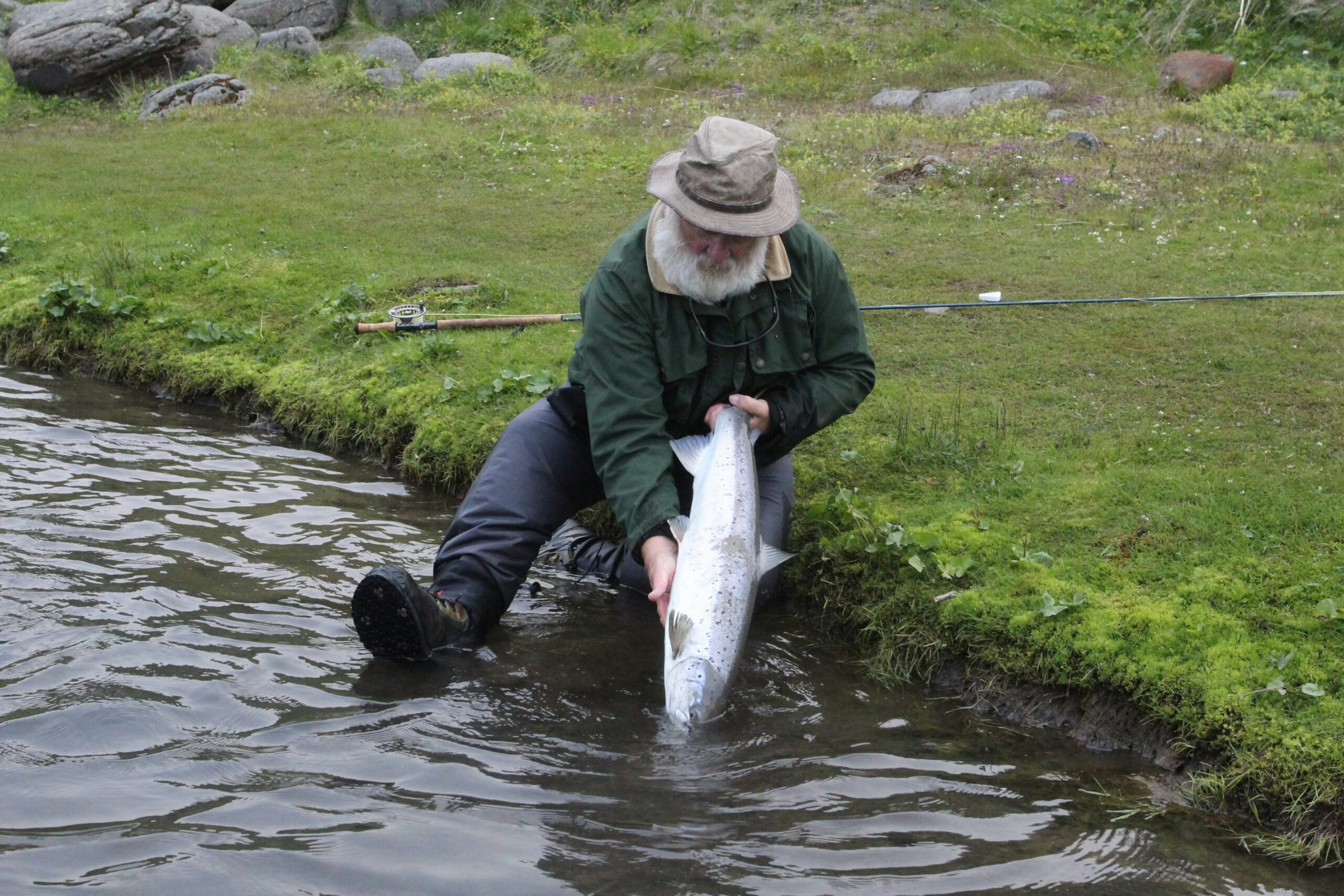
Hopefully Atlantic salmon stocks can comeback
Just so you know, we may receive a commission or other compensation from the links on this website - read why you should trust us