When it comes to how float and feeder rods are rated, there is no real industry standard. Whereas carp rods and most specimen rods are rated by their test curve in pounds – the amount of weight required to bend the tip ninety degrees to the butt – the rods used by match and pleasure anglers are often given a rating in grams.
Some companies call this a ‘casting weight’, others a ‘maximum casting weight’, some an ‘ideal casting weight’ while still more print a figure which generally provides little idea to what it relates to. Some rods might not have any figure at all or, instead, give a line rating or a label such as ‘carp feeder’ or ‘medium feeder’. To make things even more tricky, some manufacturers even choose different systems for different ranges of their own rods.
For the customer, this is a real headache, as other than giving it a waggle or asking a mate to hang to the end while you bend it, you don’t really know how powerful a rod is until you get it on the bank.
This is where NuFish is trying to change things. The company started the process of designing its own rods a couple of years ago, using consultants and sponsored anglers who knew what they wanted, but had no way of accurately describing it to each other or to a CAD design team.
The butt tip curve
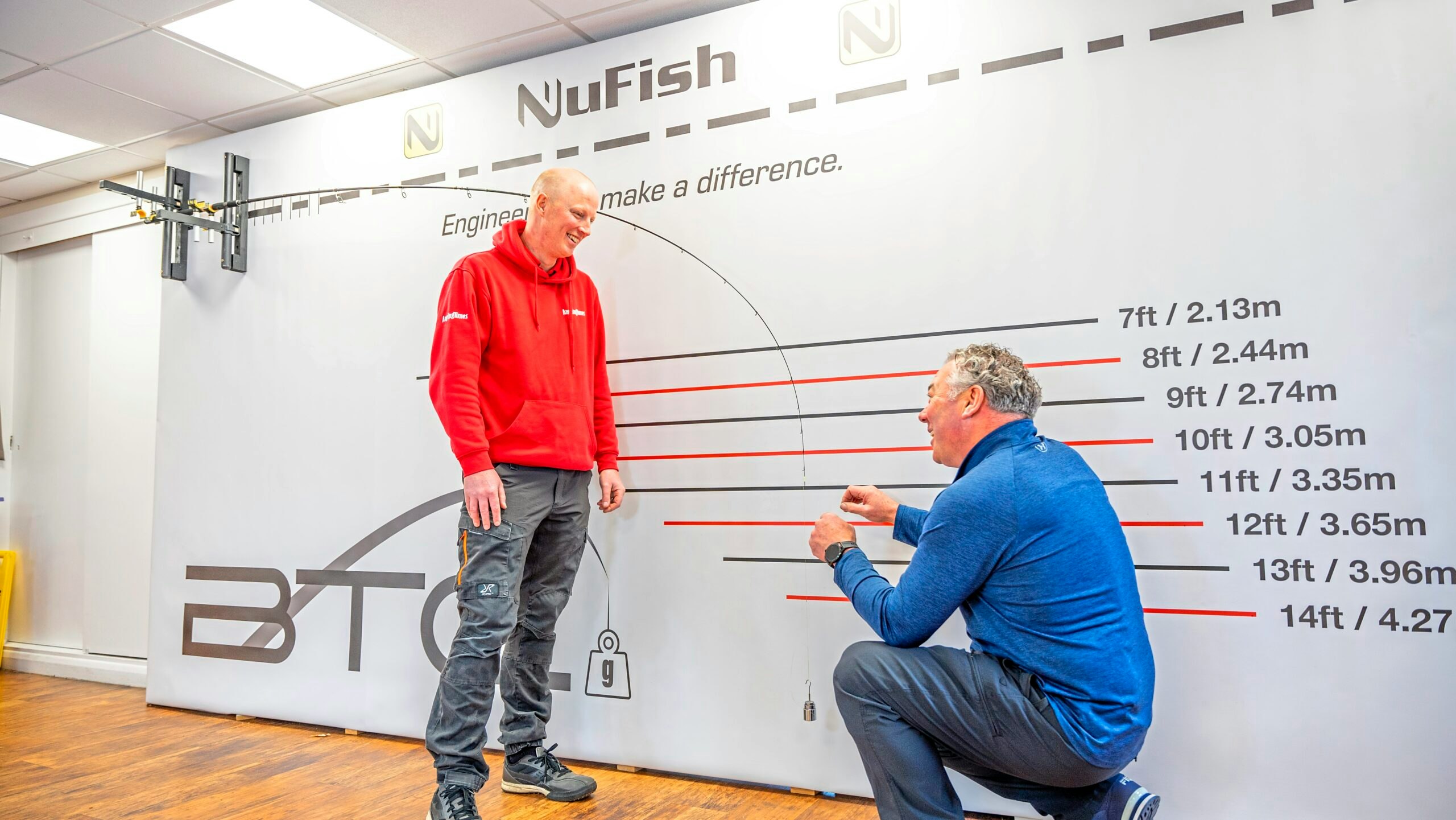
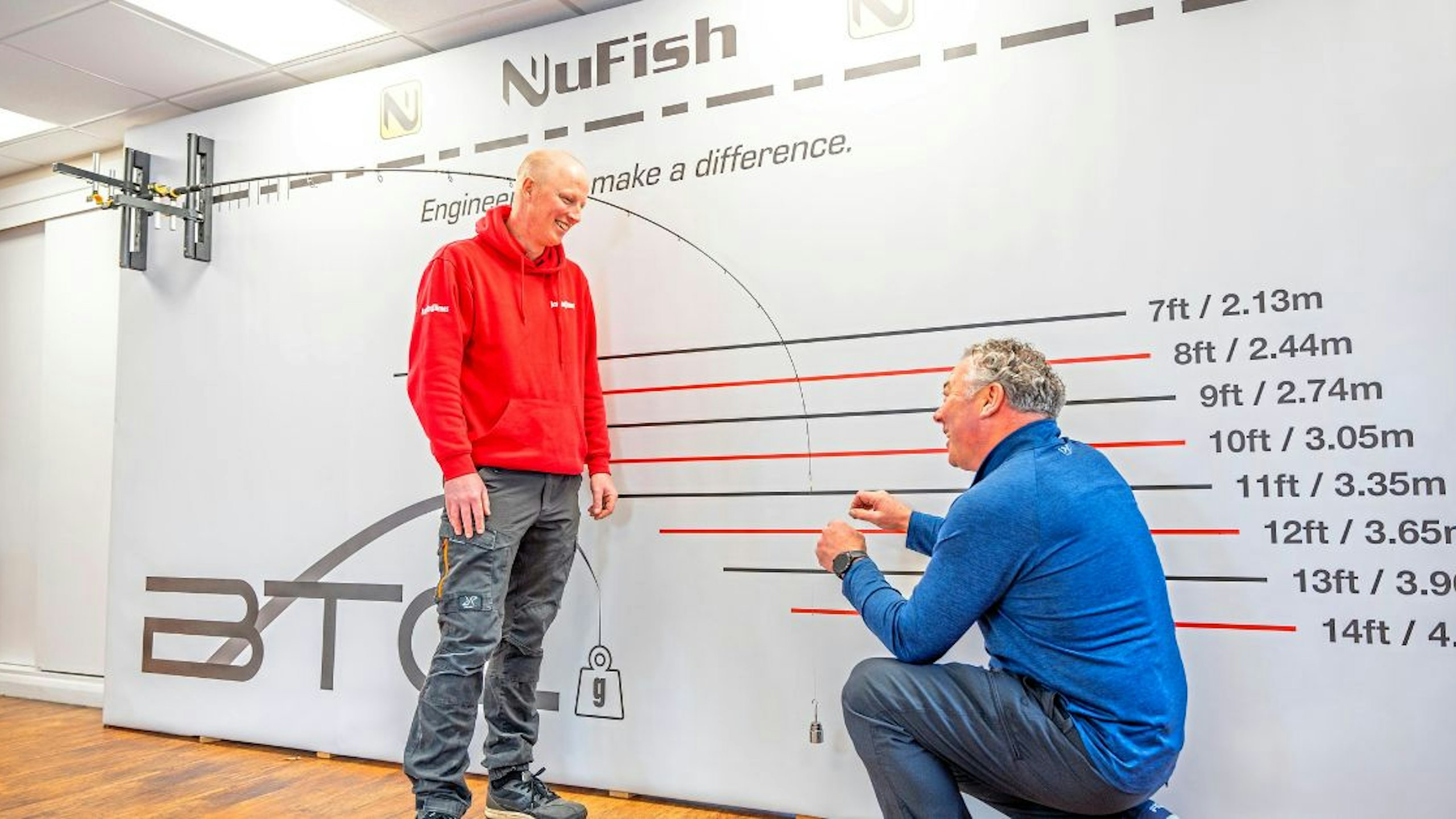
After trying various different methods, NuFish decided the best way was to use the weight in grams required to put the rod into its ‘battle curve’ – the sort of bend we all put into a rod when we look at it in a tackle shop, strike, or play a fish.
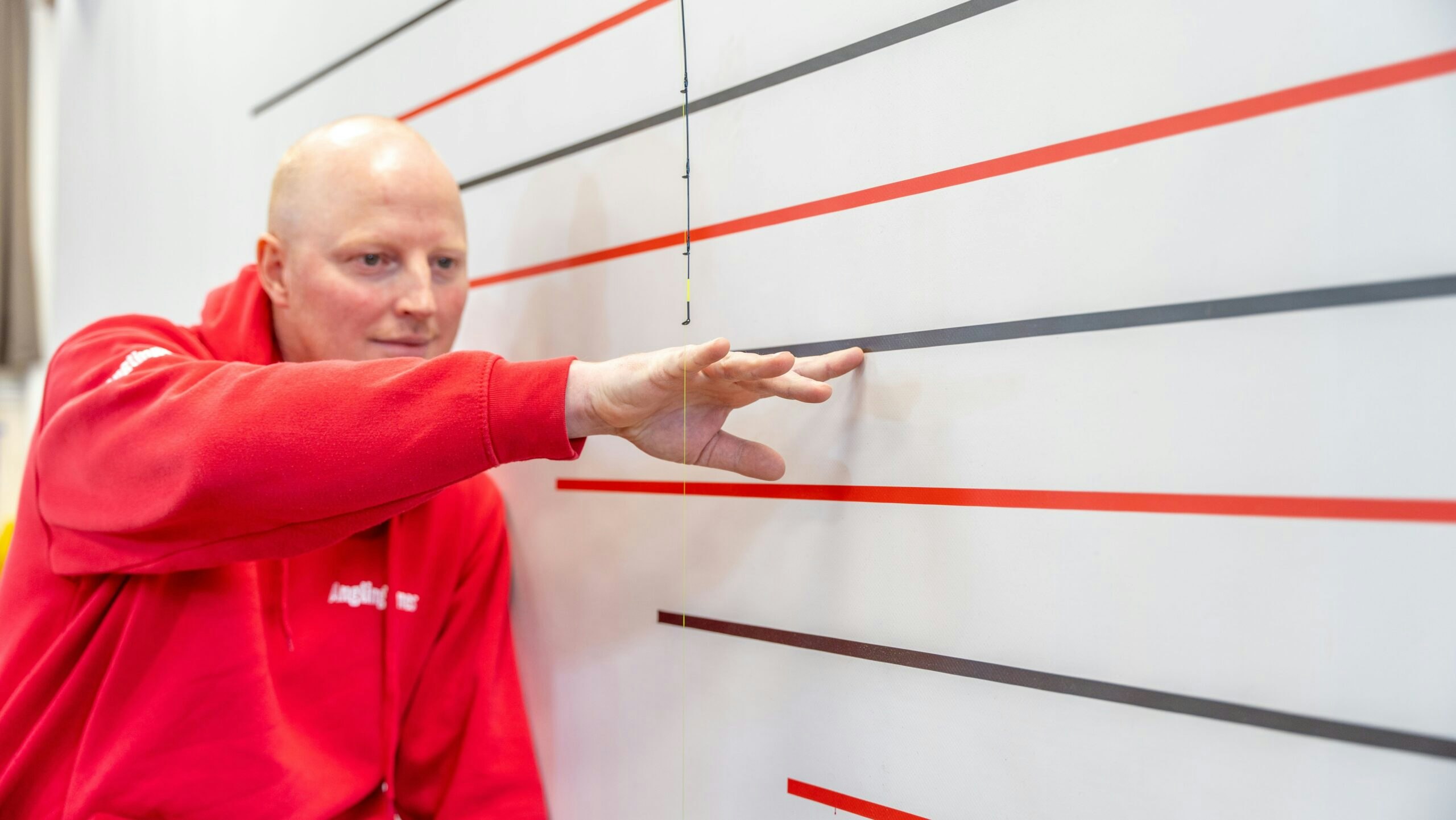
For almost every rod, this seems to be the point where it has been compressed by one third of its length. NuFish calls this the ‘butt tip curve’, or BTC for short. This is done by placing the rod onto a horizontal rack, running line through it, then hanging weights onto the end until the tip has dropped by one third of the total length of the rod. For a 12ft rod, this would be 4ft, for example.
Does it work?
As great as this sounds, I wanted to find out for myself how reliably it described the power and action of a rod, so I made my way up to NuFish to meet Mick Vials and the team with a van full of my own rods to try on the BTC rack.
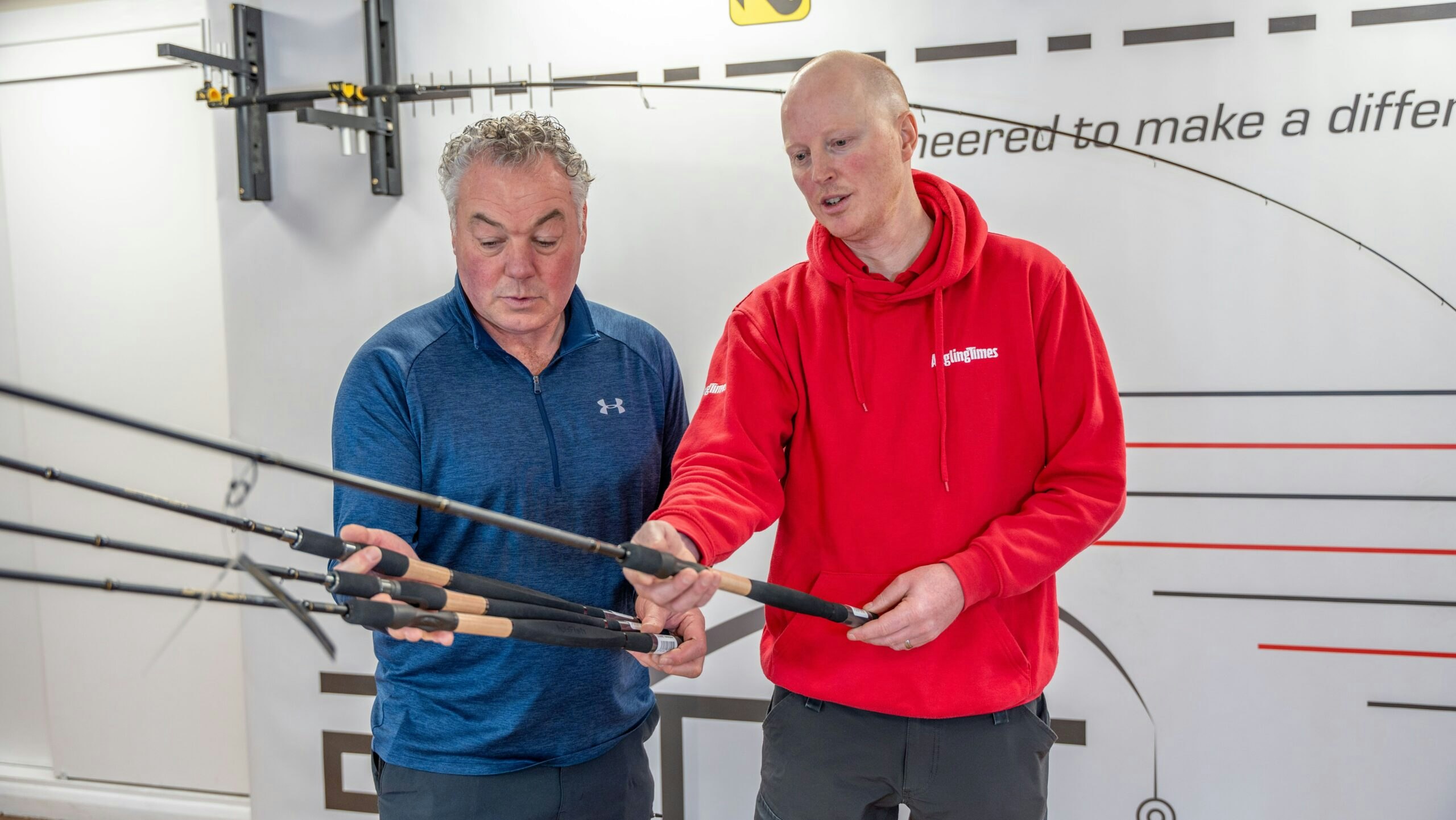
After trying four of my favourite bream and skimmer rods for use on big open waters, a surprising pattern emerged – they all came out at very similar ratings. Despite being 11ft, 12ft, and 13ft in length, they all took around 280g to 300g to hit that perfect curve, which quickly earned me the title of ‘the 300g man’. This is the beauty of the BTC system – due to the scale being a ratio of the rod’s length, the length variations are cancelled out. All those rods suit the size of fish, the way I play them, and the size of feeder – I just choose the short ones for close-range fishing and the longer ones for casting further out. If I was to add to my collection, I now know to start looking at rods around the 300g BTC rating.
Next up was a favourite of mine, a discontinued Browning Jens Koshnick rod. I had long believed it to be the softest 11ft feeder rod around but hadn’t been able to actually prove it. There were a few laughs as it loaded up with a lowly 120g, the lowest rating of any of the 50-plus rods the team of Mick Vials, Joe Carass, and Rich Wilson have measured so far.
After then trying some distance models and some commercial–style Method Feeder rods, a couple of patterns formed. Not only did these models have higher BTC ratings to cope with bigger fish and heavier feeders, but you could also see the action change – high BTC-rated rods typically have a tippier action, while lower rated rods have a more through action.
What does this all mean?
Although BTC is surprisingly accurate at describing the action and use of a rod, I don’t doubt there is more we will discover. Although NuFish’s new rods, when they arrive, will be the only ones to have a BTC rating printed on them, the database of rods NuFish had tested from other manufacturers and their measured BTC will be made public. Not only will this benefit rod designers, but also retailers, helping them decide which rods to stock.
For anglers, it will become a huge help in deciding which rod to buy, as the BTC alone will give you a great indication as to how powerful the rod is and what it will be like in use. If you have a rod and want another similar-actioned one, or perhaps want one with a bit more or less power, the BTC will give you an idea of which models to look at.
I can even see some expert anglers in features and videos telling us what BTC rods they use for certain kinds of fishing, rather than just ‘powerful’ or ‘soft’ – further helping the consumer when they walk into a tackle shop.
As for NuFish’s new rods, as impressive as they looked, I cannot tell you any more about them just yet, other than they are due in shops very soon!