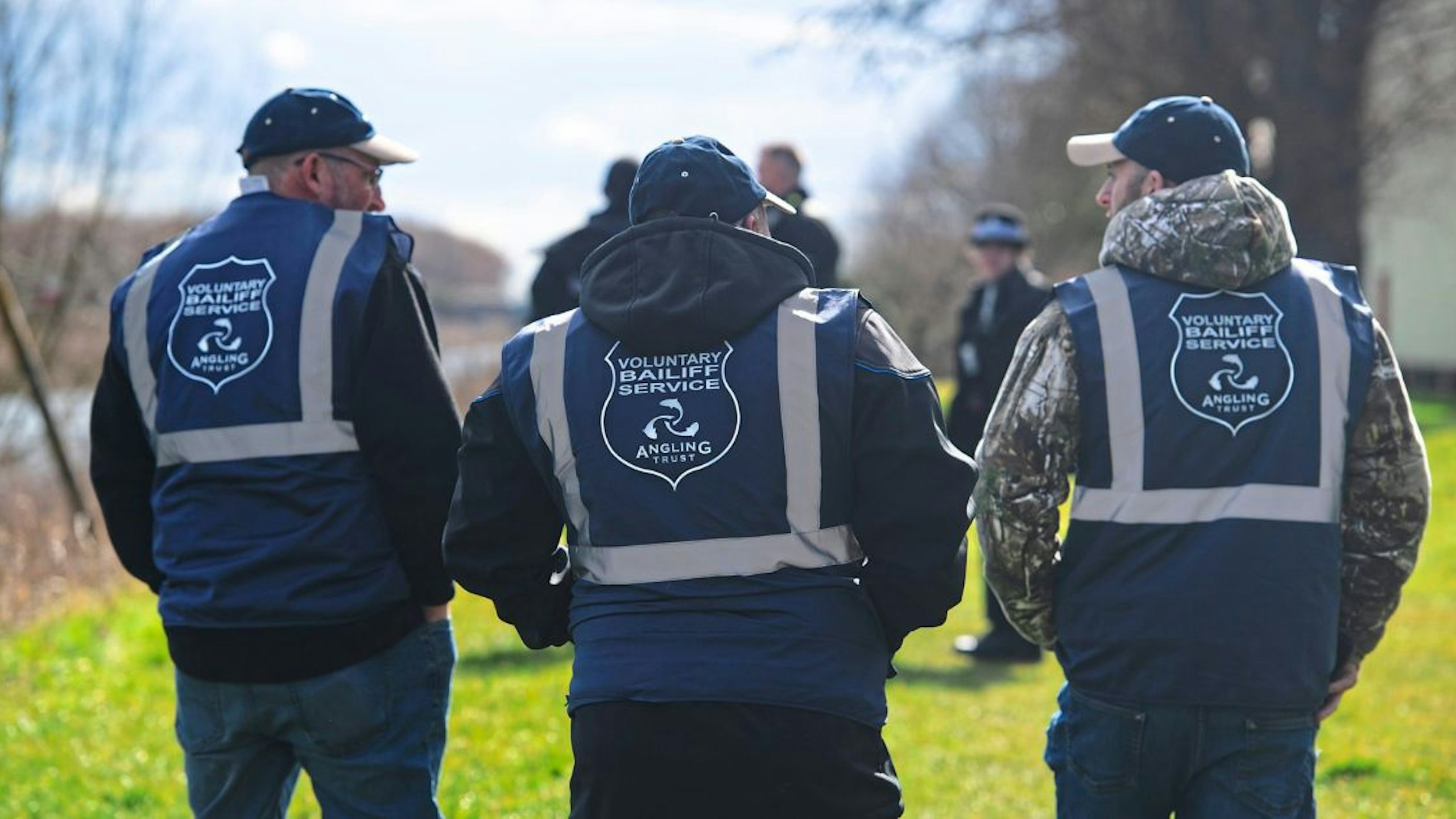
The Angling Trust and Environment Agency (EA) are set to replace the current Voluntary Bailiff Service (VBS) model with a broader network in which people from fishing clubs and communities will be encouraged to take part.
Formed over a decade ago, the VBS reports evidence of illegal fishing and fisheries-related offences to the EA, and has gained recognition from police for its contribution in helping to deter wildlife crime. Under the new approach, the Trust and EA aim to build on these foundations by extending training to club and fishery bailiffs, individual anglers, and non-angling members of the public who care about their local waterways.
This training and guidance will be delivered free through the Angling Trust’s FishNET Learning Hub. Reporting routes will be standardised, with details of ‘incidents’ being directed to the EA through online reporting, a dedicated hotline, and Crimestoppers, whichever is appropriate.
Continued support
Currently there are over 900 volunteer bailiffs, and Jamie Cook, the Trust’s CEO, outlined their continued role in the changing service.
“The volunteer bailiffs will remain central to this work,” he said. “This change is about building on the foundations they’ve created.
“By opening training and guidance to a broader volunteer network, we can involve more anglers, clubs, fisheries and communities, and help more people to understand how to identify and report fisheries crime. The commitment to protecting fisheries has not changed. What is changing is the way we organise, support, train and connect club and community volunteers.”
Broader potential
Additionally, Jamie Cook explained the wider aims of the new programme, for which he has already received a positive response.
“Some angling clubs don’t engage with the VBS – between Reading and Oxford, for example, while there are lots of big clubs, none of them really get involved,” he said. “But there’s no reason why we can’t roll out the training to every club, fishery and angler for free. That’s what we’re focused on now.
“The bit that excited me most is that, having spoken to clubs that don’t currently engage with the VBS, they’ve now said that they will put all their bailiffs through the training, as it makes sense. There will always be a bit of trepidation from some, wondering why we’re changing something that was working. But there are others who will look at it and say well, I was never a part of the VBS, but I’m now keen to do the training.”
Engaging a wider audience
From the EA’s perspective, an expanded network of people who know how to report fisheries crime correctly will allow them to be more effective, as Kye Jerrom, the EA’s National Fisheries Enforcement Manager, explained to Angling Times.
“The VBS has raised awareness of illegal fishing among anglers and enforcement partners, and more than half of illegal fishing reports currently come through volunteers,” he said. “As digital reporting has made sharing reports easier, and training platforms such as FishNET develop, we have an opportunity to build on that success and extend knowledge, guidance, and reporting to a wider Angling Trust volunteer network.
“Our Fisheries Enforcement Officers can’t be everywhere all the time, but we have a million anglers out there that could help us to be more efficient,” Kye added. “Of course, we want anyone out there that witnesses illegal fishing to let us know what’s happening, but if they don’t know how to report it properly, it’s not particularly useful for us.
“So, we now want anyone – be they an angler or a member of the public – to feel they can become part of a community in which members are equipped with the skills and knowledge to protect fisheries.”
Non-angler influence
Over recent years, the increasing number of non-anglers with an interest in the health of our rivers has not gone unnoticed. Peter Devery, Angling Trust Head of Communications, said: “Water quality issues and reports of pollution or fly tipping have made the general public more aware of the issues our rivers face. The bottom line is that getting more eyes and ears on the water, be they of anglers or non-anglers, is a good thing. It will help to better protect our fisheries.
“And if we can deliver training for anyone to do that properly, we not only generate quality intelligence for the EA, the police and other partners, but we are also helping the non-angling community to understand the work that anglers do to take care of our waterways, which is a key objective over the next few years.”
Kye added: “Anyone that can help in some way, be it giving up a day, an hour or a minute, is a massive benefit to me and my team.
“I want to thank the voluntary bailiffs and let them know that, moving forward, they are valued by my team. Their work makes us so much more effective.”