- Home|
- News|
- News Stories
How the Angling Trust is putting fishing firmly on the political agenda
From party conferences to No.10 Downing Street, Angling Trust CEO Jamie Cook reveals how the governing body is fighting across party lines to protect our rivers, tackle drought resilience, and combat cormorant predation.
@Angling Times
by Angling Times |
Published on4th November 2026 at 12.00pm
Follow Angling Times on Google
From the political party conferences to Downing Street and Parliament, and from the House of Lords to the European Parliament in Brussels, the Angling Trust has been making sure the voice of anglers is heard by those shaping the future of our sport and our waters.
Decisions made in Whitehall can have a profound impact on our rivers, lakes and seas, the fish that live in them and the millions of people who enjoy angling. That's why the Trust continues to take the case for fishing directly to politicians and policymakers through a busy programme of political engagement, including the autumn party conferences, a reception at No.10 Downing Street and a parliamentary event focused on the state of our rivers.
Our message has been consistent: angling matters to Britain, anglers are a force for good, and healthy waters and thriving fish populations must be a priority for government.
Party conferences
Working in collaboration with the British Association for Shooting and Conservation (BASC), the Trust attended rural receptions at the Reform UK, Liberal Democrat, Green, Labour and Conservative party conferences in September and October. At the Labour Party Conference, our Head of Fisheries, Mark Owen, delivered a presentation on the value of angling to Britain
Mark highlighted the millions of people who enjoy fishing, the thousands of jobs it supports and the billions of pounds it contributes to the UK economy through tackle shops, fisheries, charter boats, tourism and hospitality.
He also emphasised the huge contribution recreational sea angling makes to coastal communities. Mark also outlined how anglers are helping to protect the environment through conservation, pollution reporting and citizen science. He highlighted the Water Quality Monitoring Network and the efforts of volunteers and fishing clubs.
At the Conservative Party Conference, former MP and Angling Trust policy adviser Martin Salter addressed the joint BASC and Angling Trust rural reception, alongside our Environment Lead, Dr Emily Smith. Martin reminded his audience that fishing crosses political boundaries and deserves the attention of politicians from all parties.
He highlighted examples where engagement with successive governments has helped advance fisheries policy, including measures to support bass conservation and establish the UK's licensed recreational bluefin tuna fishery. He also stressed the important role anglers play as custodians of the environment, often being among the first to identify pollution, declining water levels and damage to habitats.
Our participation at the Liberal Democrat, Reform UK and Green Party conferences further reinforced our commitment to engaging with politicians, regardless of which party currently holds power.
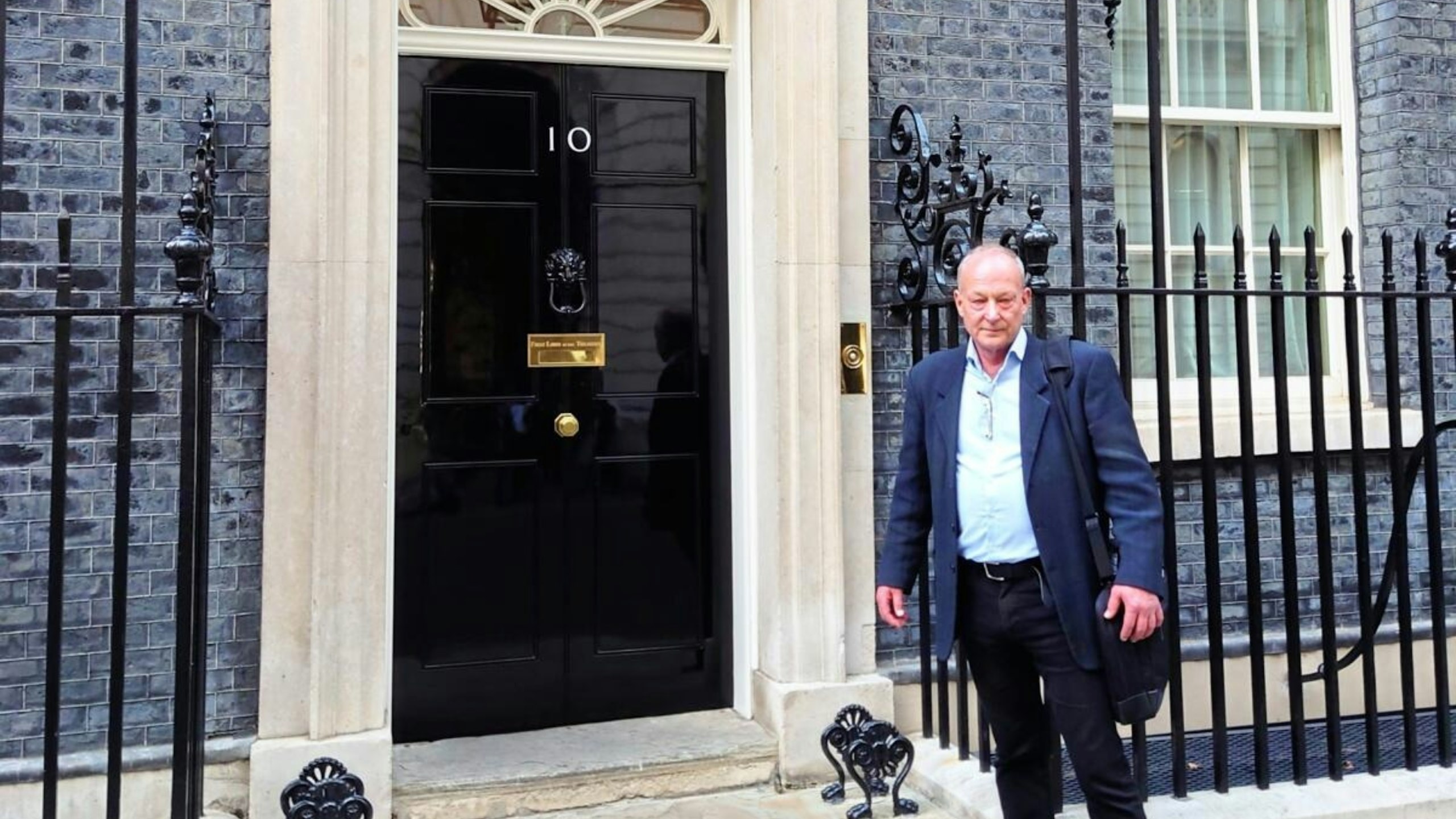
Head of Fisheries, Mark Owen, outside No.10 Downing Street. © Angling Times
Talking droughts at No.10
The impact of this year's drought on fish and fisheries was central to the Trust's engagement with government when Mark Owen attended a reception at No.10 Downing Street with the Prime Minister, focusing on the impacts of drought this summer, the risk of flooding this winter and the need for long-term resilience planning.
The prolonged dry conditions have placed considerable pressure on rivers and stillwaters, with low flows, warmer water and reduced oxygen levels creating serious risks for fish. Throughout the summer, the Angling Trust has been attending the National Drought Group on a weekly basis and warning that the consequences of drought cannot simply be measured by reservoir levels or whether rivers flow again after rainfall.
Fish populations, aquatic invertebrates and the wider ecosystems that support them can take much longer to recover. The effects of a severe drought may continue well beyond the end of the dry weather, potentially for years.
Mark's attendance provided an opportunity to reinforce the need to put fisheries and the natural environment at the heart of discussions about drought resilience and water security. Healthy rivers are not an optional extra in water resource planning. They are fundamental to it.
Putting the state of our rivers on Parliament's agenda
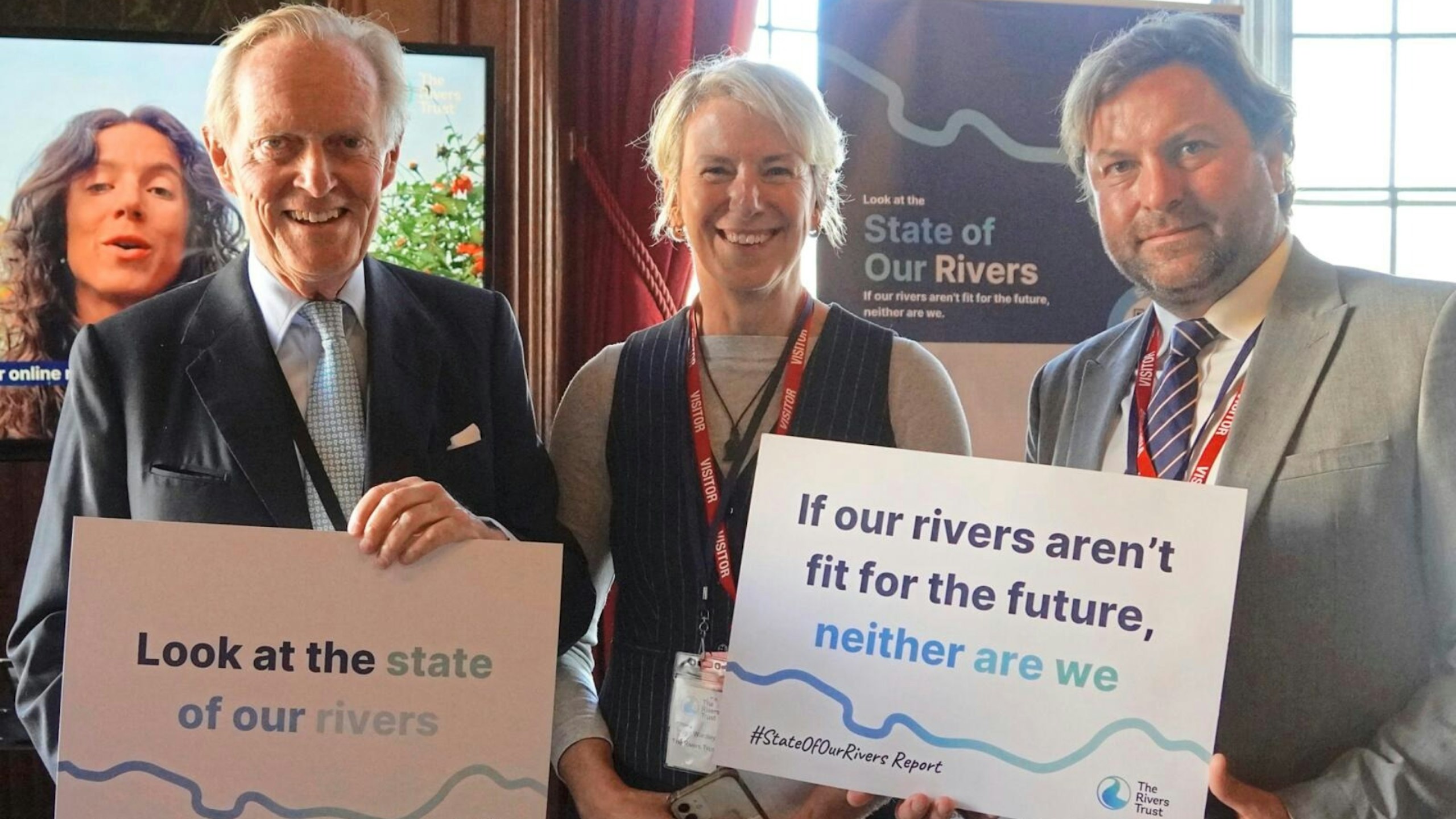
The condition of Britain's rivers was also firmly in the political spotlight when I attended the State of Our Rivers reception in Parliament, led by The Rivers Trust.
Our engagement with The Rivers Trust and other environmental organisations reflects the importance of working together where we share common objectives. The event provided another opportunity to highlight the pressures facing our rivers and the urgent need for sustained action to restore their ecological health.
For anglers, these are not abstract environmental concerns. Poor water quality, declining fish populations and damaged habitats directly affect the places we fish and the future of our sport.
The Angling Trust and Fish Legal continue to press for stronger action on pollution, effective enforcement of environmental law, investment in river restoration and better protection for fisheries.
Through our campaigning, policy work, Water Quality Monitoring Network and the work of Fish Legal, we’re helping to turn the concerns of anglers into evidence that can be taken to decision makers.
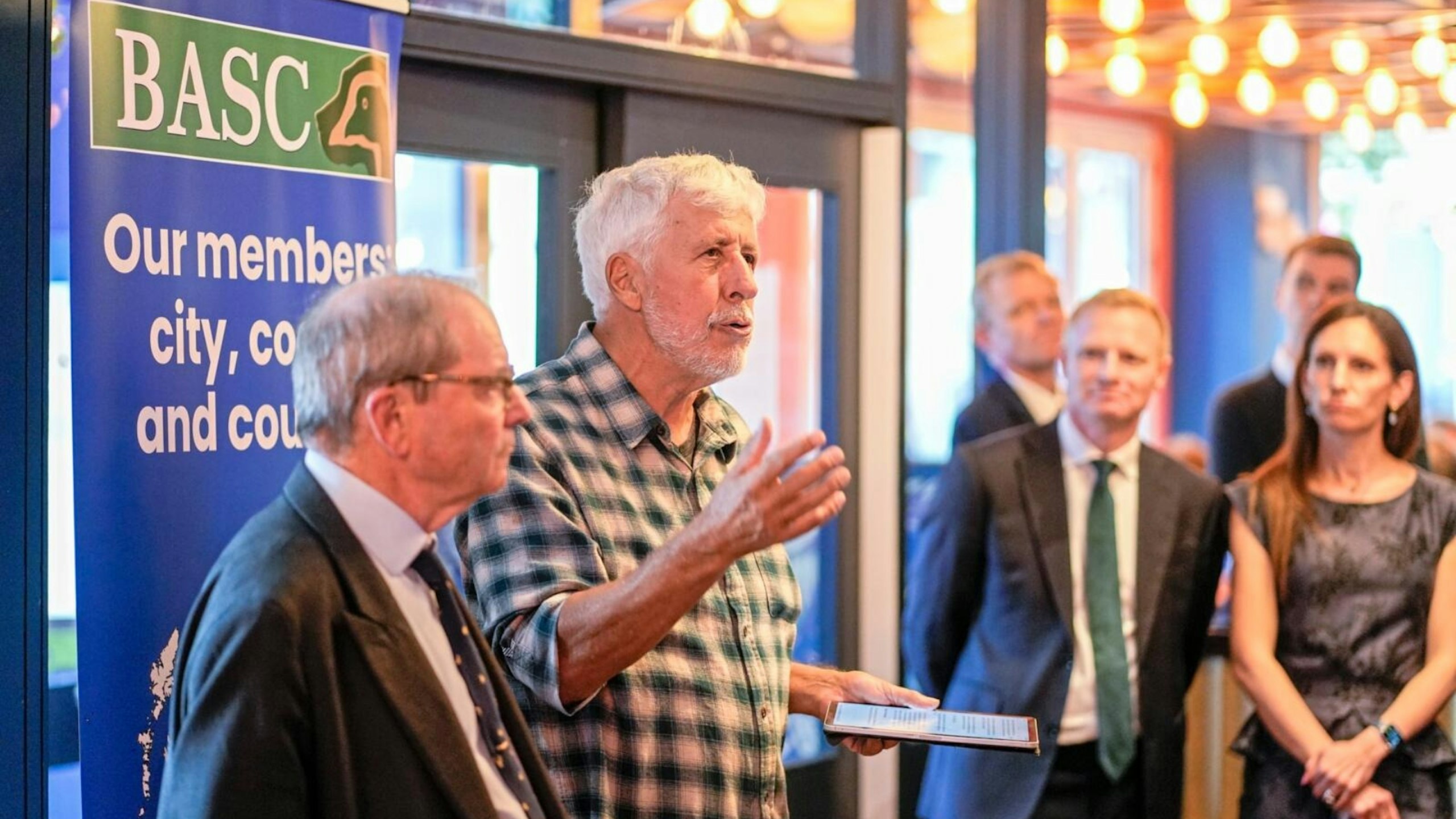
The Trust’s Martin Salter addresses a meeting at this year’s Conservative Party Conference. © Angling Times
Campaigning for protection
The Angling Trust's political engagement extends beyond Westminster to Europe, where we currently chair the European Anglers Alliance and continue to lead efforts to address the impact of cormorant predation.
We continue to campaign for cormorants to be included on a general licence to allow more proportionate management where evidence demonstrates a need to protect fisheries. That campaign is grounded in science. We have invested in peer-reviewed academic research to support the case for changes to cormorant management policy.
We are also helping to lead the pan-European bird count, building the population data that policymakers across Europe use to inform decisions about bird conservation and fisheries management.
Together, this research and international cooperation are strengthening the evidence base for meaningful policy change. We recognise the importance of protecting wild birds but believe that conservation policy must also properly account for the impact of predation on fish populations. We remain determined to secure an evidence-based approach that better protects vulnerable fisheries. We will not give up.
Across political boundaries
The Angling Trust is politically independent. We work with politicians from all parties because protecting fish, fishing and the waters they depend upon should not be a party-political issue.
Our collaboration with BASC helps us reach a wider audience and make the case for outdoor recreation, conservation and the rural economy.
That does not mean agreeing with every position taken by those organisations or the politicians we meet. It means finding opportunities to make the case for angling, challenge decisions where necessary and encourage practical action.
The future of fishing depends not only on what happens at the waterside, but also on the decisions taken by those responsible for protecting our waters. Meetings, receptions and speeches do not, by themselves, deliver cleaner rivers or healthier fish stocks. What matters is whether they lead to better policies, stronger protections and meaningful improvements on the ground.
That is why the Angling Trust will continue to make sure anglers have a voice wherever decisions affecting our sport are being made.
And that is why, if you are not already an individual member, I would ask you to consider supporting us.
Just so you know, we may receive a commission or other compensation from the links on this website - read why you should trust us