- Home|
- Advice|
- Tips
How to fish with micro jigs
Dan Brackley explains why ultra-light lure fishing can be one of the best ways to keep catching in the cold!

by Tony Grigorjevs |
Published on8th December 2025 at 11.57am
Follow Angling Times on Google
Micro jigging, or ultra-light lure fishing, is the use of small lures, jigheads and hooks to target predators.
Lures of around 3ins are the most common, combined with a jighead of just a few grams. Primarily, this is a tactic that’s all about staying mobile, having fun and enjoying plenty of action, rather than monster hunting. However, one of the beauties of this active style of fishing is that you never quite know what will take your lure next!
The main idea, though, is to cover lots of water, make hundreds of casts and catch loads of perch – from ‘wasps’ to possibly 2lb-plus – together with the odd pike and even an occasional zander, depending on which venue you are fishing.
CHECK OUT OUR BUYERS GUIDE OF THE BEST LURE FISHING RODS.
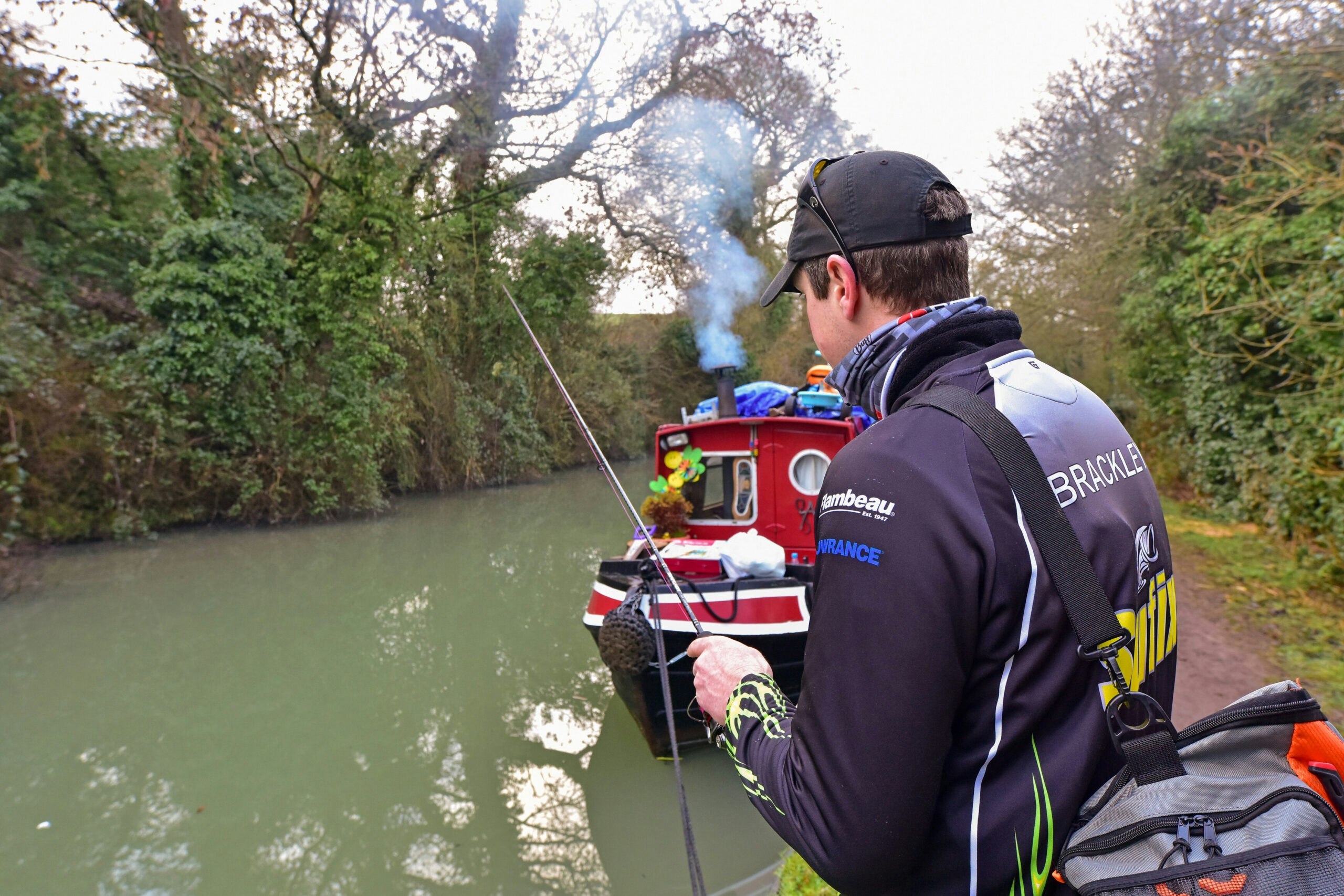
Tackling up
Unlike some predator tactics, such as deadbaiting, where you can use any rod and reel combo from barbel fishing to carp and pike rods, micro jigging requires tackle specifically made for the job.
Rods need to be lightweight, with a casting rating of around 7g or less, a sensitive tip and a bit of backbone in case you do hit into a decent fish. This can be paired with a small 1000 or 2000-sized reel.
The reel should be spooled with a light, low-diameter braid to ensure that it casts well with the light rod and jigheads. I use 0.08mm (8lb 2oz) Sufix Nano Braid, as canals can be quite snaggy, but this strength enables me to generally retrieve end tackle if I do get snagged!
Nano Braid is also very supple, which is essential in achieving the standard of presentation you want.
At the end of the mainline you’ll need to add a fluorocarbon leader around 12ins-18ins long. Again, I go a little heavier than most, choosing 7lb Sufix Super 21. Fluorocarbon lines have dramatically improved in recent years, and they are now almost as soft and supple as quality mono.
GET STARTED WITH LURE FISHING WITH OUR BEGINNERS GUIDE TO LURE FISHING FOR PERCH.
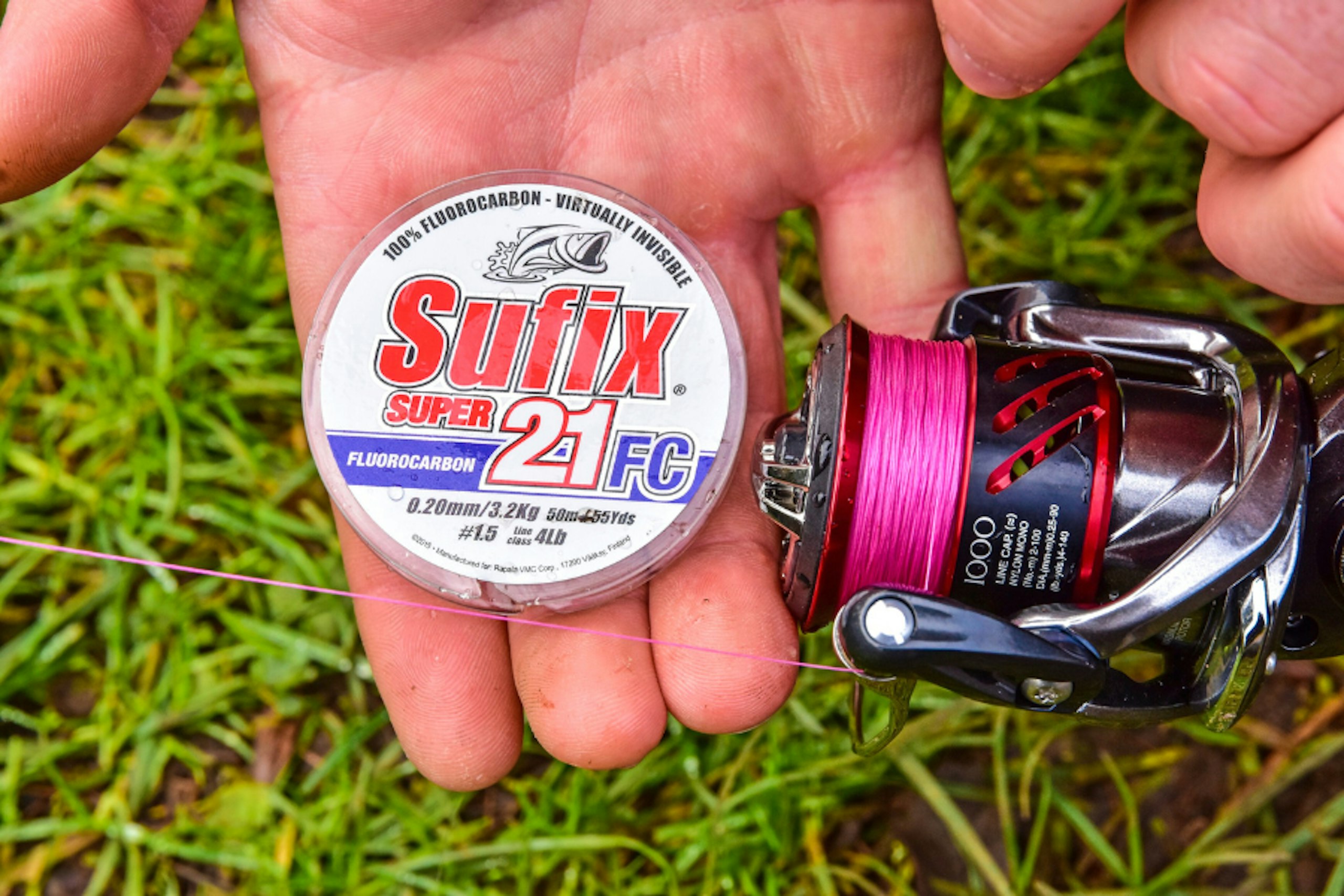
Small reels and fluorocarbon are a must for micro jigging
Jigheads
A jighead is a specifically-weighted lead head with an integrated large single hook on to which you can mount your lure.
I use VMC Bullet jigheads, and the most common retrieval with this tactic is a series of hops, where the lure is allowed to sink to the bottom, before giving the reel handle a couple of turns.
This causes the lure to lift off the deck before again sinking under the weight of the jighead. This action is where the term ‘jigging’ originates from. The most important aspect is not to fish robotically. The lure is an inanimate chunk of rubber, so it is up to you to bring it to life in the water. Good lures will work best, but it’s still up to the angler to impart thet extra action that encourages the predators to hit it.
IN THIS ARTICLE WE PICK OUR CHOICE OF THE BEST LURES FOR PERCH FISHING.
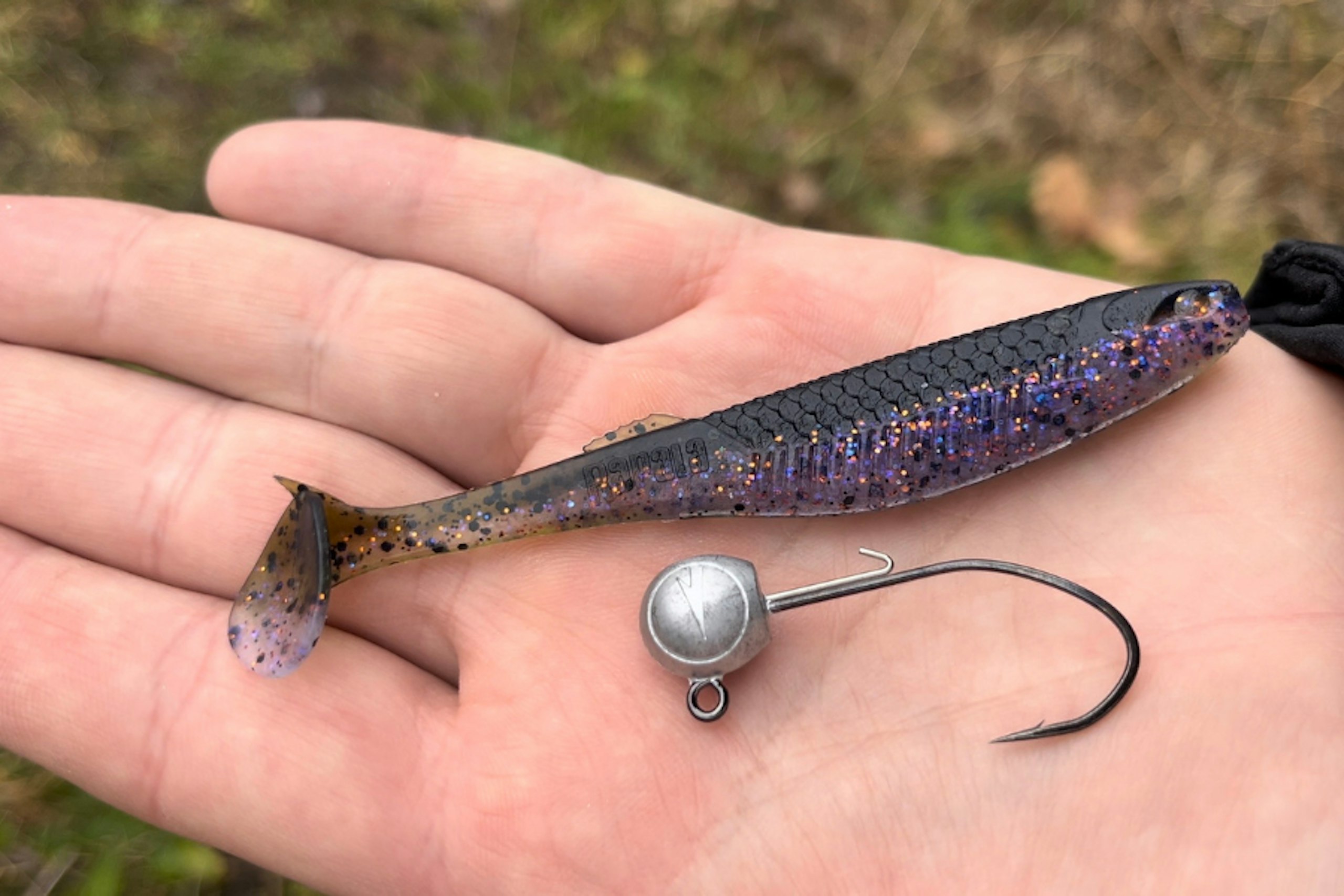
A VMC Bullet is his jighead of choice
Lure choice
I have dozens of variants, because you never know what will work from one day to the next. It can even alter hour by hour if the weather is changeable. Keep trying different types until you’ve ascertained what the ‘trigger’ is for that day.
Do the fish want a bright or a muted lure? Do they want one with a paddle tail or a more subtle forked tail?
If you’re unsure about which type of lure to use, a Rapala Crush City Kickman is a good starting point.
Available in wide range of colours and three sizes, all of which are suitable for micro-jigging, its paddle tail provides plenty of movement on even the slowest of retrieves.
When it comes to colour choice, as a general rule you’ll find that in clear water a more natural, muted coloured lure is best, while in murky conditions something much brighter is ideal, as the predators can see it that bit more easier.
The fish, however, won’t always follow the rule book. For example, when the water is very coloured, as it can often be on canals, we tend to go for bright orange or chartreuse lures.
But when was the last time a perch, zander or pike ate a hi-viz orange fish in their day-to-day life? Just because we can see the lure better in coloured water, and it gives us more confidence to fish it, doesn’t necessarily mean it will be what the fish prefer.
The colours that work well in all conditions are white and black. This is because predators nearly always look up at a bait, only really seeing a silhouette of their prey, so regardless of water clarity or cloud cover, these two extremes will always help you bring a fish or three to the bank.
Cover as much water as you can, targeting all of the ‘tasty’ bits of structure along the stretch – lock gates, bridges and turning circles – but also never ignoring the more ordinary-looking areas, or concrete banks that for some reason seem to be a magnet for perch.
Regardless of what you catch, or how many fish you land, the main thing is to just give it a go, experiment with what you are doing and using and, more importantly, have fun while you do!
TAKE A LOOK AT THIS BEGINNERS GUIDE TO FISHING WITH SPINNERS.
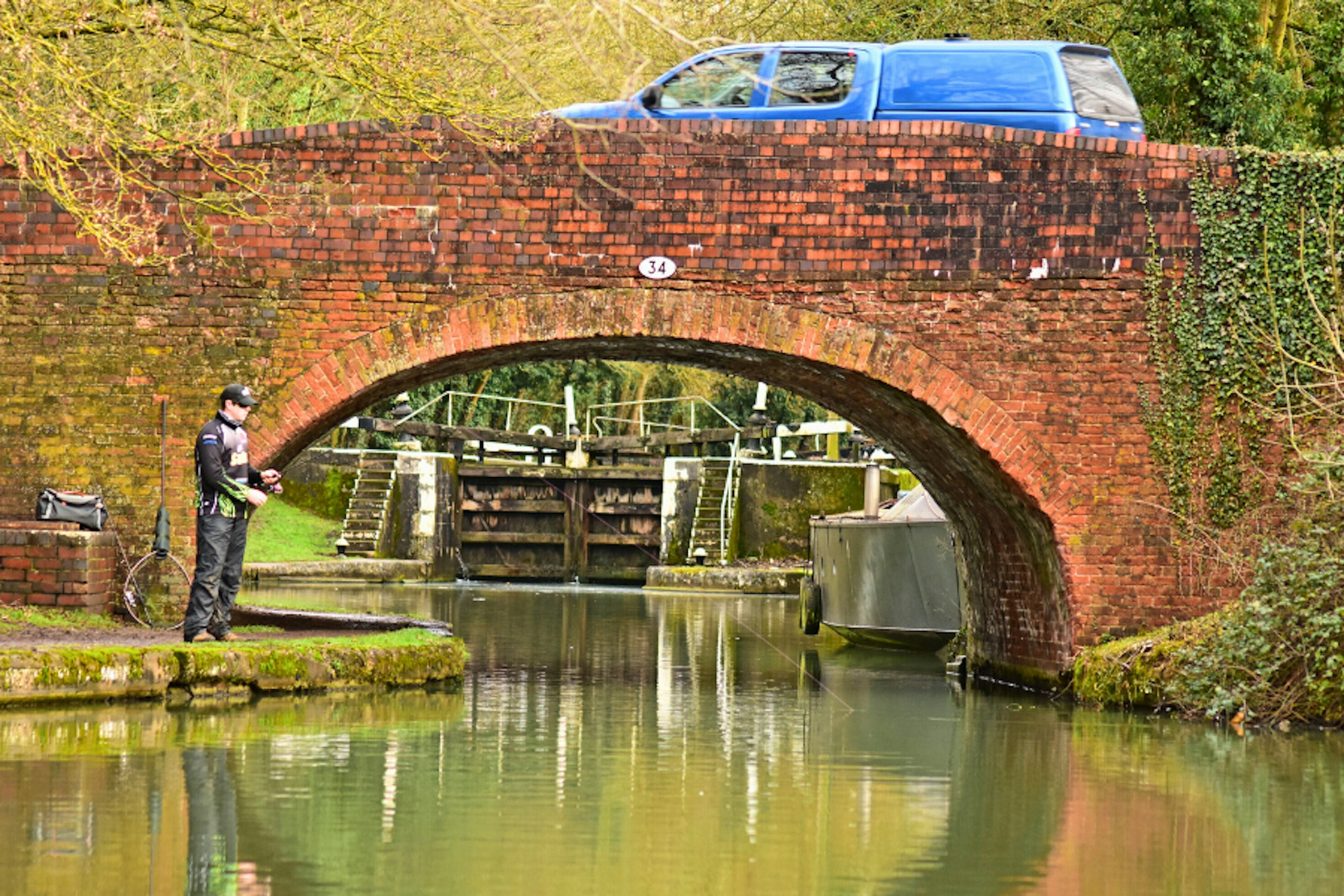
Bridges are always worth a look
Just so you know, we may receive a commission or other compensation from the links on this website - read why you should trust us