- Home|
- Advice|
- Beginners
Tips to help catch your first catfish
Catfish supremo Steve Abbott reveals his top tips to help you catch your first moggy...

by Freddie Sandford |
Updated on23rd April 2026 at 2.44pm
Follow Angling Times on Google
Catfish have surged in popularity in recent years, with more venues than ever now offering anglers the chance to target these powerful fish.
While they can seem intimidating at first, catching your first ‘moggie’ isn’t as complicated as it looks. With slightly stronger tackle and a few simple adjustments to standard carp tactics, beginners can quickly get to grips with catfish fishing.
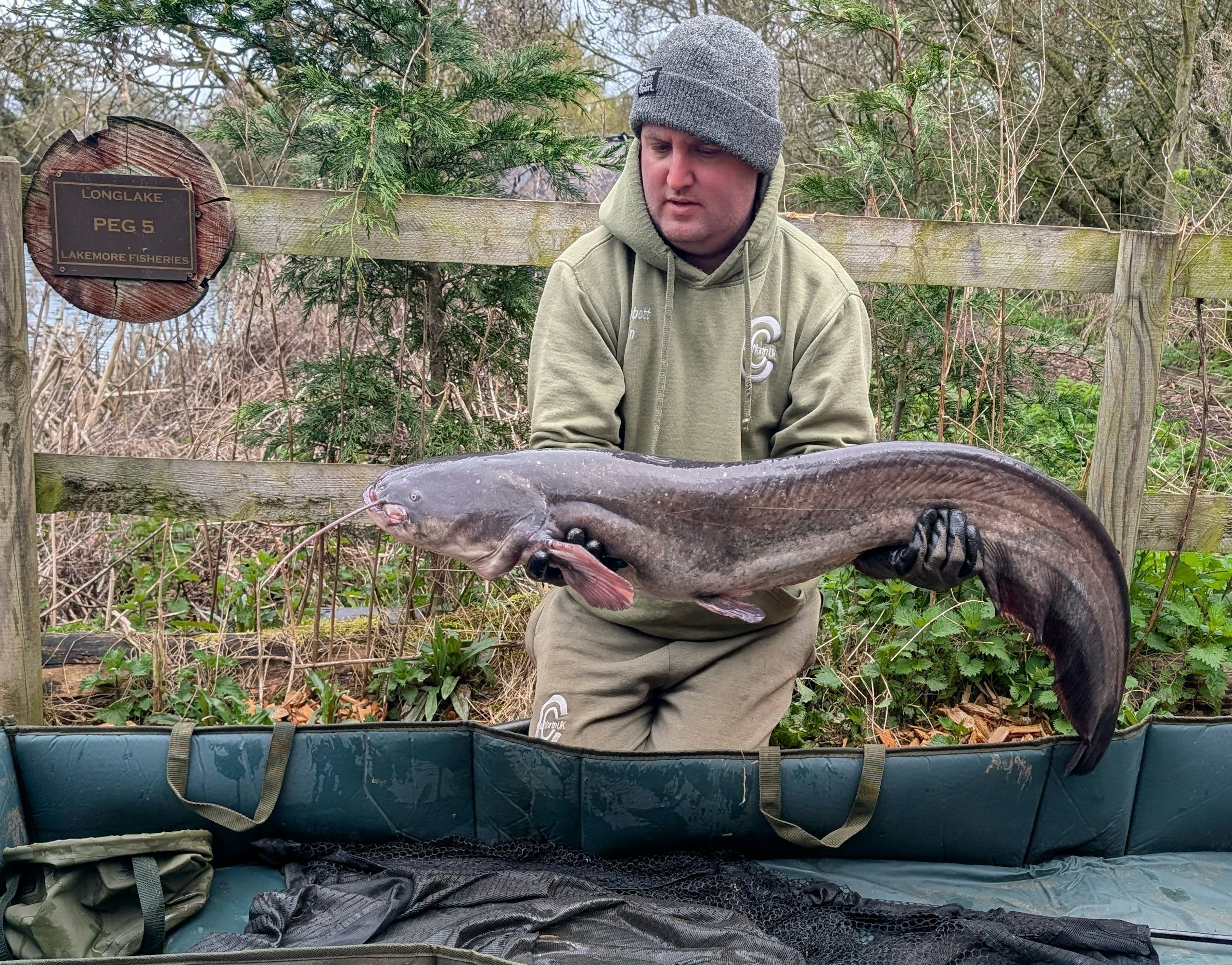
Catfish are becoming very popular for UK anglers to target...
Pick the right venue
As with targeting any species, it’s crucial that the fish you want to catch is present in the venue you’re fishing.
For a beginner just starting out with catfish, a lake with a good head of smaller ones is the ideal place to start. At Lakemore, the Long Lake is perfect, as it holds lots of fish in the double-figure to 20lb range – although some run to over 50lb.
But, with most of the cats on the smaller side, they are perfect for someone unfamiliar with the species to get to grips with. Plus, there’s the chance of a good hit of fish, with numerous runs over a session being quite common.
While catfish are generally associated with fishing over summer, I’ve had results here from April onwards. So, now that the weather is starting to really warm up, it’s a great time to target them.
A SET OF BITE ALARMS ARE NEEDED FOR CATFISH...
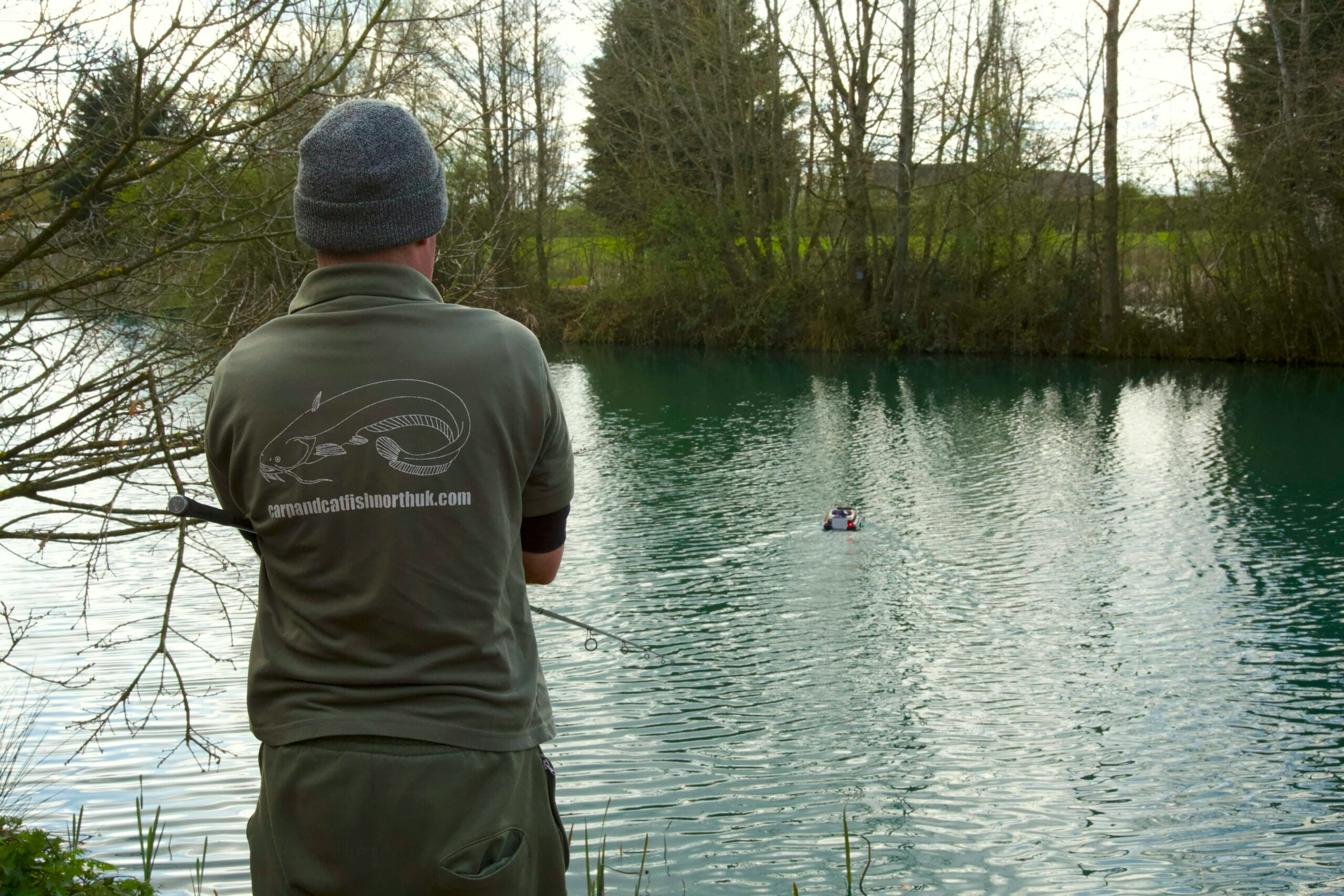
A lake with catfish in is always a good start!
Big baits and strong rigs
There are loads of hookbait options for catfish, but I like to keep things simple and use halibut pellets, with a 20mm bait on the hook and 14mm as feed. I boost these with salmon oil so they’ll last for longer in the water, and for extra potency. Meat can also work well, but beginners won’t go far wrong with pellets.
At Lakemore, bait boats are allowed. I use one to drop my rig tight to cover with a pile of freebies. I’ll then also regularly fire pellets over the top – the noise can act as a feeding trigger.
My mainline is 100lb braid or, if it’s not allowed, at least 20lb mono. On this I have a running rig, with a 2oz-3oz lead, and a strong, catfish-specific hook, matched to the size of the bait – a size 2 for a single pellet, or a 1/0 or 2/0 for a double.
My hooklink is 80lb-100lb braid and around 1ft long, to stop abrasion from the catfish’s mouth on the mainline. After you’ve caught a fish, make sure to check your hooklink for damage!
CHECK OUT THESE BAIT BOATS WHICH ARE IDEAL FOR ANY STILLWATER...
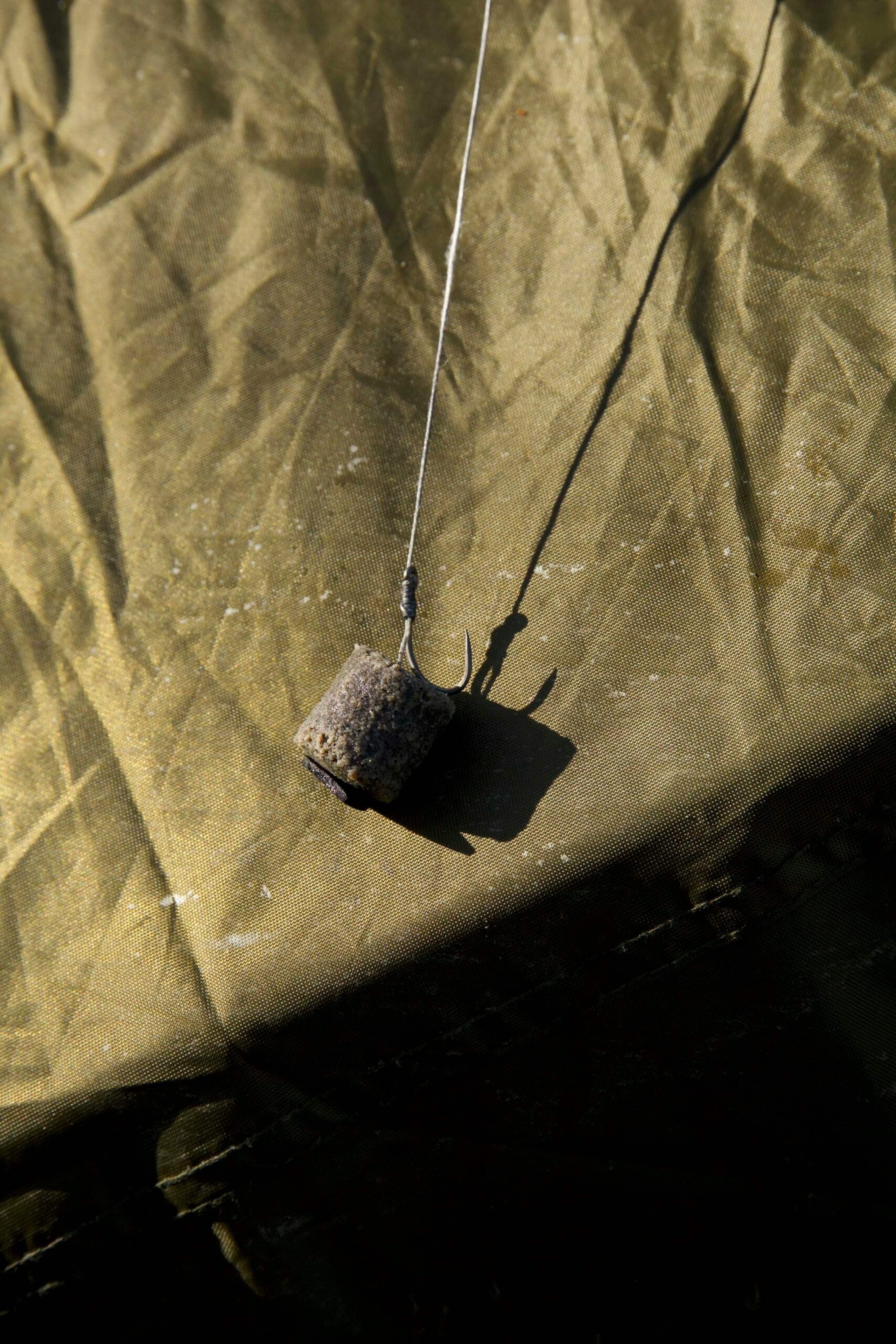
Strong hooks and big baits are required
Select the right spots
When choosing a swim, while it’s worth targeting cover, I’ve found the real hotspots to be the deeper holes that the fish tuck into, particularly early in the year. They also love an undercut bank, so give these a try too.
Keep an eye on the water and look out for tail slapping, small bubbles in a tight patch, and plumes of silt – all giveaways of a catfish’s location. Catfish can suddenly switch on – the whole lake can seem dead, and then suddenly you’ll hear alarms tearing off all around you!
The hours of darkness are typically productive, but evenings and early mornings can be good too, and if you’re struggling for bites, try exploring different depths and areas with each rod. I recast regularly, sometimes as often as every half-hour, to keep the swim topped up.
IF YOU ARE FISHING OVERNIGHT, YOU'LL NEED ONE OF THE BEST BIVVIES...
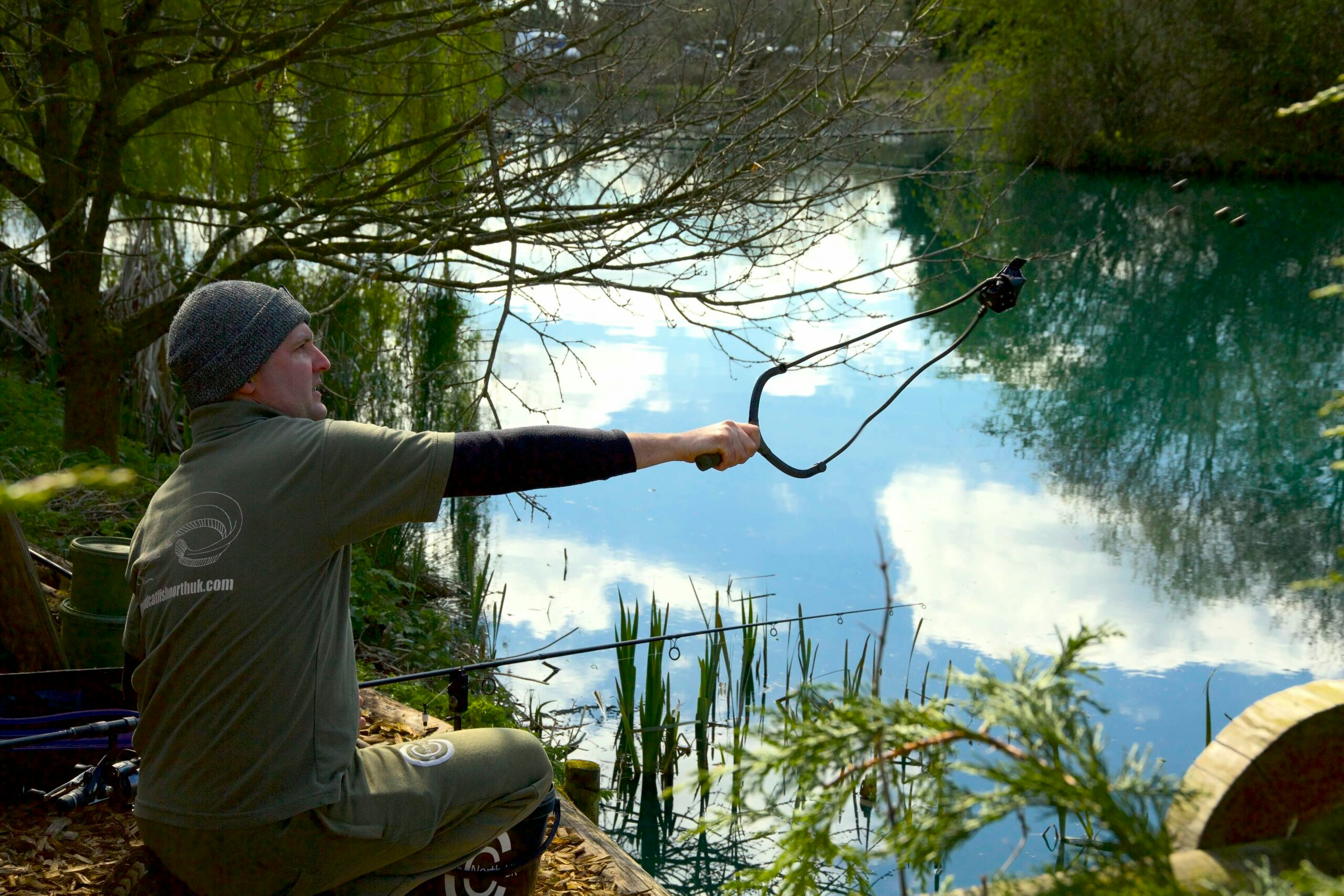
Use the correct kit
Starting with rods, I use catfish-specific models in the 4.5lb-5lb test curve range. While these are very strong, they are also designed to absorb the lunges of catfish. You don’t have to break the bank – mine are from NGT and cost less than £50.
A reel with a reliable and quality drag system is vital – I’ve seen catfish destroy some!
This strong kit, combined with the lines and hooks mentioned earlier, allows you to play the fish hard and land them quickly, which I’d always advise with catfish.
You also need an appropriate unhooking mat, and I use a large cradle instead, which I prefer to a flat mat, as the fish can’t slide off it on the bank.
Other crucial bits of kit are Kevlar gardening gloves, so you can handle the fish’s mouth without cutting your hands. Bring forceps and long-nosed pliers for unhooking, a cat-care kit, and always have a bucket of water on hand to keep them wet.
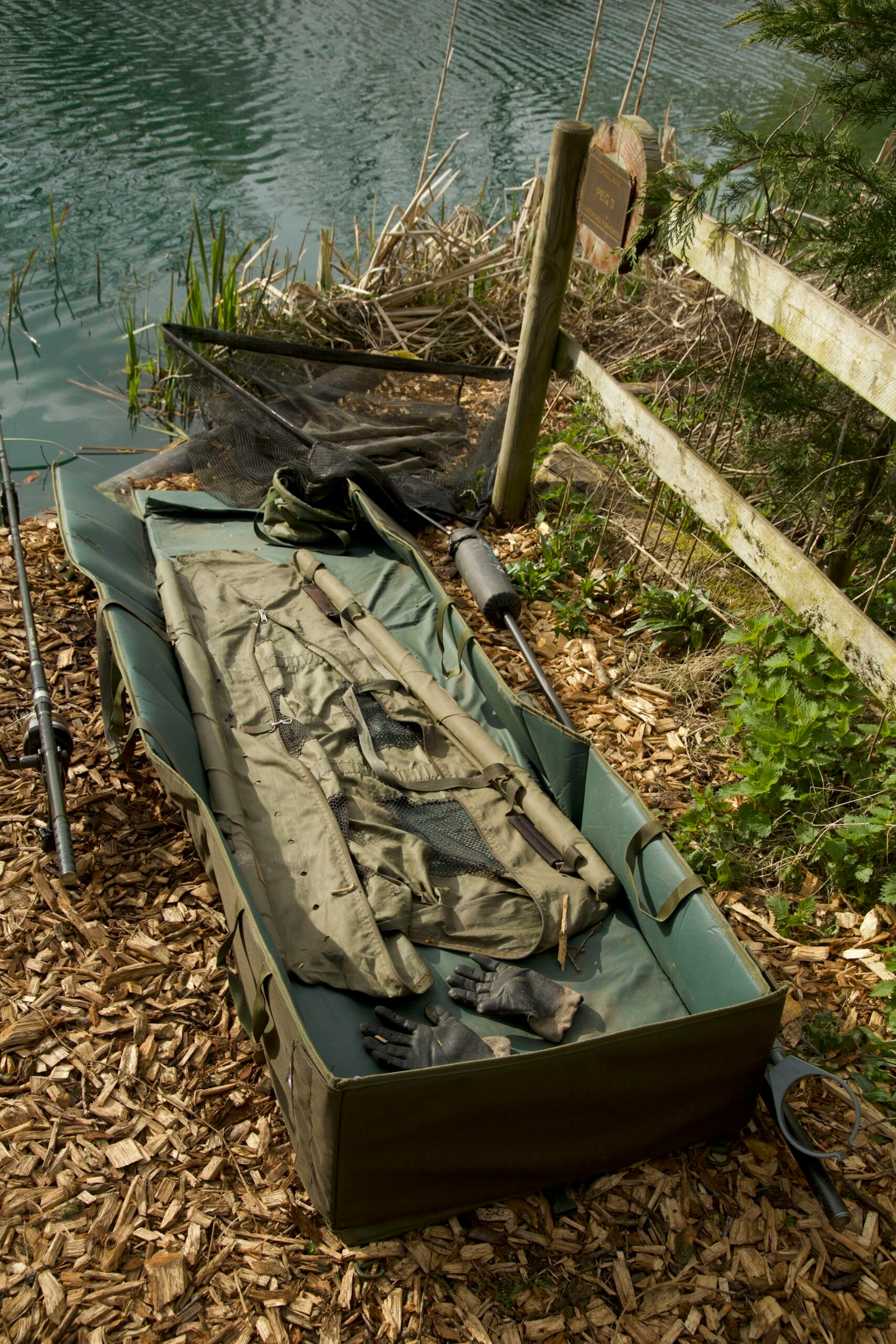
Make sure you have the appropriate kit for these big fish!
Tip the odds in your favour
To make landing the fish easier, a net designed specifically for the species is a great aid. These are not only wide, but also longer than a carp net, which makes landing these creatures much easier. In well-stocked lakes, double takes can be common, so I have two landing nets set up.
With regard to the fishing itself, I don’t like slack lines. Catfish drop a bait when they feel a change in pressure, so by fishing a tight line from the off, I find that I have more converted takes.
If you’re receiving indications but no positive bites, try giving the line a little pull. Moving your hookbait slightly can trigger a fish into taking it.
In the summer, you can sometimes get bites on the drop, and the regular recasts and long hooklinks help in this respect. Often, I’ve cast out and had the rod rip off in my hand!
I’m also convinced that the moon phase can make a difference, and have had sessions during a full moon when things have kicked-off big time. So, if you can, plan a session around these bright nights.
If you want any other advice, or to attend one of our social events, visit the Carp and Catfish North UK group on Facebook, where I and other experienced anglers will be more than happy to help!
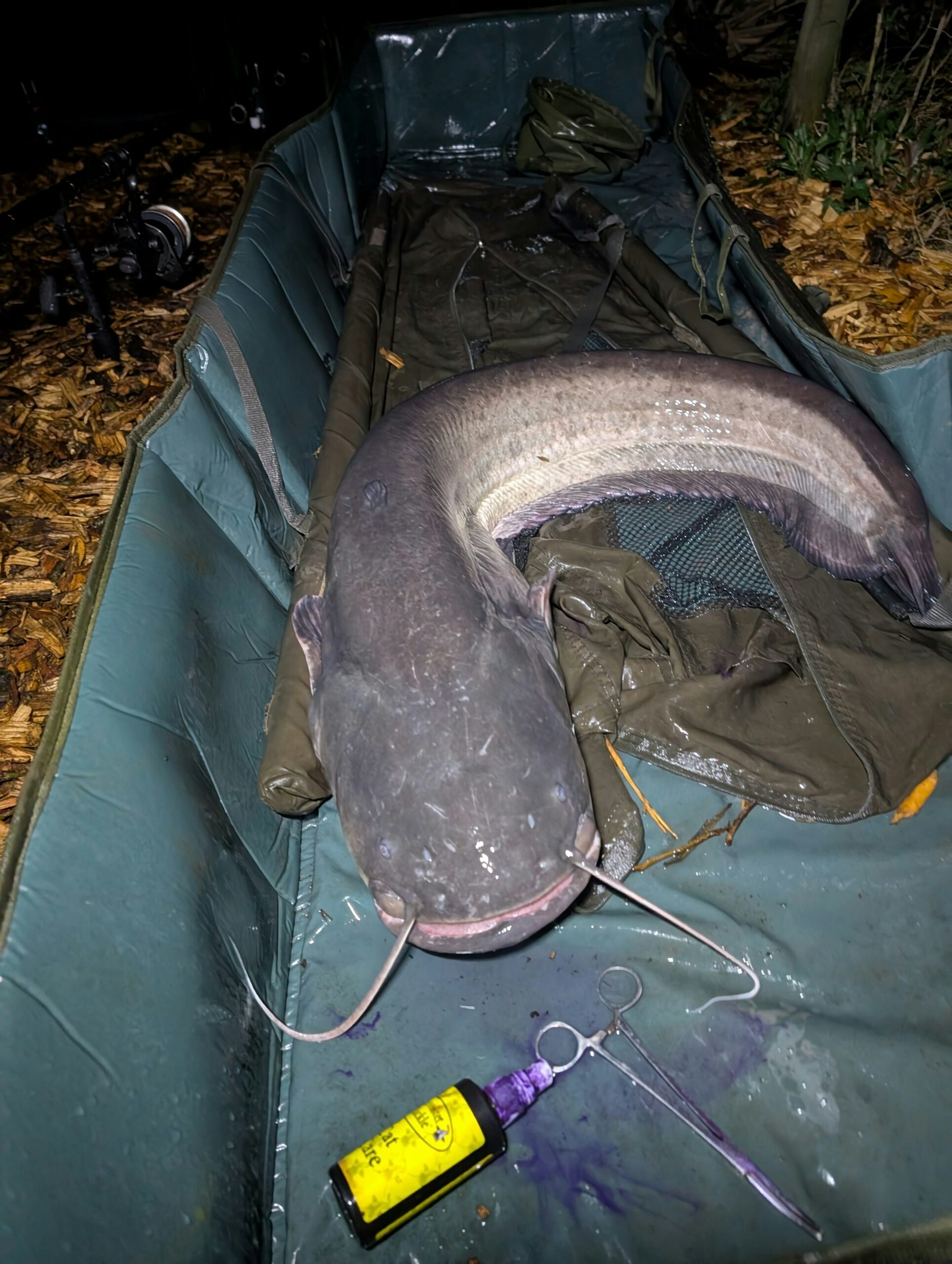
They are strong fish, but they deserve respect on the bank
Just so you know, we may receive a commission or other compensation from the links on this website - read why you should trust us